Sunday Oliseh’s pontifications: Truths and half truths
 SKAiF NewsNG SNN
By Douglas Baye-Osagie
Ex Super Eagles captain Sunday Oliseh is a name that needs no introduction in Nigeria. He is indeed a legendary figure in Nigerian and global football, with a career spanning top European clubs and the national team. He was part of Nigeria’s 1994 Africa Cup of Nations-winning team, the 1996 Olympic gold medal-winning team, and played in the 1994 and 1998 FIFA World Cups.
One of his most iconic moments was scoring the winning goal against Spain in the 1998 World Cup, a goal that’s still remembered fondly today. Oliseh’s leadership and skill on the pitch earned him 55 caps for Nigeria, and he’s widely regarded as one of the country’s greatest midfielders. After retiring from playing, he briefly coached the Super Eagles and has been involved in various football initiatives.
During the recently concluded African Cup of Nations, Sunday Oliseh worked as a commentator for CAF. His mastery of seven languages makes him an asset for CAF, and he has performed similar technical roles for FIFA. He did remarkably well while trying to remain neutral during the Super Eagles’ games, but drew the ire of Nigerians with some of his assertions in his post-African Nations Cup analysis, which he released on his YouTube channel.
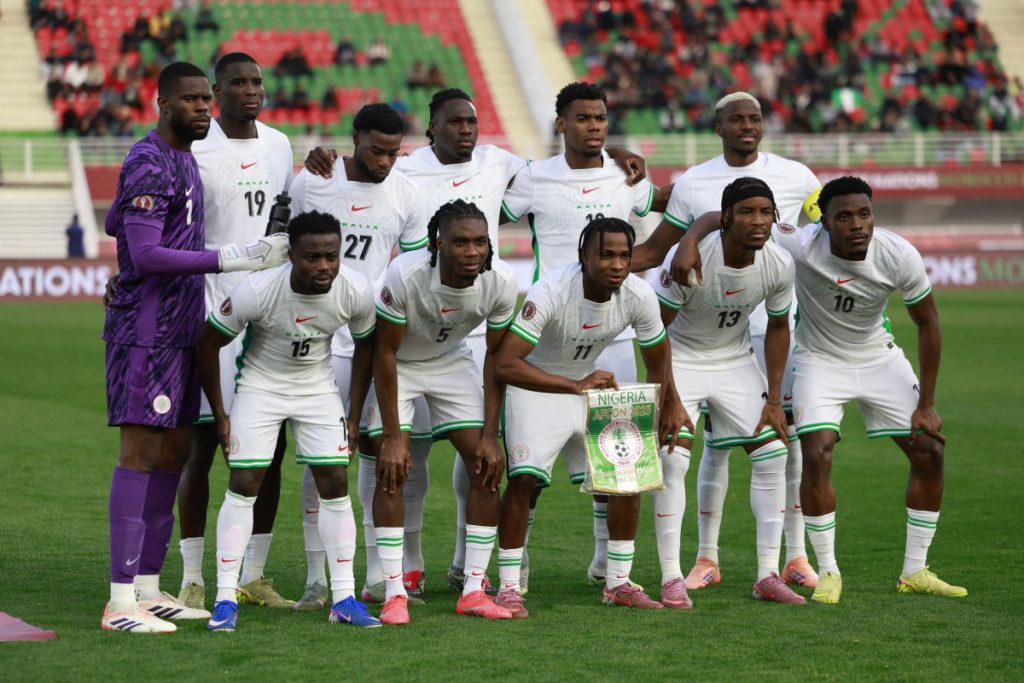
Sunday Oliseh is indeed not holding back his opinions about the Super Eagles’ performance at AFCON 2025. He’s criticized the team’s celebrations, saying “Bronze is not a trophy” and that it builds a culture of mediocrity. Oliseh believes Nigeria’s decline started when they became content with bronze medals. He’s also pointed fingers at Victor Osimhen, saying his verbal abuse of Ademola Lookman affected the team’s performance, breaking Lookman’s focus and spirit.
Oliseh thinks the team’s mentality and discipline are issues, emphasizing that success should be measured by titles, not podium finishes. Some people agree with his criticism, while others think it wasn’t well-measured, considering how the team exited the competition in the semi-final stage. It’s clear Oliseh is passionate about Nigerian football and wants to see improvement. His comments have sparked debate, with some supporting his stance and others defending the players.
A while ago, I wrote about this set of Super Eagles as the most lucky generation to have been hugely rewarded for not winning anything. They were given national honours by President Bola Ahmed Tinubu for finishing second in the previous AFCON in Ivory Coast. A second-place finish is commendable, but it’s not the ultimate prize. On recorded history since independence, no Nigerian football team or sports team has ever returned from a tournament and received national honours simply for their efforts. Only those who won gold deserved that honour. President Obasanjo famously called our bronze medal in 2004 a “golden bronze,” but it didn’t come with a national honour or anything bigger. The country was ecstatic about their performance, considering the 2004 team ended the defending champions Cameroon’s unbeaten run from two tournaments. It came with a Presidential reception and handshake in the Presidential villa.
Considering that some legends who qualified Nigeria for the World Cup and had a decent spell with the national team don’t have national honours, it’s felt that the current set of players who haven’t won any trophies or qualified Nigeria for the World Cup should return their national honours. Legends like Julius Aghahowa, Ike Shorumu, Obafemi Martins, Victor Agali, Sani Keita, Isaac Okoronkwo, Obinna Nsofor, Seyi Olofinjana, and Osazee Odemwingie don’t have any national honours despite their commendable careers with the Super Eagles in the Nations Cup , World Cup qualifications and World Cup proper.
Oliseh shared my sentiment, expressing displeasure at the energy used to celebrate the AFCON third-place finish. A country with Brazil’s reputation in the African continent shouldn’t be overly jubilant about a bronze medal in the AFCON. We understood it was a hard-fought game, but we desired more from the team after they played some of the best football in over two decades in this AFCON.
Oliseh also mentioned how the NFF has cleverly shifted attention away from Nigeria’s World Cup failure by focusing on the ineligibility of Congo Democratic Republic players. The leadership of Nigerian football has raised hopes among soccer-loving Nigerians that a FIFA ban will be imposed on Congo DR, resulting in Nigeria taking their place. Although Nigeria has a good case, this appears to be unfair to Congo DR, who performed well on the pitch.
On the flip side, regarding the defeat in the semi-finals and missing the trophy, I believe the focus should be on the coach, not Osimhen’s clash with Lookman in the round of 16 encounter against Mozambique. We played one of our best matches in decades afterwards against Algeria in the quarter finals. In the Semi finals, Nigeria lost the tactical battle after the game began. Morocco had studied Nigeria’s style and deployed a counter-formation that neutralised their attacking football.
While legends should critique and gatekeep the national team, they should also measure their words before making public statements. It’s true Osimhen has been unapologetic, but we have to accept his character. He wasn’t cultured in a traditional sense, but in the tough streets of Lagos. He brings that aggressiveness to the pitch – it’s part of what makes him effective.
Sunday Oliseh also had his own controversies, including forcefully retiring Vincent Enyeama from the Super Eagles due to a disagreement. This shows everyone makes mistakes, and we shouldn’t focus solely on Osimhen’s errors. It’s time to move forward and plan for the next AFCON, with a clear mission to win it.
The football federation should draw up a road map for qualification without relying on calculators. Nigerian football has strength, and we’re a team to be reckoned with. Legends should unite the team rather than divide it. Our football is what unites us, and we need positive agendas to replace negative vibes and jealousy.
We appreciate Sunday Oliseh’s role in Nigerian football history and hope he’ll remember that what you call your child in public is what strangers will also call them.
The post Sunday Oliseh’s pontifications: Truths and half truths appeared first on Vanguard News.