Youth Justice, inclusion, drug policy reform take centre stage at WAP Conference 2025
 SKAiF NewsNG SNN
By Joseph Erunke
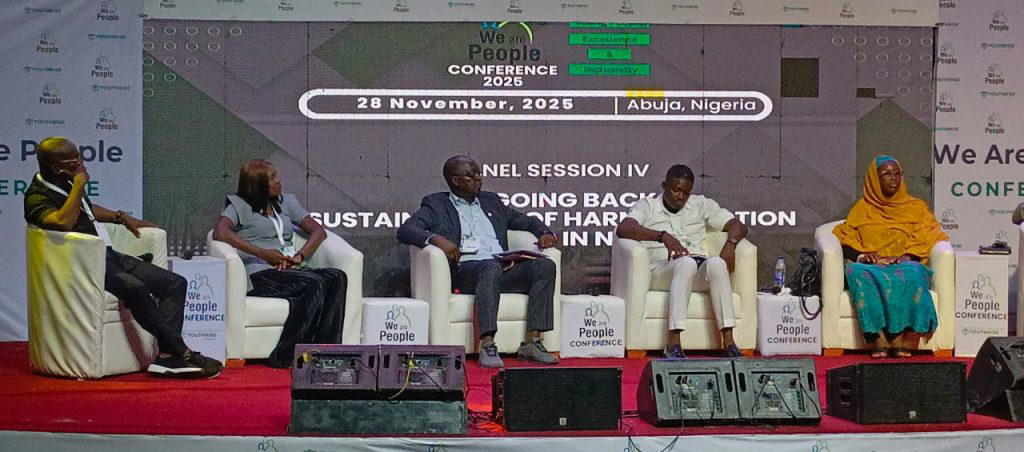
A powerful call for empathy-driven criminal justice reform and youth empowerment reverberated through Abuja on Thursday as stakeholders, legal experts, rights advocates, disability-inclusion champions, and youth representatives opened the first day of the We Are People (WAP) Conference 2025.
The event, organised by YouthRISE Nigeria under the theme “Young People, Excellence, and Inclusivity,” aims to amplify youth voices, address systemic challenges, and highlight the pivotal role of young people in national development.
Nigeria’s treatment of minors exposes systemic failures — Dawodu-Kuku
Delivering the lead presentation, UK-trained solicitor and Executive Secretary of the Administration of Criminal Justice Monitoring Committee (ACJMC), Barr. Sulayman Dawodu-Kuku, warned that Nigeria’s handling of minors and young adults within its justice architecture reveals deep, urgent failings.
“A viable criminal justice system is measured by how it handles children and young people,” he said.
Drawing on nearly two decades of practice in England and reform work in Nigeria, Sulayman analysed the troubled implementation of the Child Rights Act (CRA) 2003. The Act—designed to define a child as anyone under 18 and harmonise legal protections—mandates child-friendly police units, youth courts, and separate detention centres. Yet, many of these provisions remain largely theoretical.
Two decades after enactment, only about 25 of Nigeria’s 36 states have fully domesticated the Act, leaving several still governed by the Penal and Criminal Codes, which set the age of criminal responsibility as low as seven.
“On paper, the system exists, but in practice, many states have not operationalised the structures that protect the child in conflict with the law,” he stressed.
Sulayman noted that children are still detained in adult facilities, interrogated without an “appropriate adult,” and denied diversionary alternatives that could prevent lifelong stigmatisation. Current assessments indicate that around 6,000 children are in detention, with nearly one-third held alongside adults.
Drug dependency must be treated as a health issue
Addressing drug use among young people, Sulayman referenced UNODC figures estimating 14.3 million Nigerians use illicit substances—many of them youths. He insisted that drug dependency should be approached as a public health concern rather than a criminal identity.
“Rehabilitation, not imprisonment, must be the path forward.”
He outlined key reforms needed to safeguard minors, including raising the age of criminal responsibility to at least 12, establishing family courts nationwide, separating minors from adult detainees, mandating appropriate-adult presence during police questioning, and prioritising rehabilitation over punitive detention.
“More than a conference — a movement”
The Focal Person of the West Africa Drug Policy Network (WADPN), Nigerian chapter, Barr. Chinwike Okereke, described the event as “a movement,” reaffirming its commitment to evidence-based policies, human rights, and community wellbeing. His message was delivered through his representative, Barr. Amara Ifugeze.
Okereke urged young Nigerians to engage actively, embrace diversity, and forge networks that support national advancement.
Disability inclusion takes the spotlight
A poignant moment emerged when the Director of Social Integration at the National Commission for Persons with Disabilities—representing the Executive Secretary, Ayuba Gufwan—spoke openly about living with hearing impairment.
Dr. Lawrence Idemudia used his address to underscore accessibility, empathy, and institutional responsibility.
He reaffirmed the Commission’s resolve to ensure that all young Nigerians, including those with disabilities, have equitable access to innovation, education, and professional opportunities.
Youth realities: policing, profiling, and mental health
Earlier sessions examined the realities young Nigerians face with law enforcement, including profiling, harassment, and extortion—often linked to cultural or aesthetic expressions such as dreadlocks or piercings.
Participants were encouraged to move beyond outrage toward actionable recommendations, including improved police transparency, better rights awareness, and mental-health-informed responses during youth-police encounters.
“Young people are not the leaders of tomorrow; they are the leaders of today. But they must live in a society where justice is real and accessible,” one participant remarked.
Driving reform through collaboration
Day one of the We Are People Conference featured sessions on drug policy reform, tech-driven youth enterprise, rehabilitation and reintegration, civic engagement, and inclusive leadership.
Organisers expressed optimism that the energy and ideas generated will translate into concrete reforms that uplift Nigeria’s youth population.
The post Youth Justice, inclusion, drug policy reform take centre stage at WAP Conference 2025 appeared first on Vanguard News.