
We will safeguard state police from being abused by governors — Senate
 SKAiF NewsNG SNN
…Senate Passes State Police Bill
…As lawmakers approve constitutional amendment to establish Federal and State Police Services nationwide
By Henry Umoru
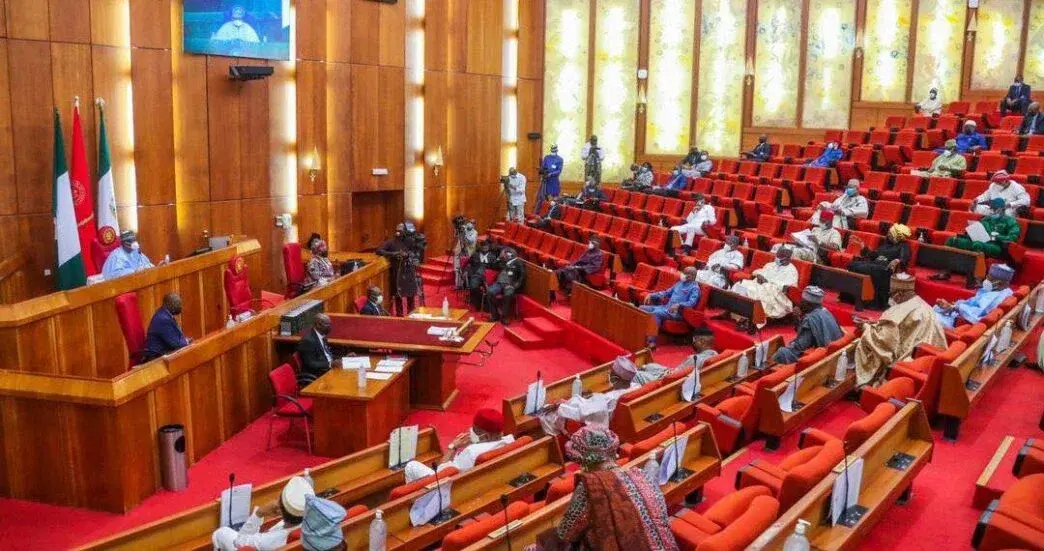
ABUJA — The Senate on Wednesday said the proposed state police system would be protected from abuse by governors through stringent constitutional safeguards, federal oversight mechanisms and judicial review provisions, as lawmakers passed the constitutional amendment bill establishing state police services across the country.
The bill, which seeks to replace the current Nigeria Police Force structure with the Federal Police Service and State Police Services, is designed to move Nigeria from a unitary policing system to a federal policing model aimed at strengthening internal security and addressing local security challenges.
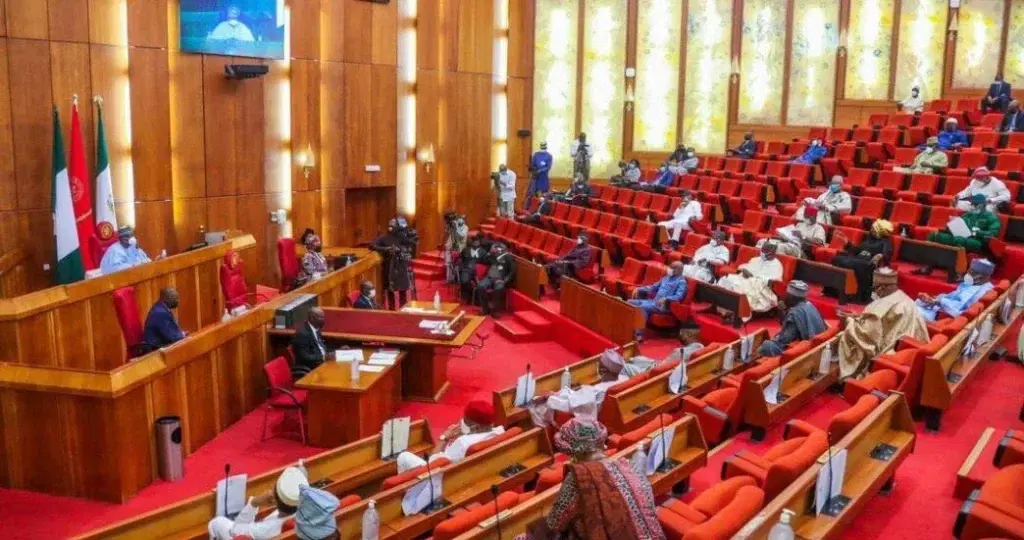
The landmark legislation was passed after a clause-by-clause consideration by the Committee of the Whole, presided over by Senate President, Godswill Akpabio.
According to the report of the Senate Committee on the Review of the 1999 Constitution, chaired by Deputy Senate President, Senator Jibrin Barau, the amendment will allow states to establish their own police services, subject to national minimum standards prescribed by the National Assembly.
The Senate said concerns over possible misuse of state police by governors informed the inclusion of extensive safeguards in the proposed law.
Under the bill, governors may issue only lawful directives relating to public safety and public order. They are expressly prohibited from directing state police authorities to arrest, investigate, detain, deploy force against, or target any named individual, political party, association or group outside the provisions of the law.
The amendment also bars state police from engaging in partisan, ethnic, religious or sectional persecution, while preserving the right of courts and relevant oversight bodies to review any questionable directives.
In addition, the legislation empowers the Federal Government to intervene in the operations of a state police service under clearly defined circumstances, including situations involving the breakdown of public order, threats to national security, administrative incapacity or evidence that a state police service is being used to violate fundamental rights or intimidate political opponents.
Such intervention, the bill stipulates, must be temporary, necessary, proportionate and subject to judicial review.
With the passage of the bill, the Federal Police Service will assume responsibility for federal crimes, terrorism, cybercrime, arms trafficking, organised crime, interstate offences, national security matters and policing of the Federal Capital Territory.
State police services, on the other hand, will be responsible for enforcing state laws, maintaining public order, preventing and detecting crimes within their jurisdictions and protecting lives and property.
The bill further provides that no state police service shall commence operations until it has been established by a law enacted by the relevant State House of Assembly and certified as meeting national minimum standards.
Presenting the lead debate, Senate Leader, Senator Opeyemi Bamidele, described the proposal as one of the most significant constitutional reforms in Nigeria’s democratic history.
According to him, the bill represents a major institutional reform aimed at addressing the nation’s persistent security challenges through a decentralised policing framework.
“Its core objective is to move Nigeria from a unitary policing structure to a federal policing model that allows states to create their own police services, subject to national minimum standards, constitutional safeguards and federal oversight in defined exceptional circumstances,” he said.
Bamidele noted that extensive public hearings, consultations and stakeholder engagements conducted by the Constitution Review Committee revealed broad support for state policing as a solution to growing insecurity across the country.
He argued that the current highly centralised policing structure has become overstretched and often lacks the local knowledge required to effectively tackle crimes such as banditry, kidnapping and communal violence.
Before debate commenced, Akpabio reminded lawmakers of the significance of the legislation, describing it as a historic opportunity to strengthen Nigeria’s security architecture.
“The matter we are about to consider is of profound national importance,” he said.
“Today presents another historic opportunity for the Senate of the Federal Republic of Nigeria to discharge one of its most sacred constitutional responsibilities — the duty to make laws for the peace, order, security and good governance of our nation.”
He added that the proposed amendment was not merely a legislative exercise but a major contribution to the national conversation on improving public safety and strengthening Nigeria’s federal system.
“The decisions we take today have the potential to shape the future of policing, public safety and intergovernmental relations in Nigeria for generations to come,” he stated.
The Senate adopted a manual voting process after repeated efforts to use its electronic voting system failed. Lawmakers voted by raising their hands following a motion moved by Bamidele and seconded by Senate Minority Leader, Senator Abba Moro.
The constitutional amendment bill was transmitted to the National Assembly by President Bola Tinubu as part of broader efforts to reform the country’s security architecture and establish a dual policing framework.
The proposal also outlines the appointment process for police leadership. While the Inspector-General of Police will be appointed by the President on the advice of the National Police Council and subject to Senate confirmation, state Commissioners of Police will be appointed by governors based on recommendations from the National Police Council and confirmed by their respective State Houses of Assembly.
The bill further provides safeguards against arbitrary removal of police chiefs, requiring due process, fair hearing and legislative approval before any removal can take effect.
Following the passage of the bill, Akpabio expressed confidence that the reform would contribute significantly to addressing insecurity nationwide.
“It is my prayer that Nigerians will become safer and that the challenges of kidnapping, banditry and terrorism will not only be minimised but reduced to the barest minimum,” he said.
“I am confident that Nigeria shall overcome terrorism and banditry.”
The Senate session was witnessed by several senior government officials, including Governors Lucky Aiyedatiwa, Uba Sani and Dapo Abiodun, Chief of Staff to the President, Femi Gbajabiamila, attorneys-general from various states and officials of the Nigeria Governors’ Forum.
The bill will now proceed to the House of Representatives for concurrence before being transmitted to the 36 State Houses of Assembly. For the amendment to become part of the Constitution, it must secure the approval of at least 24 state legislatures.
The post We will safeguard state police from being abused by governors — Senate appeared first on Vanguard News.