Top 10 air defence systems in the world [2026]
 SKAiF NewsNG SNN
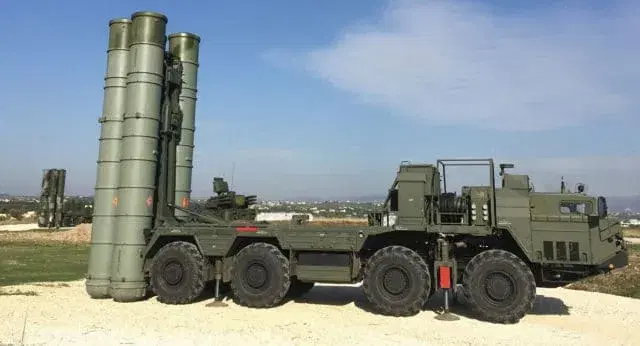
The landscape of global air defence in March 2026 is defined by a shift from traditional anti-aircraft roles to sophisticated, multi-layered “space-agnostic” systems.
Modern conflict, particularly recent engagements in the Middle East and Eastern Europe, has proven that top-tier systems must now counter hypersonic glide vehicles (HGVs), drone swarms, and low-earth-orbit satellites.
Here are the top 10 air defence systems in the world as of 2026, ranked by range, technological sophistication, and combat-proven reliability.
1. S-500 Prometheus (Russia)
The S-500 remains the world’s most advanced strategic interceptor. Unlike its predecessors, it is designed for “near-space” defence.
Key Capability: Intercepts ICBMs, hypersonic missiles (Mach 15+), and satellites.
Range: Up to 600 km; altitude up to 200 km.
2026 Update: Now fully integrated with the A-235 Nudol system to provide a comprehensive orbital-denial umbrella.
2. THAAD (USA)
The Terminal High Altitude Area Defence (THAAD) is the gold standard for high-altitude ballistic missile interception.
Key Capability: Uses “hit-to-kill” kinetic technology (no explosives) to destroy targets.
Status: Extensively deployed in 2025–2026 across Israel and Saudi Arabia, showing high success rates against intermediate-range ballistic missiles.
3. S-400 Triumf (Russia)
The backbone of many global air forces, the S-400 is prized for its multi-layered approach, using four different missile types to handle various threats simultaneously.
Range: Up to 400 km.
2026 Update: Recent software patches have improved its performance against small-form-factor “suicide” drones, a previous vulnerability.
4. David’s Sling (Israel/USA)
Filling the gap between the short-range Iron Dome and long-range Arrow systems, David’s Sling has become Israel’s most active mid-tier defender.
Key Capability: Its “Stunner” interceptor uses dual-mode seekers (radar and imaging infrared) to ignore decoys.
Range: Up to 300 km.
5. Patriot PAC-3 MSE (USA)
The latest “Missile Segment Enhancement” (MSE) version of the Patriot has seen more combat than any other system on this list.
Key Capability: Proven ability to intercept “invincible” hypersonic cruise missiles like the Kinzhal in the Ukraine-Russia theatre.
Reliability: Remains the most trusted mobile point-defence system for NATO allies.
6. Aegis Ashore / SM-3 (USA/International)
A land-based version of the sea-based Aegis system, using the SM-3 Block IIA interceptor.
Key Capability: Designed specifically to intercept short- to intermediate-range ballistic missiles in the mid-course phase (outside the atmosphere).
Presence: Key sites in Poland and Romania provide the primary shield for Europe.
7. Arrow 3 (Israel)
A top-tier exo-atmospheric interceptor that operates as the upper layer of Israel’s defence.
Key Capability: In 2025, it successfully intercepted long-range missiles at altitudes where other systems could not reach, effectively acting as a “space fence.”
8. Aster 30 SAMP/T (France/Italy)
Europe’s premier long-range anti-missile system, often called “Mamba.”
Key Capability: Exceptional at 360-degree coverage and high mobility.
2026 Update: The new NG (Next Generation) variant has doubled its detection range to over 350 km.
9. HQ-9B/C (China)
The HQ-9 series represents China’s most capable indigenous long-range SAM system.
Key Capability: Uses advanced “active” seeker technology similar to the S-300/S-400 but optimised for China’s dense electronic warfare environment.
Range: Approximately 250 km.
10. Iron Dome (Israel)
While the shortest-range system on this list, it is arguably the most successful in history.
Key Capability: Optimised for C-RAM (Counter Rocket, Artillery, and Mortar) with a 90%+ success rate.
2026 Update: Now often supplemented by Iron Beam (laser-based defence) to reduce the cost-per-intercept for cheap drones.
The post Top 10 air defence systems in the world [2026] appeared first on Vanguard News.