Was ransom paid to secure kidnapped schoolchildren’s release? Amnesty raises fresh query
 SKAiF NewsNG SNN
By Nnamdi Ojiego
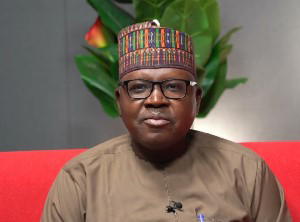
In this interview, the Country Director of Amnesty International, Nigeria, Isa Sanusi, speaks on human rights in Nigeria. Sanusi reflects on
the persistent killings, mass abduction of schoolchildren and alleged payment of ransom to secure their release, and the steady erosion of civic freedoms that shape daily life for many communities, setting out why these patterns trouble the organisation and what must change if public trust is ever to be restored. Excerpts:
Let’s start this conversation with the sentencing of Nnamdi Kanu to prison. How do you see the trial? Some people believe this could be the end to the violent separatist agitation in the South-East? Do you think that the non-state actors terrorizing the region and security agents committing human rights abuses there will now sheath their swords?
Well, I have to start by being very frank with you. We normally observe this kind of trials. Unfortunately, we didn’t follow the trial from the beginning to the end. We normally send observers, but this time because we are short-staffed and overstretched, we couldn’t follow the case. So, normally when we have not followed or observed a trial, observing a trial for us is a very important process for being in the position to say whether the trial is fair or not. But we have gotten hold of the judgment and we have gotten hold of the charges and we are looking at both. And at the right time, I’m sure in January, we are going to issue our own legal assessment of the judgment.
Sometime ago, your organization raised the alarm over alleged human rights abuses in Tiger Base in Owerri, Imo State capital. Any updates on that?
Yes. We are going to release our report on Tiger Base next week (referring to last week). I don’t want to preempt that report, but Tiger Base is a very deplorable, very horrible, very horrifying detention center that is grossly committing human rights abuses. And it is really a shame and a stain on Nigeria’s image that such an institution exists in our country. I don’t want to preempt our report, but you know this is just a very brief snapshot. Next week (referring to last week), we will share with you as well our report on what we discovered at Tiger Base.
Mass kidnapping of schoolchildren in parts of the country drew a critical reaction from you and you in fact spoke about the consequences for education in the North. Kindly expand on your perspective now that the children are being released piecemeal without action taken against the captors.
Well, we are hearing stories about those who were abducted being released but we always say that since 2014 when Chibok girls’ abduction took place, we have stressed the need for transparency. And particularly, we have made it very clear that the most important thing, after each kidnapping of children, is that the perpetrators must be known. Who are they? What is their motive? Are they doing it for political or religious or they are doing it to make money, that is, to get ransom money?
Unfortunately, Nigerian government never makes the right effort to tell Nigerians who these people are. And that is why this thing is going on and on. And we want to know why is it that whenever this thing happens, children are released in piecemeal and there are serious allegations of payment of ransom which government has always denied. But these allegations are becoming stronger and stronger every day and we expect government to investigate these things. A situation whereby over 300 children are picked from a school and taken away without any repercussion, without justice, without punishment according to the rule of law for the perpetrators is just an incentive for more and more armed groups to do the same thing. So, we believe that the failure to be transparent about these things is one of the reasons why they continue to happen. And unless government becomes transparent and makes sure that the perpetrators face justice, these things will never stop and they will continue.
Negotiating with bandits and terrorists and payment of ransom is an ongoing issue in the polity. Only recently, the new defence minister said no negotiation of such will be entertained. Where does Amnesty International standards in all of this?
Well, as a human rights organization, according to our policy, we don’t have a position on payment of ransom or negotiation because this is a government responsibility. And we don’t have opinion or position on whatever the government is going to do. But we believe that anything that will encourage impunity, anything that will give incentive to criminals is against human rights and we don’t support it. We believe that the government should place the interest of the nation above anything else. We believe that whatever the government should do should not be an incentive, should not be an encouragement, should not condone impunity in whichever way. And we believe that the government has to be seen to be the protector of the people, not protector of the perpetrators.
Recently, the American government alleged that there is Christian genocide in Nigeria, something the Nigerian government has denied. What is your position?
We have always said that genocide is a very big word and it’s a very big thing, and it has criteria. There are even scholars who examine these things and determine whether genocide is going on or not. And we believe that before you decide that genocide is happening, there are a lot of criteria that you have to meet. American politicians and American government have been talking about genocide and, based on our investigation, we have not yet had evidence to show that this is a genocide happening.
But what is happening in Nigeria, especially in Northern Nigeria, is utter failure of the government to protect lives. And we believe that we don’t need foreign countries to tell us that what is going on is wrong, unacceptable, against the Constitution, against the international law. Nigerian government has consistently failed to protect its people and this thing has been going on and on endlessly. And we believe that without using any word, we know that even the life of one Nigerian is too precious to be allowed to be wasted by criminals. Therefore, what we are saying is that the Nigerian government has to stop these killings. They should not be part of normal life. They should not be a routine. They should not be something that happens again and again and again. We don’t even need the US to tell us that.
You must be following up on the trial of captured terrorists and bandits in the country. What updates can you share with us in terms of the data?
Well, we believe that the trial should be transparent, should be very fast, and it should not be hidden. So many arrests have been made but unfortunately, there is no evidence that these trials are taking place at the right time. We believe that the government should prioritize expedient trial for terrorists and criminals. These killers should be tried as early as possible because when their trial is slow, the victims lose faith in the system. The victims lose hope in getting justice. Therefore, we believe that their trial should be transparent and open and people should know who are these people: why are they killing Nigerians? Where are they from? I believe it is only by doing that that we can be able to address this problem.
Now let’s go back to issues like #ENDSARS, #EndBadGovernance and the like. It is several years since the #ENDSARS protests took place but there are different opinions on whether killings actually took place especially in Lagos. What are your findings?
Two, judicial panels were set up across the country on the protests. The panels made recommendations which were not made public. Are you privy to these recommendations and to what extent were they implemented to ensure that justice is served?
Well, as you remember, #EndSARS protest happened, and even though the government and the agencies denied, we have evidence, concrete evidence that people were killed. So we have moved past that level of conversation, that level of debate. It is no longer about whether it happened or not. It happened; it is undeniable. And even the panel set up by the Lagos State government confirmed that people were killed and the compensations were paid to so many families. Therefore, the issue of whether people were killed at Alausa and Lekki Tollgate is no longer in doubt. And we know that the panel in Lagos issued a report, and the report was made public. So it’s no longer a doubtful matter.
Face of justice
Furthermore, we have documented the activities of panels by other states, but we are so disappointed that only the panel of Lagos State government was able to conclusively carry out its assignment. It conducted its hearings in public and it was very regular. It issued a report at the end, a white paper was issued and compensations were paid.
Lagos state government has shown an exemplary commitment to rule of law in some ways. Unfortunately, in other states, such thing has not happened. In some states, the committees were set up and they never finished their work. In some others, the committees have never even taken off while in some states, there were sittings, but the sittings have not continued. They just started and then abruptly stopped. So this is really a disappointment. This is a slap on the face of justice. And we are calling on the states to review this lackadaisical treatment of injustice to make sure that all the findings of these committees are treated as a serious outcome of a judicial process that must lead to justice for the victims of #EndSARS protest.
In the case of #EndBadGovernance protests, some minors were said to have been arrested and took to court while some were killed by security forces. What were your findings?
We investigated that issue, and we confirmed that, of course, minors were arrested, and not only arrested, but also detained, not only detained, but also subjected to deliberate starvation, which is a crime under international law. They were deprived of food, they were deprived of water, they were deprived of healthcare. And we condemned that, and we asked the government to pay compensation to the families of those minors, and to make sure that they receive adequate reparation, and that reparation includes psychosocial care and proper rehabilitation, so that they can go back to school or learn trade or acquire skills to continue to be useful to the society. The fact that minors were subjected to that kind of treatment is really unfortunate. So we are going to continue to follow up. In fact, we are tracking all those minors to find out how they are doing in life, to make sure that there is justice for all of them.
In the wake of the #EndBadGovernance protests more than one year ago, President Tinubu promised to set up a youth conference to address issues concerning youths in Nigeria. One is not sure that is not a failed promise because nothing appears to have been done on that. Are you following up?
Yes. We have no evidence that the government has fulfilled its promise, and I believe that we should ask the government where are we in terms of fulfilling that promise. It’s so unfortunate that the government always has a good plan in words, but in action, they fail again and again.
How would you describe the state of human rights protection in Nigeria at the moment?
Well, human right is in danger in the sense that we know how people are arrested and maltreated when they criticize government or prominent political figures, and we know human right is in danger because people in rural areas, especially in northern Nigeria, continue to live in fear because gunmen, from time to time, go into their communities and kill them in large numbers and disappear. So a right to life, which is the most important human right, is in danger in Nigeria because people go into the villages and kill people in large numbers and disappear, and nothing happens to them. So this is a very big danger to our society, and I believe that democracy should provide the platform for better human rights.
Unfortunately, you can see the right to peaceful assembly is at risk and is in danger. People are attacked by security agents when they come out to protest against human rights violations. So we really have a long way to go, and we have a long process to meet upward because human right is suffering a setback in Nigeria.
Which issues trouble you the most when you look at recent patterns of abuses or violations in the country?
Killings are the ones that give us much more sleepless nights because when people cannot sleep peacefully at their homes, then the most important human right, which is the right to life, is in danger. Therefore, that is the most important thing, and we believe that for a government to be legitimate, to have power, it has to be able to protect the right to life.
Unfortunately, even the right to life is in danger right now, and we believe that that should not be the case. At least people should be able to have the right to live their lives without being killed, without being attacked, without being molested or maltreated.
Military and police operations continue to raise concerns about unlawful killings, arbitrary arrests and detentions. What evidence has Amnesty documented in the past year that Nigerians should know about?
As I told you earlier, we are already documenting what happened at the Tiger Base, which is a good example or a bad example of the atrocities being committed. And we have been receiving cases and petitions and complaints about violations by the police and the military, and we continue to document them. And early in January, we are going to release a report about this.
So what is your assessment of the government’s response to allegations brought forward by your organisation?
Well, the government always denies these things, but their denial has never shaken us. It has never discouraged us, because people know the truth. Whenever we say that something happened, we have evidence. We are expecting the government to be honest with the people, and when these things happen, they should admit them and accept them and say, “How do we address them?” But when the government continues to deny, they are putting a lot of distrust in the mind of people about them, and that is very dangerous for the whole country.
Communities face threats from insurgents, bandits and other armed groups. How has this shaped Amnesty’s priorities?
Well, our priority remains the conflicts, because these conflicts cost lives, and they cost much more than you can imagine. A situation whereby people are killed for doing nothing, just living in their villages, they are attacked by government. Therefore, we believe that the fundamental rights of people should be protected, and the most important right is the right to life. Unfortunately, the right to life is in danger. Therefore, we have to continue to make sure that these things are analyzed and those responsible are brought to justice.
There have been growing worries about shrinking civic space. How widespread are threats against journalists, activists and protesters today?
You know, in Nigeria, we have what we call Cyber Crimes Act, which is a law that was put in place, and it continued to be used to violate human rights. Many journalists were arrested, in fact, last year, over 11 journalists were arrested. And this year, we have also recorded so many cases of arrest of people for just expressing an opinion, or writing in a newspaper, or in their blog. And this continues to be the case, and we believe that the fundamental right of people should be respected, and these attacks on human rights should stop. There is no way we can have peace if these things continue to happen. So we have to stop this.
So what practical steps should authorities take to protect civilians without repeating past abuses?
We know that there are rules of engagement, and every military or civilian organization, every security agency has its own operating rules. And those rules of engagement clearly prohibit human rights violations. We believe that the only way to do that, to protect people, is to make sure that when security agents commit human rights violations, they are brought to justice.
Unfortunately, whenever they commit these atrocities, they are either transferred to another part of the country or they are just, you know, they are changed to another location and nothing happens. So we believe that there should be transparency and the government should give the security agencies, all of them, clear instruction not to violate human rights. I think that is the way forward.
What reforms would help secure a freer and safer civic environment?
Well, what we need is to make sure that there is accountability. I think that is the best reform that can ever happen. We have to make sure that there is accountability. No one should be above the law. Whoever commits a human rights violation should be brought to justice, whether he’s a security agent, a politician, or whatever, there should be no one above the law. I think that is the only magic that can work.
What has Amnesty found in relation to overcrowded prisons, prolonged pre-trial detention and treatment of detainees?
Those things are elements that show the failure of our criminal justice system. When you go to our prisons, you find out that there are more people on waiting trial than people who have been convicted. And that is a failure because if the criminal justice system is working, there is no way this thing can be happening. Therefore, we expect government to carry out reforms.
They have been promising to reform these things, but those promises have never materialized. And that is a big disappointment because hundreds and hundreds of people are held in overcrowded, very unhealthy conditions in prisons, just waiting for trial for years. And that is quite unfair. We believe this is contributing to the growing social injustice that we have in Nigeria.
Sometimes your work Amnesty’s work has drawn criticism from government officials. How do you manage this relationship without compromising your independence?
Well, Amnesty International remains independent. And we protect our independence from anything. We are not a political party. We are not an opposition body. We are not a commercial organization. We are not a religious organization. We don’t have affiliations with any ideology or any group of people. We are just human beings, just passionate about human rights. And we came together to protect human rights. Therefore, we will continue to do that. And we are not against the government at all. We are generally against the failures of the government.
We are just telling the government to do the right thing because if they are doing the right thing, we cannot even talk about them again. We would concentrate on other issues. And the reason why we are drawing their attention to human rights issues is because we want them to do better. We want them to earn the trust and respect of the people they are leading, not the other way around. We are not interested in their power or the resources they control. We are only interested in a Nigeria where human rights are respected, people live with dignity, and the authority is not a violator in itself.
What should Nigerians expect from Amnesty in the coming year?
We will continue to pay attention to human rights. We will continue to remain focused and resolute. We will continue to keep our eyes on the ball. We will continue to make sure people have their rights and their rights are protected.
We will continue to expose human rights violations and abuses without fear or favour. And we will continue to make sure that there is accountability in Nigeria. We want a Nigeria that is better. We want a Nigeria that respects human rights. We want a Nigeria where no one is killed by anybody. We want a Nigeria where killers are held to account. We want a Nigeria whereby people will respect the security agencies because they respect themselves and they protect human rights.
President Tinubu just asked the National Assembly to expedite action on state police to combat heightened insecurity in the country. Is state police what we need to arrest insecurity?
Well, Amnesty International does not have a position on state police, but we know that there is nothing wrong with the Nigerian police as it is today except corruption, mismanagement, and lack of accountability. These are the problems with the Nigerian police.
So we believe that if the Nigerian police has failed, there is every reason that even if you have state police, it will also be like the current police. There is no evidence whatsoever that the problem is with the police itself, but the problem is with how it is managed. We believe that setting up a state police will not in any way make any difference as long as it is the same people who are going to run the same system.
Let’s look at the failed coup in Benin Republic and Nigeria’s intervention. If Nigeria didn’t intervene in Niger, Guinea Bissau, Mali, etc, why should it in Benin? And what lessons do we learn?
We are a human rights organization, so we don’t deal with politics, but we always believe that military rule always has a very devastating impact on human rights, and we always say that military rule is against the principles of democracy, principles of freedom and justice, but political decisions are something that is outside the purview of our work.
People have always said bad governance fuels coups in Africa. Shouldn’t Nigeria emphasise good governance in the continent and, in fact, show good example rather than intervening militarily when political leaders behave badly and soldiers topple them?
As an organization, we believe that there should be justice, there should be fairness in everything people are doing, and what we are saying is that democracy is the best thing for our country. Democracy is the most important thing that will happen to us, and we always support democracy, and we believe that no matter the shortcoming or the current system we have, it is the best for freedom and justice and for the people.
So we believe that there should be more emphasis on making sure that democracy works, and we will continue to encourage our leaders to make sure that they make our democracy work because it is the best for freedom and justice.
The post Was ransom paid to secure kidnapped schoolchildren’s release? Amnesty raises fresh query appeared first on Vanguard News.