Terrorists ‘abduct 42’ schoolchildren in Borno
 SKAiF NewsNG SNN
…as Nigeria, US forces ‘kill’ ISIS top commander, others
•Trump threatens more strikes
•Inside story of three-hr raid – Military
By Dapo Akinrefon, Nnamdi Ojiego, Ndahi Marama, Kingsley Omonobi, Henry Umoru, Nkiruka Nnorom and Luminous Jannamike
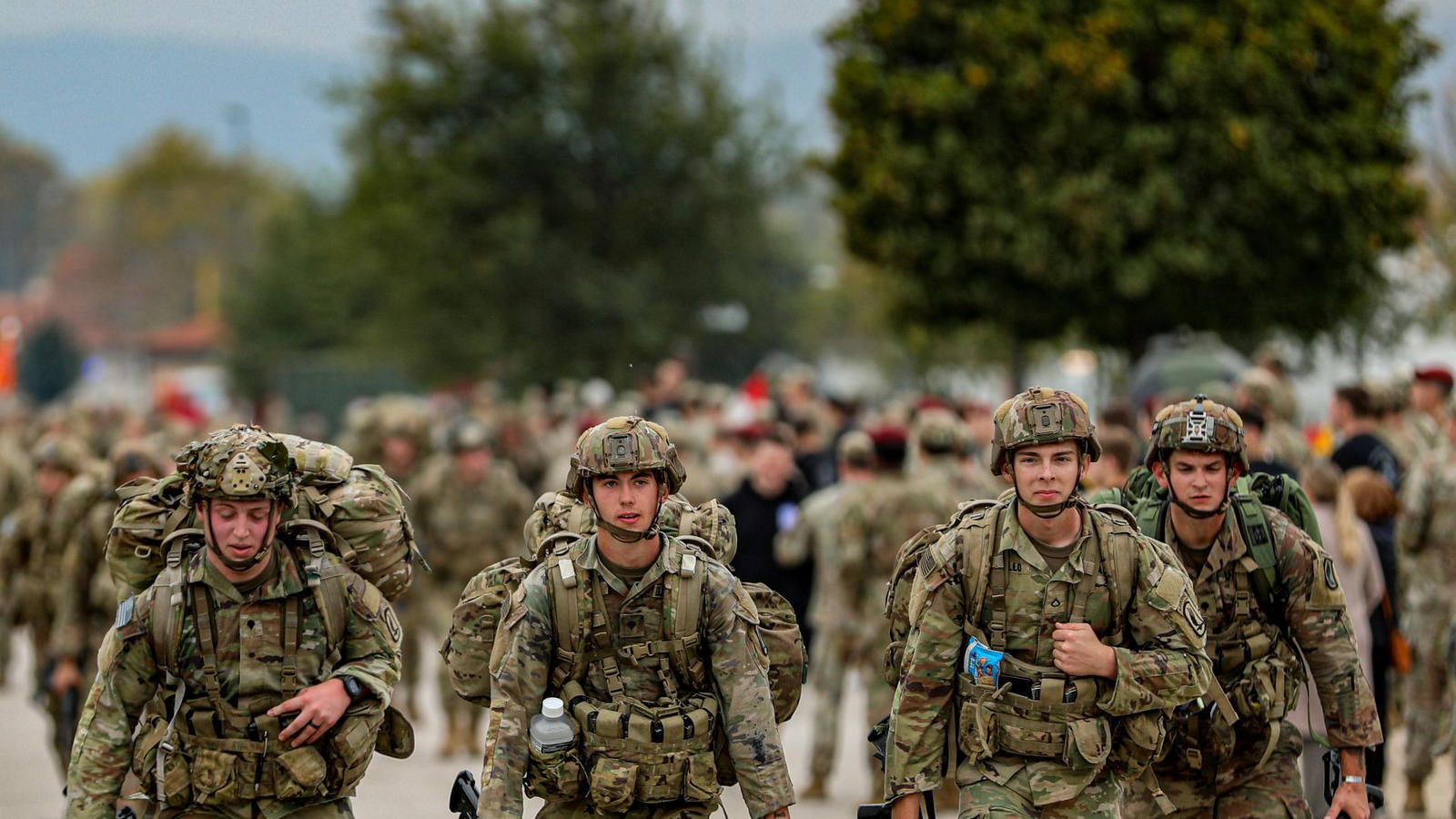
Nigeria’s deepening security crisis assumed fresh urgency at the weekend after terrorists reportedly abducted 42 schoolchildren in Borno State, even as the Nigerian military, working alongside United States forces, announced the killing of a top Islamic State commander, Abu-Bilal al-Minuki, during a coordinated overnight operation around the Lake Chad region.
Similar strikes were carried out against terrorists in Sokoto by the US in conjunction with Nigerian forces on December 25, 2025.
The latest incidents have again thrown the country’s fragile security situation into sharp focus, with security experts warning that extremist groups may launch retaliatory attacks in response to the killing of the ISIS leader, while former President Goodluck Jonathan lamented that Nigerians had gradually become desensitised to killings and violence across the country.
42 students reportedly abducted
The reported abduction in Borno came barely hours after the military disclosed details of a joint Nigeria-United States counter-terrorism operation that reportedly eliminated al-Minuki, described by American authorities as the global second-in-command of the Islamic State terrorist organisation and one of the most influential ISWAP commanders operating within the Lake Chad Basin and the wider Sahel region.
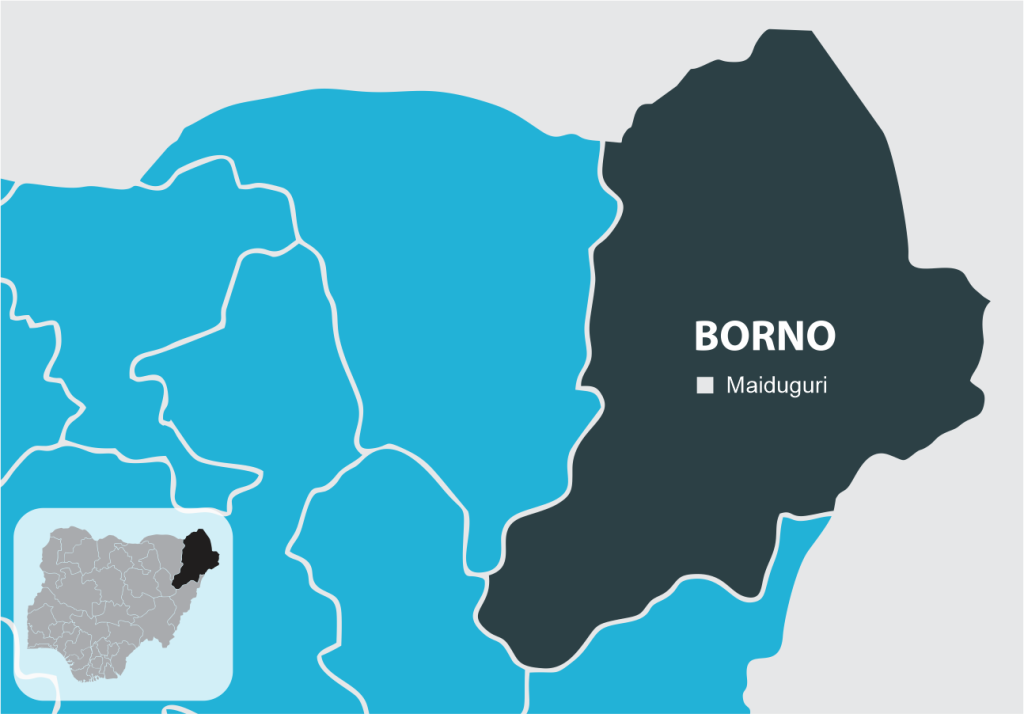
Senator Ali Ndume, who represents Borno South Senatorial District, confirmed that no fewer than 42 students and children were abducted after Boko Haram and ISWAP terrorists attacked Primary and Junior Government Day Secondary School, GDSS, Mussa, in Askira-Uba Local Government Area of Borno State. The lawmaker said the attackers stormed the schools during early morning lessons on Friday and whisked away pupils and students, while some other children were abducted from nearby homes.
According to him, information obtained from the school authorities showed that four students were abducted from the secondary school section, including two boys and two girls, while 28 pupils were taken from the primary section. Another 10 children were reportedly kidnapped from residential homes within the community, bringing the total number of abducted persons to 42.
Ndume described the incident as barbaric, traumatic and heartbreaking, noting that it had thrown families and residents into despair.
The senator, a former Chairman of the Senate Committee on Army, appealed to troops of the Joint Task Force North-East, Operation Hadin Kai, and other security agencies to intensify rescue efforts and secure the safe return of the victims.
He also lamented the resurgence of attacks across Southern Borno communities, particularly recent assaults on Bambatsu and Ngadarma communities in Chibok area, where several residents, including elderly persons, were reportedly killed.
For residents of Borno and neighbouring communities around the Lake Chad axis, the latest abduction revives painful memories of previous mass kidnappings carried out by Boko Haram insurgents over the last decade, including the Chibok schoolgirls’ abduction in 2014 and subsequent attacks on schools across the North-East.
Security analysts have repeatedly warned that educational institutions in remote communities remain vulnerable due to weak security presence, poor infrastructure and the persistent activities of insurgent groups operating around forest corridors and border territories linking Nigeria, Chad, Niger and Cameroon.
The Lake Chad raid
While communities in Borno were grappling with fresh terror attacks, the military announced what it described as one of the most significant counter-terrorism victories recorded in the North-East theatre in recent years.
Military authorities disclosed that the operation targeting Abu-Bilal al-Minuki commenced at about 12.01 a.m. on Saturday and ended around 4 a.m. after coordinated air and ground assaults on insurgent enclaves around Metele in Borno State.
According to military sources, the operation followed months of intelligence gathering, surveillance and reconnaissance involving Nigerian troops and the United States Africa Command, AFRICOM.
The military said intelligence had confirmed that al-Minuki and members of his international terrorist network had established a concealed and fortified base within the Lake Chad fringes.
Special Forces were reportedly deployed simultaneously to block escape routes, secure the operational zone and support air assets involved in the strikes.
Military authorities said the operation involved multiple air platforms operating in a synchronised air-land configuration that left the terrorists with no escape path.
The operation, according to the military, was executed with no casualties or loss of equipment on the part of Nigerian and allied forces.
Al-Minuki, also known as Abu Bakr ibn Muhammad ibn Ali al-Mainuki, had been designated a global terrorist by the United States Department of State in June 2023 under Executive Order 13224 for allegedly coordinating ISIS operations and funding channels across the Sahel and Lake Chad region.
Military officials described his elimination as the single most consequential counter-terrorism outcome recorded since the establishment of Operation Hadin Kai.
Trump threatens more strikes
The United States President, Donald Trump, reportedly commended the operation and praised the growing partnership between American and Nigerian forces in the fight against terrorism, even as he signalled the possibility of more strikes against ISIS targets in Nigeria.
In a post on Truth Social, Trump said US and Nigerian troops carried out a successful mission that eliminated al-Minuki,
Hours after announcing the strike, Trump shared a video featuring Plateau-based cleric, Rev. Ezekiel Dachomo, who has repeatedly appealed to Washington over insecurity and attacks in Nigeria’s Middle Belt.
In the accompanying post, the US President wrote that “more is coming,” suggesting that further operations against ISIS-linked groups in Nigeria may follow.
President Bola Tinubu also welcomed the development, describing the operation as a major milestone in efforts to dismantle transnational terror networks threatening Nigeria and the wider Sahel region.
The President reaffirmed Nigeria’s commitment to intelligence-sharing and stronger international security cooperation aimed at combating terrorism and violent extremism.
Falana blasts Tinubu
However, contrary to Trump’s claim, Abu-Bilal al-Minuki was reportedly killed by Nigerian troops in 2024.
Reacting to President Tinubu’s confirmation of the claim, human rights lawyer, Femi Falana, urged the President to verify security developments through the Defence Headquarters rather than relying on statements made by Trump on Nigeria’s counter-insurgency operations.
Falana described Trump’s comments on the anti-terror war as erroneous.
“As the Commander-in-Chief, President Tinubu should contact the Defence Headquarters on the killing of Abu-Bilal al-Minuki and other terrorists instead of relying on Trump’s erroneous claims on the prosecution of counter-insurgency operations in Nigeria,” Falana said.
Amid the controversy surrounding the reported elimination of the senior ISWAP commander, Special Adviser to the President on Information and Strategy, Bayo Onanuga, defended the Presidency’s position, insisting the operation followed extensive intelligence gathering and verification.
“This was not a snap judgment. It was months of persistent tracking, layered verification and coordinated action.”
Addressing concerns over previous reports linked to the terrorist leader, the Presidency said earlier claims resulted from mistaken identity during military operations.
“That was a case of mistaken identity arising from fog-of-war conditions,” the statement added.
“Capturing him alive was our priority,” the statement noted. “That’s why he was kept under surveillance in multiple locations, including Abuja and Maiduguri, until we were certain the operation could succeed without jeopardising the mission.”
Experts warn of possible reprisal attacks
Despite the military success, security experts warned against premature celebration, cautioning that insurgent groups often retaliate after losing key commanders.
Security analyst and kidnap incident management specialist, Sam Otoboeze, said the true measure of success would depend on whether terrorist attacks decline in the coming weeks and months.
“As interesting as the claim may sound, the only way to validate it and assess the general effectiveness of the joint operations is through observable reduction in the activities of terrorists and general insecurity in Nigeria,” he said.
He warned that previous high-profile operations against insurgent leaders had not always translated into improved security outcomes, recalling concerns raised after the 2025 Christmas Eve strike in Sokoto, which was followed by renewed attacks in several communities.
Another security expert, Chisom Emenalom of Bulwark Intelligence, said the operation demonstrated a strengthening intelligence partnership between Nigeria and the United States focused specifically on degrading ISIS-linked networks operating in West Africa.
According to her, the operation reflected a more intelligence-driven approach to counter-terrorism rather than conventional military offensives alone.
Human rights advocates also urged authorities to ensure future operations comply with international humanitarian standards and avoid civilian casualties or abuses capable of fuelling further radicalisation.
Executive Director of the Rule of Law and Accountability Advocacy Centre, RULAAC, Okechukwu Nwanguma, described the operation as significant but maintained that military action alone would not resolve Nigeria’s worsening insecurity.
He argued that violent extremism thrives in environments shaped by poverty, injustice, weak governance, rights abuses and distrust between citizens and security institutions.
Nwanguma called for greater investment in education, social protection, rehabilitation programmes, justice reforms and community-based peacebuilding initiatives to reduce terrorist recruitment and prevent radicalisation.
Jonathan expresses concern
Former President Goodluck Jonathan expressed concern that Nigerians had become dangerously accustomed to violence, killings and destruction.
Jonathan spoke at the first session of the 13th Synod of the Anglican Diocese of Abuja held at St. James Anglican Church, Asokoro, where he called for national reflection, moral rebirth and responsible leadership.
According to him, incidents that once shocked the conscience of the nation now pass with little public outrage.
“When we look around today, particularly at the challenges confronting our country, it is easy to become discouraged. Violence, insecurity, moral decline, and the loss of human values have become deeply troubling realities,” he said.
“What is even more painful is how society sometimes appears to normalise these tragedies as though they are ordinary occurrences. In times past, such incidents would shake the conscience of the nation. Today, people are killed, communities are destroyed, and life seems to continue as though nothing has happened.”
Jonathan said Nigeria urgently needed moral direction and focused leadership built on integrity, courage and vision.
He also warned that negative influences spreading through modern technology and digital platforms were contributing to moral decline among young people.
The Anglican Primate, Henry Ndukuba, also expressed concern over worsening insecurity, mounting public debt, economic hardship and persistent killings across several states.
He criticised political actors for focusing on the 2027 elections rather than governance and national welfare, warning that the weaponisation of religion and ethnicity continued to fuel insecurity.
According to him, Nigeria was “bleeding” as terrorism and violent attacks persisted across Plateau, Benue, Kaduna and other states.
Military strikes not enough
Former presidential candidate, Gbenga Hashim, said that although the killing of al-Minuki was significant, Nigeria could not defeat terrorism through military operations alone.
Hashim said the operation demonstrated what could be achieved through genuine international collaboration and intelligence-sharing.
However, he argued that terrorism in Nigeria was deeply rooted in poverty, unemployment, illiteracy and social exclusion.
According to him, rural communities often remain vulnerable to reprisal attacks after military offensives targeting insurgent leaders.
He warned that Nigeria’s large population of out-of-school children remained susceptible to extremist indoctrination and recruitment.
“Addressing terrorism requires not just military action, but strong governance capable of confronting the socio-economic realities that sustain violent extremism,” he said.
Hashim added that only decisive and uncompromised leadership could implement a comprehensive strategy capable of restoring peace and stability nationwide.
PFN seeks divine intervention
Meanwhile, amid growing concern over insecurity and economic hardship, the Pentecostal Fellowship of Nigeria announced a three-day national fasting and prayer exercise for the country.
The exercise, scheduled for May 22 to 24, was approved during a meeting of the PFN National Executive Council.
In a statement signed by the fellowship’s National Publicity Secretary, Dr. Sylvanus Ukafia, the Christian body said the decision followed deep concern over insecurity, bloodshed, attacks on communities and worsening social tensions across the country.
The PFN said the prayer programme would coincide with the observance of Global Pentecost Day and would focus on peace, healing, restoration and national renewal.
“The PFN notes with grave concern the growing insecurity across the country, persistent violence and bloodshed, attacks on communities and places of worship, economic hardship confronting millions of Nigerians, rising social tensions, and anxieties surrounding the nation’s political future and upcoming elections,” the statement read.
According to the fellowship, the first two days would involve fasting and prayers in homes and churches nationwide, while the final day would culminate in a united national prayer assembly across states of the federation.
The organisation urged Nigerians, especially Christians, to unite in faith and patriotic commitment toward the peace and future of the country.
The latest developments come as Nigeria continues to battle multiple security threats ranging from insurgency and banditry to kidnapping, communal violence and organised criminality, with citizens increasingly anxious over the nation’s future ahead of the 2027 elections.
US command releases video of military operation
US Africa Command (US AFRICOM) has shared footage of strikes in northeast Nigeria that targeted a large group of Islamic State fighters. The operation killed several high-value targets, including senior leader Abu Bilal al-Mainuki.
Brant Philip, a security expert, shared this information in a post on.
Al-Minuki, identified as the second-in-command of the Islamic State of Iraq and Syria worldwide, was reportedly killed by American forces working with the Nigerian military.
Trump said in a statement on his Truth Social account on Saturday that the operation was based on extensive intelligence gathering and careful coordination.
He said al-Minuki was one of the most active ISIS leaders and played a major role in planning attacks and supporting terrorist operations against Americans and African communities.
The US President said this operation would greatly weaken ISIS activities worldwide and reduce the group’s influence in Africa.
Trump also praised the Nigerian government and military for their cooperation during the operation.
The post Terrorists ‘abduct 42’ schoolchildren in Borno appeared first on Vanguard News.