Atiku, Obi parting of ways: Why it’s difficult for opposition to unite behind a single candidate– Osuntokun
 SKAiF NewsNG SNN
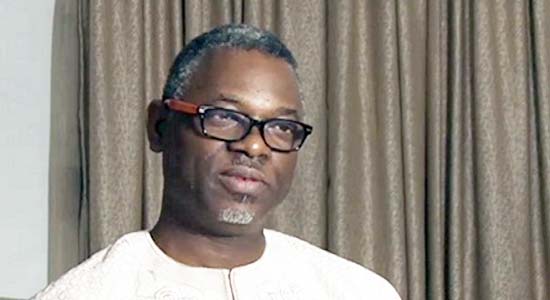
•Explains how some LP leaders frustrated him as Campaign DG
By Dapo Akinrefon
Chief Akin Osuntokun was the Director-General of the Obi-Datti Presidential Campaign Council ahead of the 2023 polls. In this interview, Osuntokun, a former Political Adviser to ex-President Olusegun Obasanjo, gives reasons the opposition may find it difficult in rallying behind a candidate to contest the 2027 presidential election. He also discloses how some Labour Party leaders frustrated him and others who were brought him to help the 2023 presidential candidate, Mr Peter Obi. Excerpts:
You previously stated that the Labour Party was heading towards extinction due to internal saboteurs. Given that you defected to the ADC and Peter Obi just moved to the Nigeria Democratic Congress (NDC), is the original third-force experiment officially dead?
Well, I didn’t defect to ADC, so I’m not a member of ADC or any other party. The third force? With your reference to a third force, the presumption is that there are already in existence two parties you deemed of sufficient gravitas. I know of APC but which other party do you have in mind?
Peter Obi moved from the Labour Party to the ADC, and now to the NDC within a short period. As his former campaign manager, do you worry this rapid party-switching erodes his brand as a principled alternative?
No, there are extenuating reasons for his departure from ADC. First is that the party is not prepared to zone the presidential ticket to the South. Given the factors that determine victory in party primaries in Nigeria, the only aspirant with a realistic chance of winning the primaries in the ADC is Vice President Atiku Abubakar. Second is the uncertainty beclouding the future of the party going forward. I’m talking about the legal issues. I hope, for the sake of the stability of the political party system, such issues will be resolved in favour of the ADC. I think he (Obi) has been vindicated by the prompt categorical declaration by the NDC that it has zoned the presidential ticket of the party to the South.
It was reported that Obi and Kwankwaso left the ADC coalition project because Atiku Abubakar claimed the party was “formed in his house”. What really happened behind the scenes during the failed ADC coalition talks?
This is the first time I’m hearing of such claim by Abubakar. In any case, the fact that the party was formed in his house cannot mean that he holds proprietary rights over how the party conducts its affairs. As I said earlier, I’m not a member of the party so I wouldn’t know anything about what happens behind the scenes. I can only assume that the reason for the departure of Obi from the party has to do with its disposition towards the adoption of the principle that the presidential ticket presently is exclusive to Southern Nigeria.
Some political analysts warn that Obi, Kwankwaso, and Atiku running on separate platforms will hand an easy victory to the APC. Why can the opposition leaders not unite behind a single candidate?
That is the conventional wisdom and a correct reading of the potential of the APC to win the presidential election. It is a boon to the chances of a party that already wields substantial advantage in the realm of power politics. For whatever it is worth, getting the nod from 31 state governors cannot be dismissed as irrelevant. The opposition cannot unite behind a single candidate because they have conflicting visions of where Nigeria is headed. Remember that the fundamental reason behind the decision of Obi to leave the ADC coalition is the issue of power rotation. If he had stayed back, he would have to content himself with the role of running mate to Abubakar. Now, people can take positions regardless of whether it serves the cause of making their ambition realistic or not, that they would not subordinate their principles to personal ambition
What was the single biggest structural obstacle you faced when managing the Obi-Datti presidential campaign council?
Well, there was the problem of working with the extant structures of the Labour Party from the national executive to the state party structures. In their understanding, the utility of the party offices was the mercenary use of the structure to generate money for personal embezzlement particularly from political office aspirants. Obi was a different kind of politician from those they were accustomed to who deal with them in the language of naira. So, they were frustrated with him right from the word go. The frustration was extended to those of us who came to work with Obi. They extorted us of the little money available. You can extrapolate this mentality from the behaviour of the former party chairman, Julius Abure and fellow travellers who lent themselves to the cause of internal subversion of Obi. You also remember the spectacle of the Arabambis and the Apampas. When Obi’s associates conducted due diligence on the list of polling agents (for payment of allowances) submitted by Abure. It was discovered that over 80 percent of them were ghosts
The Labour Party spokesperson recently admitted your departure left a massive void. Now that the core team has scattered across different parties, who truly owns the Obidient movement today?
The Obidients movement was not synonymous with the Labour Party. It was and it is exclusive to Obi. So to the best of my knowledge, the Obidients have not scattered across different parties.
Does the ADC possess the structures to challenge the ruling party without Obi?
As I said earlier, I’m not a member of any party, so I don’t know the extent to which I can be identified as an opposition leader. This does not stop me from criticising the conduct of any public institution. Remember, I’m first and foremost a newspaper columnist.
My understanding of the Nigerian problem is that it is systemic so I doubt if any part of the dysfunctional structure can be successfully isolated for durable redress. INEC, like any other dysfunctional manifestation is a symptom of this underlying disease. The electoral body is this consequential because it is the agency through which the big elephant of the Nigerian constitution namely the presidency is procured. Until that presidency is constitutionally trimmed to align with decentralisation and becomes federalism compliant, INEC will always come under unbearable pressure that it is unable to withstand. You can say that of any Nigerian public institution including the judiciary
You previously protested against INEC alongside other opposition leaders. With the upcoming election cycles approaching, has Nigeria’s electoral infrastructure seen any genuine reform since 2023?
This was the point I was making and you have struck the kernel on the head. The courts have become an accessory to the destabilisation of the political system. We are witness to how a court will deliver a judgement today and violate the same judgement tomorrow. It has become as ridiculous as that. This is also a symptom of the power politics unleashed by the present hyper-centralisation of power at the centre.
The post Atiku, Obi parting of ways: Why it’s difficult for opposition to unite behind a single candidate– Osuntokun appeared first on Vanguard News.