Tanko Al-Makura: 73 years of service, leadership, legacy
 SKAiF NewsNG SNN
By Adedayo Adejobi
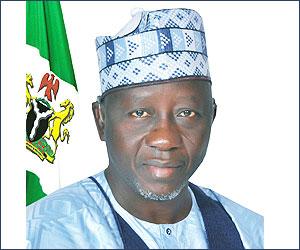
At seventy-three, Senator Tanko Al-Makura stands as a testament to the power of vision, discipline, and enduring service. His journey through life and leadership tells a story that mirrors the Nigerian spirit itself: resilient, pragmatic, and ever hopeful.
In celebrating his 73rd birthday, we celebrate not just a man, but an idea—an idea that leadership, when rooted in principle and guided by compassion, can outlive political seasons and shape generations.
Born in the ancient city of Lafia, Al-Makura’s early years were marked by modest beginnings that became the foundation of his self-discipline and empathy. From his earliest days, he understood that leadership is not about titles or privileges but about purpose. It is this sense of purpose that has defined his trajectory, from educator and businessman to governor, senator, and now elder statesman.
His story cannot be told without acknowledging the profound imprint he left on Nasarawa State.
When he assumed the governorship in 2011, Nasarawa stood at the crossroads of expectation and neglect. The young state yearned for direction, and Al-Makura provided it. With characteristic focus, he set out to build institutions where none had stood, to expand access to education, to reform governance, and to lay physical and moral foundations for development. His administration’s commitment to inclusivity brought into government those who had long been excluded, and his insistence on transparency established a new culture of accountability.
Beyond the physical infrastructure that still defines the Nasarawa skyline, Al-Makura’s true legacy lies in the institutional structures he built—structures that have endured changes in leadership. He understood that a governor’s greatest achievement is not the number of roads built or schools opened, but the systems that continue to serve people long after he has left office. That understanding remains the quiet cornerstone of his political philosophy.
In the Senate, he brought that same discipline and thoughtfulness to national discourse. As a legislator, Al-Makura earned respect not by volume, but by the weight of his ideas. He approached debate with the humility of a teacher and the clarity of a technocrat, often framing issues in ways that transcended partisanship. For him, the Senate was not a theatre of power but a workshop of policy, a place where the dignity of governance should be matched by the seriousness of intellect.
Those who have worked closely with him often describe his leadership style as steady and contemplative. He does not rush to speak, nor does he seek applause. Yet, when he does speak, his words tend to linger. They reveal a mind that has seen the highs and lows of public life and a heart that still believes in the transformative potential of service.
Over the decades, Al-Makura has also shown an uncommon ability to evolve with the times. From his entrepreneurial ventures in education to his early advocacy for inclusive governance, he has been ahead of his time. His decision to invest in education long before it became a national talking point reflected his belief that the future of Nigeria lies in minds, not minerals. His early embrace of technology and youth engagement anticipated a generational shift that now defines modern governance.
As Nigeria continues to wrestle with questions of leadership and renewal, Al-Makura’s life offers a quiet lesson in balance. He represents a generation of leaders who have lived through the turbulence of Nigeria’s formative decades and have emerged not bitter, but wiser. His politics has never been driven by theatrics but by thought; never by populism, but by purpose.
What sets him apart today is not only what he has done, but what he has refused to become. In an era where politics often rewards noise over nuance, he has remained a study in restraint. His maturity, both in temperament and vision, has made him a bridge between generations—a man young enough in spirit to mentor, and old enough in wisdom to guide.
As Chairman of the 2025 FCT Press Week, his reflections on journalism, democracy, and national development have been both timely and profound. He has consistently argued that the media and political leadership must see themselves as partners in nation-building, not adversaries. His advocacy for press freedom, responsibility, and civic dialogue reflects his lifelong belief in the power of communication to sustain democracy.
Turning seventy-three Al-Makura stands not at the end of a journey, but at a meaningful threshold. He embodies the continuity of experience that Nigeria needs at this moment of national introspection. His generation bears the weight of history, but his outlook remains resolutely forward-looking. He speaks often of legacy, not as nostalgia, but as an obligation to the future—to mentor, to guide, and to leave the public space better than he met it.
The true measure of leadership lies in what remains after titles fade. In this regard, Senator Al-Makura’s record stands firm. His integrity has weathered time and transition. His name continues to command respect across political divides. His home remains open to old allies and new thinkers alike, a reflection of his inclusive spirit. In every phase of his public life, he has reminded Nigerians that politics can still be noble when practiced with honesty and heart.
In recent years, as he increasingly assumes the posture of a statesman, Al-Makura has devoted more energy to mentorship and advocacy. His engagement with younger leaders and emerging entrepreneurs reflects his belief that wisdom must be shared, not hoarded.
He is often heard saying that every generation must build its own staircase, but it is the duty of elders to light the way.
At seventy-three, therefore, his story is not merely one of survival, but of substance. It is the story of a man who has navigated the corridors of power without losing sight of the corridors of humanity. It is the story of a teacher who became a governor, a governor who became a senator, and a senator who now stands as a symbol of continuity and hope.
At seventy-three, Senator Tanko Al-Makura stands as one of Nigeria’s most enduring symbols of integrity, foresight, and public service. His life story, from humble beginnings in Lafia to the pinnacles of governance and national leadership, embodies the values of discipline, inclusion, and vision. In an era often defined by fleeting ambition, Al-Makura’s journey offers a rare continuity of purpose, a reminder that true leadership is measured not by titles, but by the lives transformed. His seventy-three years mark not just the passage of time, but the steady unfolding of a legacy that continues to inspire faith in Nigeria’s promise.
In celebrating Senator Tanko Al-Makura at seventy-three, Nigeria is reminded that true leadership is not defined by years in office, but by the impact that endures. His is a life that continues to inspire reflection, a journey that reinforces faith in the idea that one person, guided by conviction and humility, can make a difference.
As the candles are lit and tributes flow, the essence of this moment lies not in ceremony but in meaning. It is a reminder that legacy is not built overnight, nor written in marble, but etched in the quiet accumulation of service. And in that regard, Senator Umaru Tanko Al-Makura’s seventy-three years shine as a masterclass in leadership that listens, serves, and endures.
Adedayo Adejobi writes from Abuja
The post Tanko Al-Makura: 73 years of service, leadership, legacy appeared first on Vanguard News.