Pink Kekes, Real Freedom: Kano’s women-only tricycles open city to female riders
 SKAiF NewsNG SNN
By Nkiruka Nnorom
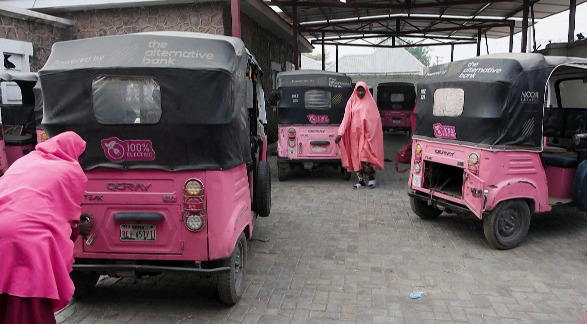
In Kano, women say a hot-pink tricycle driven by another woman removes a daily risk: no cramped contact with a male rider, no dignity trade-off, just a safe hop to the market or clinic.
Sarah Abner, a passenger, told Vanguard that she picks the women-only keke because it respects her comfort and privacy – a small permission that determines whether she rides at all.
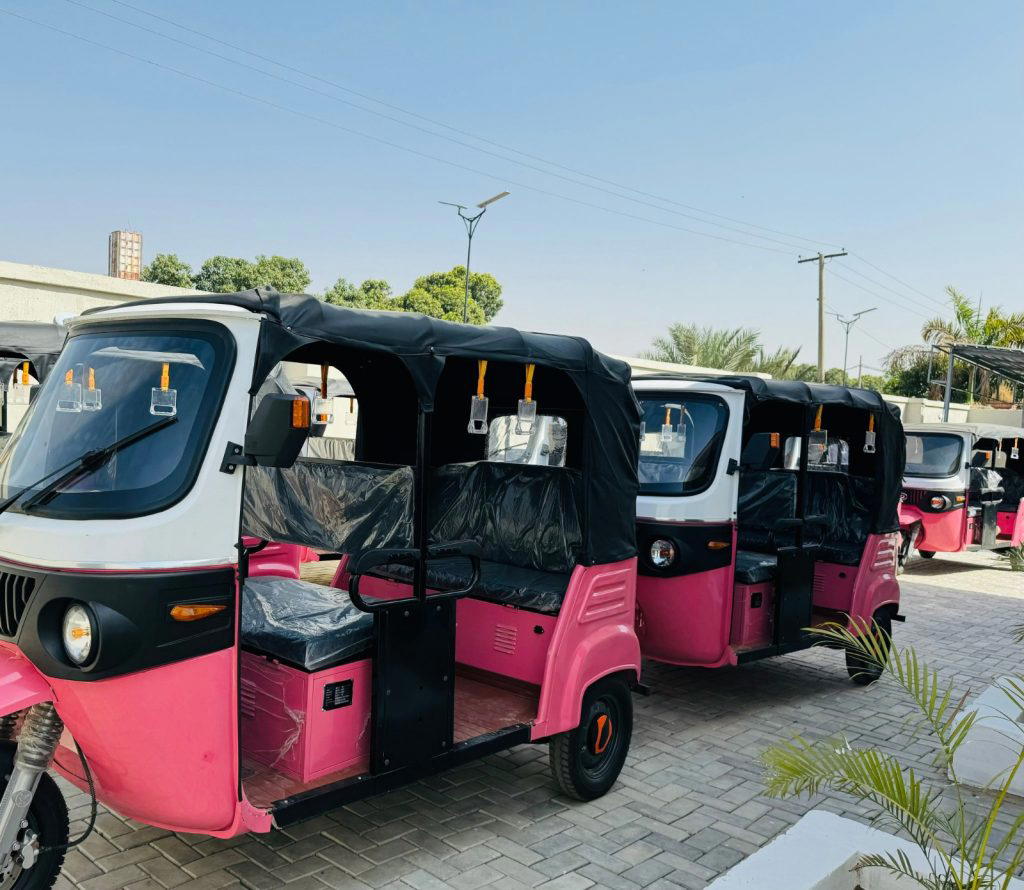
That permission rests on a model built for Kano’s mornings, when the call to prayer fades and the city erupts into activities – horns and gates banging open and hawkers taking to their daily routine.
For the riders, women who months ago may not have imagined venturing into a men-only space, the initiative is a dream come true.
The initiative
Since March, 120 electric tricycles — all hot pink for fifty-metre visibility — have gone to riders from the Mata Zalla and Yar Baiwa cooperatives. Each woman received weeks of instruction in driving, servicing and maintenance, so a puncture doesn’t become financial ruin.
A battery-swapping terminal inside the metropolis means a drained pack is exchanged in minutes, not hours. In a city where time is cash, that detail keeps daily income intact. With fuel subsidies gone, EVs fix running costs, turning volatile petrol spending into predictable earnings.
Where Mata Zalla story really started
This reality is being driven by the Mata Zalla initiative, powered by a partnership between The Alternative Bank, the UK government’s Foreign, Commonwealth & Development Office, FCDO, and electric mobility company – Qoray.
What they have built together in Kano is a bet on women, placed in one of Nigeria’s most tradition-bound cities, and it is paying off.
Before the bank got involved to scale the ambitions of these women, there was already a cooperative. The Mata Zalla Cooperative Society with more than 2,500 members has been operating in Kano for years. Membership cut across all 44 of the state’s local government areas and included teachers, traders, farmers, women with formal education and women without it. What they share is the cooperative’s founding premise: that women’s empowerment is not a single intervention but a way of life.
Hauwa Ahmad Tarauni, who co-founded Mata Zalla, speaking to Vanguard, described the women at the heart of it: “Most of the women we deal with are divorced or widowed, with children to care for. They face many difficulties because they have no trade or steady means to support themselves. We realised that this was a profitable business that women were not benefitting from, as it had been left almost entirely to men. But I know that in Kano, we have strong women who are capable of doing this work,” she said.
The cooperative had the community and the trust. What it needed was a partner willing to back that community with something tangible, something that could not be undone when the press releases dried up and the cameras went home. The Alternative Bank stepped into that role.
What Pink actually means
Ask anyone why the tricycles are pink and you’ll get a practical answer – safety. Female commuters in Kano have long had to navigate public transport that is, at best, indifferent to their comfort. A women-only service, identifiable from fifty metres away, changes that calculus entirely.
Sarah Abner, a passenger, put it plainly when speaking to the media: “I ride with her because she is a woman, like me. It is not considered appropriate for a woman to take a tricycle alone with a man, as it can compromise her dignity if their bodies come into contact. That’s why I prefer to ride with a female driver.”
Sarah’s words illuminate something that a programme document cannot easily capture: the social permission this initiative creates. Women who might otherwise arrange for a family member to accompany them, or simply not travel at all, can now hail a ride with a reasonable expectation of arriving safely and with their dignity intact. That is not a small thing. For many women, it is the precondition for everything else including going to the market, getting to the clinic, showing up to work.
Regional Coordinator of Kaduna and Kano State for the UK’s FCDO, Adamu Maikano, echoed Sarah’s sentiment, saying: “The project addresses challenges women face with traditional tricycles, including instances of violence. Having female owners and operators of the e-tricycles offers added comfort and security to women passengers who have no choice but to use tricycles for transportation, and equally offers the potential to lower greenhouse gas emissions significantly.”
For the drivers, pink means something different. In a city where women in the transport sector have historically been invisible, these riders cannot be missed. They are out there, every day, doing a job that was not supposed to be theirs. And doing it well.
The bank behind the bet
It would be easy to frame The Alternative Bank’s involvement here as corporate social responsibility, a worthy side project, separate from the main business of banking. That framing would miss the point.
AltBank’s role in the Mata Zalla initiative is consistent with a broader institutional posture. This is a bank that has shown an appetite for precisely this kind of structural, multi-stakeholder deal, one that creates genuine economic infrastructure rather than one-off handouts. It brokered the relationship between a bilateral development donor, a private-sector mobility company, and a grassroots women’s cooperative. That is not charity. That is architecture, showing the blueprint of what could be when multi-sectorial stakeholders work together to build.
The question any serious financial institution has to answer when it enters this territory is: what happens when we leave? The Mata Zalla model is built to outlast the partnership that created it. The women own their routes. The cooperative provides a support structure. The battery-swapping terminal is a permanent piece of city infrastructure. The training is in their hands, not in a manual that gathers dust. According to Garba Mohammed, Executive Director at The Alternative Bank, “That durability is the real metric. Not how many tricycles were handed over on launch day, but how many are still running a year from now. It was important that through this project, we provided these remarkably strong women with the infrastructure to match their drive.”
Model worth replicating
The Mata Zalla Cooperative Society is already expanding. What began in Kano is now stretching towards other states, carrying with it a template that other state parastatals can learn from.
The template is not complicated. Start with a community that already exists. Find a financial partner willing to build infrastructure rather than just handing over assets. Bring in technical expertise. Train people properly. Then get out of the way.
Nigeria’s development challenge has never really been a shortage of good ideas. It has been a shortage of execution, really, the dearth of a connective tissue between vision and reality. What AltBank has done in Kano, through the Mata Zalla initiative, is provide exactly that connective tissue.
The bank has embodied this year’s International Women’s Day Theme, #GiveToGain, and in doing so, the bank has created something rare, a programme that works, with women who are not waiting to be told what to do next. They are simply working, building something that belongs to them and those who they care for.
The post Pink Kekes, Real Freedom: Kano’s women-only tricycles open city to female riders appeared first on Vanguard News.