Nigeria v Algeria: History vs form – Can Nigeria rewrite AFCON script in Marrakech?
 SKAiF NewsNG SNN
By Douglas Baye-Osagie
As the Super Eagles step under the Marrakech lights, they face one of their fiercest rivals in African football. History has often pitted both sides on the path to Nations Cup triumph. Every time they have cancelled each other out, one has gone on to emerge as champions.
Nigeria’s first Nations Cup triumph came in 1980 as hosts, with a comprehensive 3–0 victory over Algeria in Lagos. Algeria won their first title in 1990, opening with a 5–1 win and then beating Clemens Westerhof’s Nigeria 1–0 in the final in Algiers. More recently, in the 2019 edition, Algeria defeated Nigeria in the semi-finals with a late Mahrez free kick before beating Senegal in the final to lift the trophy for a second time.
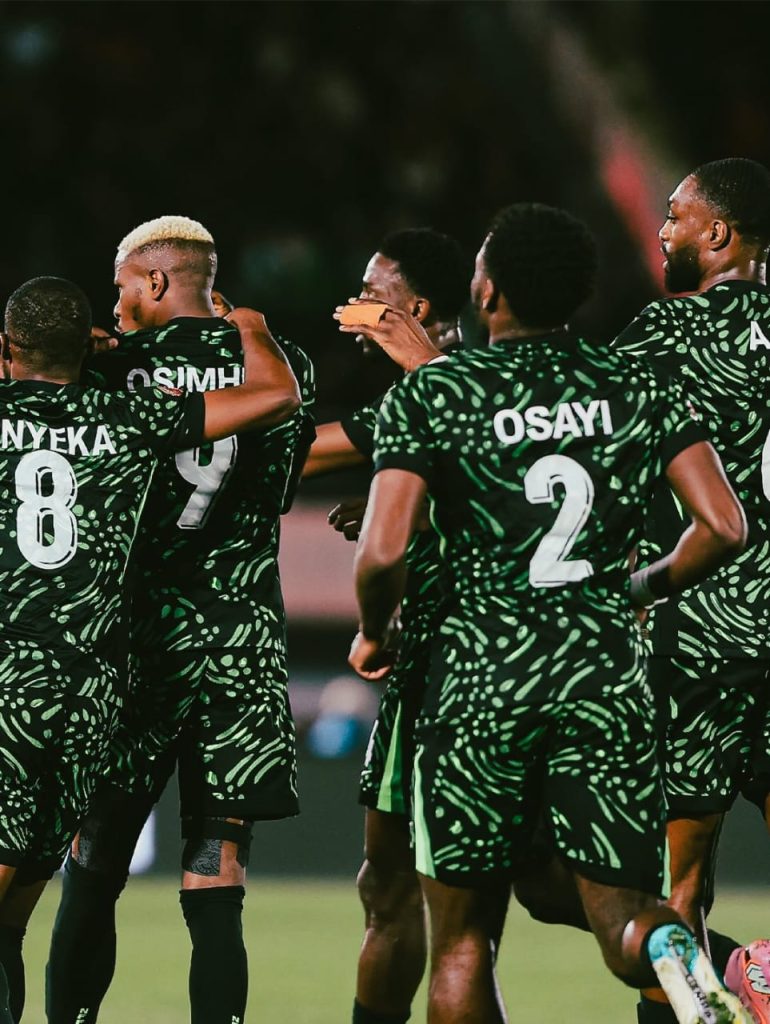
Nigeria have been among the most potent teams at this AFCON, while Algeria have conceded the fewest goals among the quarter-finalists. This will be one of the biggest examinations of Coach Eric Chelle’s career. The Eagles have been in blazing form, with an attacking threat led by the all-action striker Victor Osimhen and an in form Ademola Lookman. Against an ageing Algerian defence, you would expect goals.
Both Osimhen and Lookman are chasing goal-scoring marks that, even if they are not fully conscious of their significance, fuel their desire to keep scoring and drive the team forward. While Osimhen continues to close in on national records, only two Nigerian players have more AFCON goals than Ademola Lookman. The Atalanta forward joins Segun Odegbami and Julius Aghahowa on six goals in the competition, behind Rashidi Yekini (13) and Jay Jay Okocha (7). Lookman also follows Yekini (5) with four goals in AFCON knockout stages.
The experienced, in-form defensive duo of Aïssa Mandi and Ramy Bensebaini will give Lookman and Osimhen a fight to the finish. Nigeria will need the trickery and mazy runs of Akor Adams to open up an Algerian defence that has conceded just one goal in this tournament.
The head coach has tweaked the set-up to a more compact midfield rather than relying primarily on wing play. It has helped the team defensively and made it difficult for opponents to pin down any one player in attack. The defensive midfield pair of Frank Onyeka and Wilfred Ndidi have allowed Alex Iwobi to play with the freedom of a traffic warden, dictating the flow of movement. This has brought out the best in the attackers.
Previously, the formation depended heavily on the effectiveness of the wingers; a bad day for Moses Simon or Samuel Chukwueze meant struggling to score. Now, in a 4-2-2-2 in which Iwobi and Lookman play behind Akor and Osimhen, the team resembles Brazil’s 1994/1998 shape. With Romário and Bebeto you had two strikers inviting attacking midfielders like Zinho, Mazinho or Rai to join, while Dunga and Mauro Silva shielded the midfield, allowing full-backs Branco and Jorginho to raid the flanks. In this team, Bright Osayi-Samuel and Bruno Onyemaechi are similarly well placed to contribute in the final third.
There is now a sense of calm, cleaner passing and improved ball retention in the middle compared with when the midfield felt near empty. With that foundation, Alex Iwobi can be unleashed against any team in this tournament. With 94 caps under his belt, he needs a trophy of any sort before reaching a century; this is the tournament in which he can assert himself as a Nigerian great.
This is a game in which the defence must be alert for 90 minutes. Algeria have a group of tricky attackers, with 20-year-old Maza leading the line, and talents like Bennacer and Mahrez bringing experience against top defenders. Thankfully, Calvin Bassey has been playing his best football in this tournament. He will need Bruno Onyemaechi well positioned to deal with Mahrez cutting in from the right—a threat we can’t get out of our heads after that free kick in the last encounter that knocked Nigeria out of AFCON in 2019
Managing substitutions has been another headache for the coaching staff, given the avalanche of quality on the bench. The dilemma often comes in the final quarter when protecting a lead: go like-for-like, or tweak the shape if a goal is needed? Keeping possession with a lead is better than changing formation when you’re in front. Conceding first might bring out another version of this team and test the staff’s credentials. It should be some game—but with the same mentality and focus, the Super Eagles can beat Algeria.
Time to Call Victor Osimhen to Order
The incident on the pitch between Victor Osimhen and his teammates against Mozambique in the round of sixteen clash was a sorry sight. Never in the history of the national team has a player shown that level of disdain toward his teammates and the fans, in full public view. We understood the situation and the team’s wastefulness when they had opportunities to outscore Mozambique, but any frustration should have been kept for the dressing room. Having played as a professional in Europe for a decade, he is expected to keep his head. This attitude created friction in the team and cost us vital points in the World Cup qualifiers, with Coach Finidi George cast as the villain.
We all admire Victor Osimhen for his love, commitment, and burning passion to play, score, and make Nigeria proud in the green and white of the Super Eagles. His dedication is unquestionable. He is one of the finest strikers Nigeria has produced in recent times, and his hunger for goals and victory is evident in every match he plays. However, professionalism demands more than goals. It also demands character, emotional control, and respect for teammates.
As a professional footballer, Osimhen must learn to manage his temperament and attitude on the pitch. Football is a team sport. No player, no matter how talented, is bigger than the team. Team spirit is not a slogan; it is a discipline. Your teammates are not your pupils or children to be publicly scolded, bullied, or humiliated. In terms of status and achievement, many of them are “big boys” in their own right, excelling at top clubs across Europe. Respect is mutual, not enforced through anger.
Ademola Lookman has won the U-20 World Cup, while Victor Osimhen has also won the U-17 World Cup. Both players have African Footballer of the Year awards as well. So let the respect, both behind the scenes and in front of the cameras, be mutual. If a player is offended, frustrated, or dissatisfied, there are mature ways to express it through communication within the boundaries of decorum and professionalism.
Unfortunately, Osimhen has made public outbursts a recurring issue, both at club level and with the Super Eagles, even in matches his teams are winning. The recent incident was particularly needless. Nigeria was already winning and the match was almost over. What, then, was the essence of the outburst against his teammates? It achieved nothing positive. It did not improve the performance, change the result, or uplift the team. It only drew unnecessary attention and embarrassment.
No part can function without the whole. Football history is full of talented players whose careers were limited not by lack of ability, but by lack of emotional discipline. Osimhen must understand that beyond goals, trophies, and victories, image matters. Big clubs not only buy strikers; they invest in ambassadors, dressing-room influences, and global brands. A player who cannot control his anger becomes a risk, no matter how lethal he is in front of goal.
For his own good and for the future of his career, Victor Osimhen must grow emotionally, manage his anger, and embrace leadership through maturity, not through outbursts. Passion builds great players, but only discipline sustains them.
The post Nigeria v Algeria: History vs form – Can Nigeria rewrite AFCON script in Marrakech? appeared first on Vanguard News.