My reforms rescued organised labour from foreign influence, funding – Obasanjo
 SKAiF NewsNG SNN
—Says he told labour veteran Sunmonu to criticize him publicly after meeting secretly
—I’ll be with labour till I die– Oshiomhole
—Tax laws impose heavier burdens on workers, worsen excruciating poverty –Ajaero
—As Falana urges current labour leaders to emulate Sunmonu’s leadership style
By Johnbosco Agbakwuru
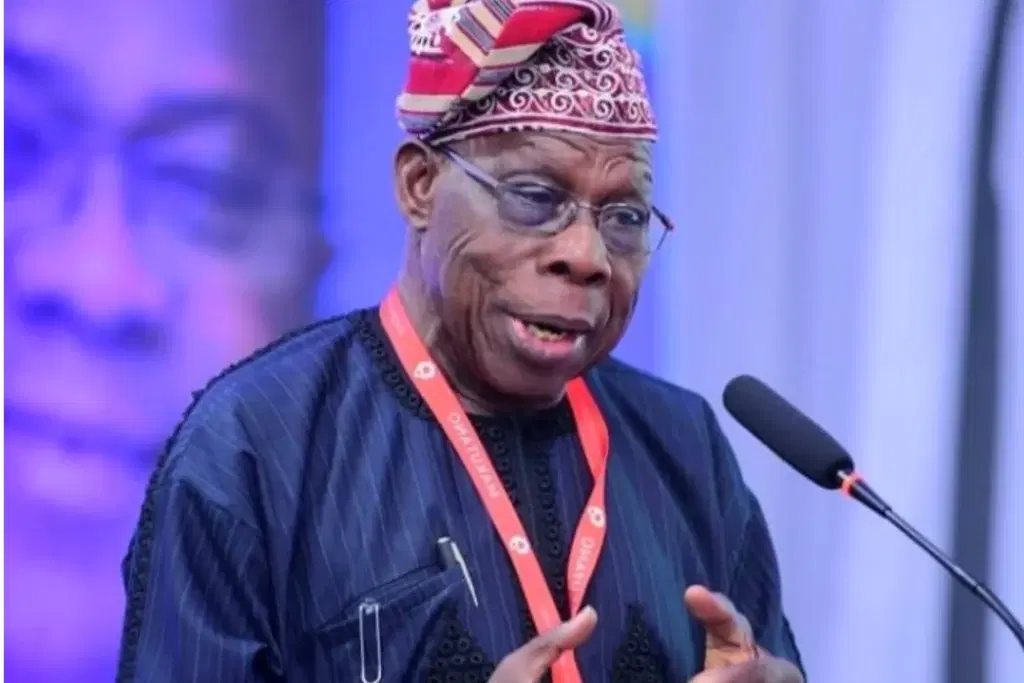
ABUJA — Former President Olusegun Obasanjo said on Wednesday that the reforms he introduced as military head of state rescued the labour movement from foreign funding during the height of the Cold War—a situation he said posed serious implications for the country’s sovereignty and independence.
Chief Obasanjo also revealed how he told the erstwhile labour veteran and one-time President of the Nigeria Labour Congress, NLC, Hassan Sunmonu, to abuse him publicly after they met secretly, so that he would retain the confidence of labour members.
This is as the former governor of Edo State and former NLC President, Senator Adams Oshiomhole, vowed to be with labour till he dies.
Meanwhile, the NLC President, Comrade Joe Ajaero, has for the umpteenth time taken a swipe at the new tax laws, saying they tax the national minimum wage, impose heavier burdens on workers and the poor, and worsen excruciating poverty in the country.
Ajaero said labour was deliberately excluded from the Presidential Committee on Tax because workers were “meant to be on the menu.”
Former President Obasanjo, Senator Oshiomhole, Comrade Joe Ajaero and others spoke at the 85th birthday celebration and public presentation of the memoir of former NLC President Hassan Sunmonu, titled Memoirs of an African Trade Union Icon: Organise, Don’t Agonise.
Chief Obasanjo recalled that two dominant labour organisations existed at the time, operating outside Nigerian control and allegedly financed by rival foreign intelligence blocs.
The former president stated that one labour group was linked to funding from the Soviet Union’s KGB, while the other received support from the United States’ Central Intelligence Agency, CIA.
Obasanjo said this reality prompted him, during his tenure as military head of state, to push for comprehensive reforms aimed at establishing a labour movement that would be wholly Nigerian in structure, leadership and funding.
He said: “As far as you remember, when Goodluck was leading one of the two major labour groups then, Adebola—these two labour organisations were Nigerian labour organisations, but they were not organised or funded by Nigeria.
“I don’t know if you know that, but that was the reality. One was being financed by the KGB—that is the truth—and the other one was being financed by the CIA—that was the truth—and then I came on the scene.
“I needed a Nigerian labour union organised by Nigeria, controlled by Nigeria, financed by Nigeria. So I decided there was going to be a labour union reform, and I think the man I put in charge was Justice Adebiyi. Hassan was one of those at the forefront asking, ‘What do I know about labour that I’m asking for reform? What is my business?'”
Obasanjo explained that the labour reform process, led by Justice Adebiyi, culminated in the restructuring of trade unions and the enactment of laws that gave birth to the NLC.
He stressed that the NLC leadership emerged through elections conducted without direct government interference, resulting in Sunmonu’s emergence as the first elected president of the congress.
According to him, the outcome restored credibility to organised labour and fostered relative industrial peace at the time.
“Of course, I don’t know anything about labour, but I know that I wanted a Nigerian labour organisation organised by Nigeria, headed by Nigeria, and funded by Nigeria.
“When Justice Adebiyi finished his job and we reformed the labour and trade union laws establishing the NLC, what happened? Without the government’s hand, they elected their leader, and Hassan became the first leader they elected. I don’t know how I felt at that time, but I felt comfortable.”
Reflecting on his relationship with Sunmonu, Obasanjo said both government and labour needed each other to succeed but had to maintain clear boundaries.
He recalled advising Sunmonu to openly criticise government policies after their private engagements to preserve his independence and sustain the confidence of workers.
He added that the introduction of a compulsory check-off system ensured stable union funding and permanently eliminated foreign financial influence from Nigeria’s labour movement.
Obasanjo further praised Sunmonu for extending the influence of Nigerian labour beyond the country’s borders, noting that his leadership helped position organised labour in Africa and globally.
He described Sunmonu as the most influential figure in Nigerian labour after the late Pa Michael Imoudu, crediting him with laying enduring foundations for trade unionism.
Also speaking, NLC President Comrade Joe Ajaero faulted the new tax laws, rising public debt and what he described as the systematic exclusion of labour from critical policy processes.
Ajaero, who critiqued the Federal Government’s economic and governance approach, warned that policies crafted without workers’ input were deepening poverty and undermining democracy.
According to him, the philosophy captured in Sunmonu’s memoir, Organise, Don’t Agonise, stood in direct contrast to what Nigerians were experiencing under current policies.
He accused the government of preferring “enrage over engage,” arguing that decisions on fuel pricing, taxation, wages and social services had been taken without structured consultation with organised labour.
“Tax laws that tax the national minimum wage, impose heavier burdens on workers and the poor, and worsen excruciating poverty are not progressive but regressive,” he said, insisting that labour was deliberately excluded from the Presidential Committee on Tax because workers were “meant to be on the menu.”
Raising broader concerns about governance, Ajaero echoed Sunmonu’s recent public query on Nigeria’s growing debt profile, asking:
“Where are all the monies being borrowed by the federal government? It is from this standpoint that we must speak directly to the Nigerian Government.”
He warned that bypassing key stakeholders, distorting acts of parliament and ruling “by strong arm” eroded public trust and threatened national stability.
“The philosophy of ‘Organise, Don’t Agonise’ also implies that the state has a duty to engage, not enrage. There is an urgent need for deeper, more sincere and structured engagement with the trade union movement at all levels. Policies—from fuel pricing to taxation, from wages to social services—must be crafted with the active, respected input of those who represent the workers and the broader masses.
“To sideline the organised voice of labour is to design policies on shaky, exclusionary foundations, destined to generate crisis and agony as is being witnessed currently.”
The NLC President also demanded the immediate constitution of the PENCOM board and a halt to what he called confusion surrounding the implementation of the tax laws, cautioning that insisting on the current path was dangerous for tax administration and democracy.
While honouring Sunmonu as a symbol of courage, integrity and principled engagement, Ajaero said the celebration transcended personal accolades and had become a moment of national reckoning on the condition of Nigerian workers.
He called on the Federal Government to urgently address workers’ wages ahead of the next statutory minimum wage negotiation and urged a shift toward inclusive governance.
“Comrade Sunmonu, as we launch your book today, we pledge to keep its central message alive. We will continue to organise. We will continue to challenge power. We will continue to fight for a Nigeria where no worker has to agonise over poverty, insecurity, heavy taxation or a stolen future riddled with national debt.”
Senator Oshiomhole, who stood in for President Obasanjo before he arrived at the book launch, advised the labour movement not to agonise but to organise, adding that what they needed was not their tears but their fight.
He said if labour does not get its facts right, it would play into the hands of those who do not know their challenges, just as he concluded: “I will be with labour till the end of my life.”
The human rights activist, Chief Femi Falana, SAN, advised the leadership of the NLC to emulate Comrade Hassan Sunmonu’s leadership style.
He noted that 62 percent of Nigerians have been classified as multidimensionally poor.
The post My reforms rescued organised labour from foreign influence, funding – Obasanjo appeared first on Vanguard News.