Lagos 2027: Tinubu’s close ally, Olusi reveals possible successor to Sanwo-Olu
 SKAiF NewsNG SNN
.As Sanwo-Olu, Hamzat, Fashola, Shashore, others meet at summit
By Olasunkanmi Akoni
Ahead of the 2027 Lagos governorship race, the Chairman of the Lagos Governance Advisory Council, GAC, Pa Tajudeen Olusi, and an ardent loyalist of President Bola Tinubu, on Wednesday, revealed possible successor to incumbent Governor Babajide Sanwo-Olu.
This comes amid wild speculations over the current Deputy Governor of the State, Dr. Obafemi Hamzat as the All Progressives Congress, APC, consensus candidate for the forthcoming gubernatorial primary next month.
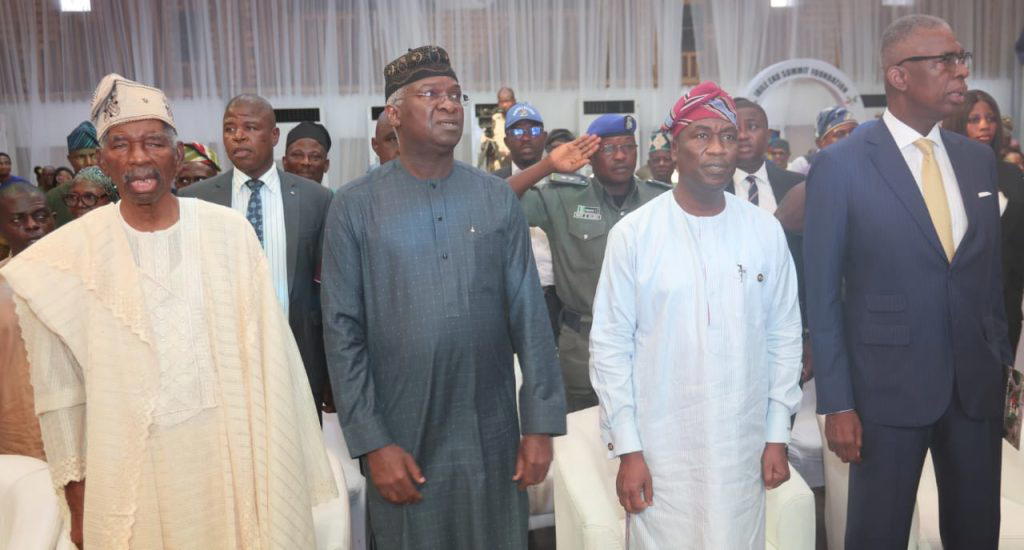
Olusi gave a strong hint on the possible consensus candidate when he repeatedly referred to Hamzat, as the “incoming Governor of Lagos,” at the General Assembly of Indigenous Associations in Lagos State, hosted by the IBILE Eko Summit Foundation, themed: “Addressing Urbanization and Urban Challenges of Lagos State,” held at MUSON Centre, Onikan, Lagos.
The remarks by the highly revered Tinubu’s ally made in the presence of political watchers and stakeholders drew immediate curiosity which was considered as significant in shaping elite consensus within Lagos State politics.
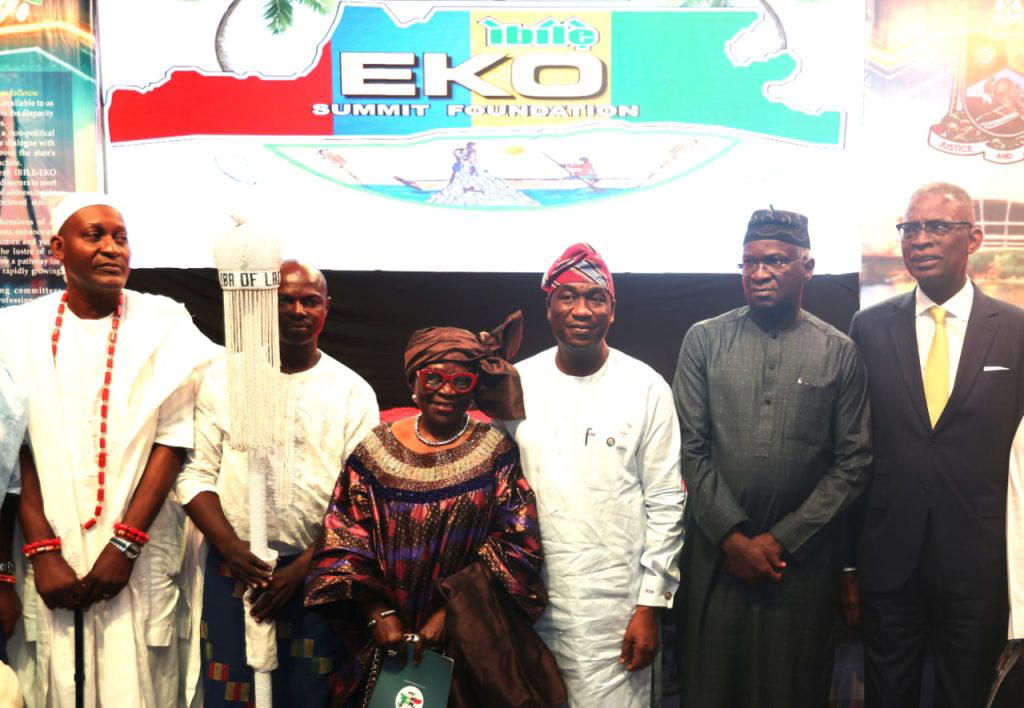
The event also featured former Lagos State Governor, Babatunde Fashola, who was seated directly beside Hamzat during the proceedings, a detail that further heightened interest in the political undertone of the gathering with President, IBILE Eko Summit Foundation, Olasupo Shasore, SAN, a former Attorney-General and Commissioner for Justice.
Observers at the summit noted that Olusi made repeated references to Hamzat in terms that strongly suggested political continuity at the top of the Lagos State hierarchy, at one point describing him explicitly as “our incoming Governor of Lagos.”
The comment, delivered more than once during his address, reportedly drew visible reactions from delegates, given its implications for succession politics in the state ahead of the 2027 general elections.
Olusi also used the platform to reinforce Hamzat’s roots within Lagos as “son of the soil” slogan, describing him as a “cousin from Egbe,” a remark he said many people were previously unaware of, and one that he presented as further validation of Hamzat’s indigenous standing within the state’s traditional and political structures.
The Ibile Eko Summit, which brings together political leaders, traditional rulers, and influential stakeholders of Lagos origin, is widely regarded as a strategic forum within Lagos political architecture, often used to project elite consensus on governance direction and political continuity.
Although neither Hamzat nor former Governor Babatunde Fashola publicly commented on Prince Olusi’s remarks at the summit, the optics of the gathering, especially Fashola’s proximity to Hamzat during the event, have further fuelled interpretation of subtle succession signalling within elite political circles.
With formal political processes for the 2027 governorship race yet to commence, the comments by the GAC Chairman are therefore expected to intensify conversations around succession dynamics in Lagos State, as political alignments gradually take shape ahead of the next election cycle.
Hamzat had earlier on Tuesday, led credence to the widely reported endorsement by President Tinubu to succeed Sanwo-Olu.
Hamzat and his supporters, particularly a member of the House of Representatives, James Faleke, representing Ikeja Constituency, are already embarking on mobilization for support ahead of next month’s primaries of the party to elect flagbearers for the 2027 general elections.
Although, Hamzat has not officially declared his interest for the guber contest, his support team have been going round for necessary back up. It was also gathered that the incumbent Governor, Sanwo-Olu has thrown his weight behind his deputy, who he described as “the right man for the job.”
The Governor’s Advisory Council, GAC, led by Tajudeen Olusi, including Lagos APC Chairman, Pastor, Cornelius Ojelabi and leading party chieftains have expressed support for Hamzat as consensus candidate.
In a Facebook post, on Tuesday, Hamzat, suggested what could be termed as declaration for the guber bid.
The post reads: “Today, I began consultations with respected members of the Governance Advisory Council, GAC.
“We had honest, thoughtful conversations about the future of Lagos and the kind of leadership it requires.
“I value the experience and guidance shared. This is about listening, learning and working with others to build a stronger Lagos.”
Hamzat has continued to hold strategic meetings with members of the GAC, party leaders, and key stakeholders.
The deputy governor, who has recently maintained a visible presence in high-level stakeholder meetings, is among prominent figures being mentioned in discussions about the state’s future leadership.
However, Hamzat’s push is said to be strongly backed by the old guard within the Justice Forum, the influential political bloc founded by his late father, which has deep representation in the GAC.
About Hamzat
Hamzat, an engineer and long-serving public administrator, has been Deputy Governor of Lagos State since 2019 under Governor Sanwo-Olu.
On loyalty, experience, and preparedness– which really counts, on politics, Hamzat has stood out.
He is not an outsider to governance; he is a product of it. From his days as commissioner under the Tinubu administration, through his strategic proximity to Babatunde Fashola, both in Lagos and at the federal level, to his current role alongside Sanwoolu, his journey reflects over two decades of consistent, high-level public service, more than 21 years in governance.
Sanwo-Olu calls for inclusivity
Meanwhile, Lagos State Governor, Babajide Sanwo-Olu, has reiterated that effective urbanisation in Nigeria, especially in Lagos, is crucial for unlocking economic prosperity, improving connectivity, and fostering the empowerment of indigenous communities.
The Governor made the declaration on Wednesday at the IBILE Eko Summit.
Sanwo-Olu, who was represented by Hamzat, stressed that urbanisation is not the enemy of indigenous identity, but must be guided by a government that sees, hears, and plans with the people.
According to him, indigenous communities must remain central to Lagos’ development agenda, where every planning decision, infrastructure project, and policy must reflect their voices.
Sanwo-Olu alluded that rapid urbanisation has brought opportunities and growth, stressing that this growth has also strained infrastructures in the communities across the state, with the government massively investing in infrastructure and amenities that enhance the well-being and living standard of residents.
Speaking further, the Governor said that his administration in the past seven years has pursued inclusive development across all five IBILE divisions through major investments in infrastructure, transportation, healthcare, housing, and economic development.
He cited the Opebi-Mende Link Bridge and the operational Red Line Rail in Ikeja; the Badagry road network, a Mother and Child Centre and housing schemes; the Imota Rice Mill in Ikorodu, now the largest in Africa; the reconstruction of Massey Children’s Hospital, among others.
Reaffirming Lagos’ position as one of the fastest-growing cities in the world with a population exceeding 20 million, the Governor noted that while the state remains Africa’s most dynamic urban economy, contributing nearly a third of Nigeria’s GDP and attracting global investment, unmanaged growth continues to place pressure on infrastructure and traditional livelihoods.
He warned that without deliberate planning, urbanisation could deepen inequalities, especially in indigenous and waterfront communities that have long existed before the city’s rapid expansion.
In his keynote address themed “Urban Subnational Challenges: Leadership, Policy Reform and Governance,” former Minister of Housing, Fashola, called for urgent reforms in key sectors such as housing and transportation as part of a more structured and inclusive approach to managing the rapid urbanisation of Lagos.
He described Lagos as a historic homestead with a rich cultural identity that has shaped its emergence as a major economic hub, noting that while the state continues to attract opportunities and global attention, its uniqueness must be protected. He urged key ministries, including Transportation, Budget and Planning, Housing, and Environment, to engage more actively with stakeholders by presenting clear plans, challenges, and expectations.
Addressing infrastructure and planning challenges, Fashola underscored the importance of reliable data for effective governance, advocating for expanding initiatives such as the Lagos State Residents Registration Agency (LASRA) to improve identity management and service delivery.
He further called for renewed investment in mass transit systems and the development of housing along emerging rail corridors.
Shasore, in his address, stated that the forum was designed to strengthen unity among indigenous groups and address challenges affecting their identity and development.
He added that the summit aims to promote inclusion by creating a platform where indigenous voices, experiences, and expertise can contribute meaningfully to the development of Lagos State.
Speaking further, the President stressed the importance of unity and cultural identity, describing it as a key strength for driving sustainable development and greater global recognition of Lagos and its people.
He further stressed the need to align development with global standards such as the Sustainable Development Goals, particularly in areas like housing, transportation, environmental sustainability, and waste management.
In his goodwill message, the Oba of Lagos, Oba Rilwan Akinolu, represented by the Bajulaye of Lagos, Prince Ayodele Oyekan, commended the IBILE Eko Summit Foundation for its unwavering commitment to the continuous development of indigenous people in Lagos.
He noted that the Council of Obas in Lagos places high importance on the development of their communities, adding that the Lagos State Government has consistently prioritized the growth and upliftment of all IBILE divisions in the state.
Akinolu added that as traditional rulers in Lagos, they are committed to ensuring that indigenous people have a voice in community development and governance, emphasizing that Lagos remains prepared for urbanisation, youth empowerment, sustainable development, and social inclusion.
The post Lagos 2027: Tinubu’s close ally, Olusi reveals possible successor to Sanwo-Olu appeared first on Vanguard News.