Felabration UK: When Art Birthed in Kalakuta Meets a City Shaped by William Wilberforce
 SKAiF NewsNG SNN
By Prisca Sam-Duru
Hull city in North England came alive on October 18, 2025, with Felabration, as Afrobeat filled the air in Hull, proving that history, when reclaimed, can entertain.
The 2025 Felabration in Hull opened with a new exhibition exploring the influence of Nigerian music legend, activist, and Afrobeat’s inventor, Fela Aníkúlápó Kuti, at the Wilberforce House Museum, Hull.
Founded by Yeni Kuti in Lagos, Felabration is an annual international festival honouring the life and legacy of Fela Aníkúlápó Kuti. Today, Felabration is celebrated in many cities across the globe, continuing Fela’s message of unity, creativity, and resistance through art and music.
Themed “Shakara: Bold Expressions of Afrobeat,” the experience this year has been expanded with exhibitions, thought leadership panels, and live music performances, creating an intersection between art, dialogue, and rhythm.
The festival connects history, rhythm, and community in a celebration of African creativity across the diaspora while exploring the legacy of Afrobeat pioneer Fela Aníkúlápó Kuti.
Opened on October 1 to coincide with Nigeria’s Independence Day, the Underground Spiritual Game exhibition at the Wilberforce House Museum will run until November 2, 2025, exploring Fela Kuti’s global influence through photography, art, and archival materials.
“We are delighted to host this exhibition by Fágbèmí Ọ̀ṣìnúgà at Wilberforce House Museum, introducing the story of a giant in musical culture to a new audience,” said Robin Diaper, Curator at Hull Museums.
The legendary musician and activist who created the Afrobeat movement in the 1960s was known for giving a voice to the voiceless. Through sound, image, and spirit, Fela fashioned Afrobeat, which he employed as a weapon of truth, a call to freedom, and a bridge between Africa and the world. The exhibition offers observers rare insight into the journey of Abami Eda’s life — his struggles, vision, and legacy from 1938–1997.
The Underground Spiritual Game, a visual storytelling exhibition, features works by Nigerian artist Abolore Sobayo, including masks from his acclaimed Echoes collection.
Presented with support from Hull Museums in partnership with the Black Heritage of Hull Collective, led by Stella Munthali, the exhibition builds on earlier collaborations such as the Echoes of Heritage exhibition and the 2024 Black History Month Sound of Our Skin Festival.
“Shakara: Bold Expressions of Afrobeat” marks the 25th anniversary of the global Felabration festival, curated by The Gidi Vibes and Morpheus Multimedia. Fágbèmí Ọ̀ṣìnúgà, a UK-based Nigerian marketing consultant, cultural curator, and founder of The Gidi Vibes platform, led the curation of Felabration Hull. It brought together artists, musicians, cultural leaders, and community voices across three major venues in Hull: Wilberforce House Museum, Ferens Art Gallery, and Princes Quay Event Space.
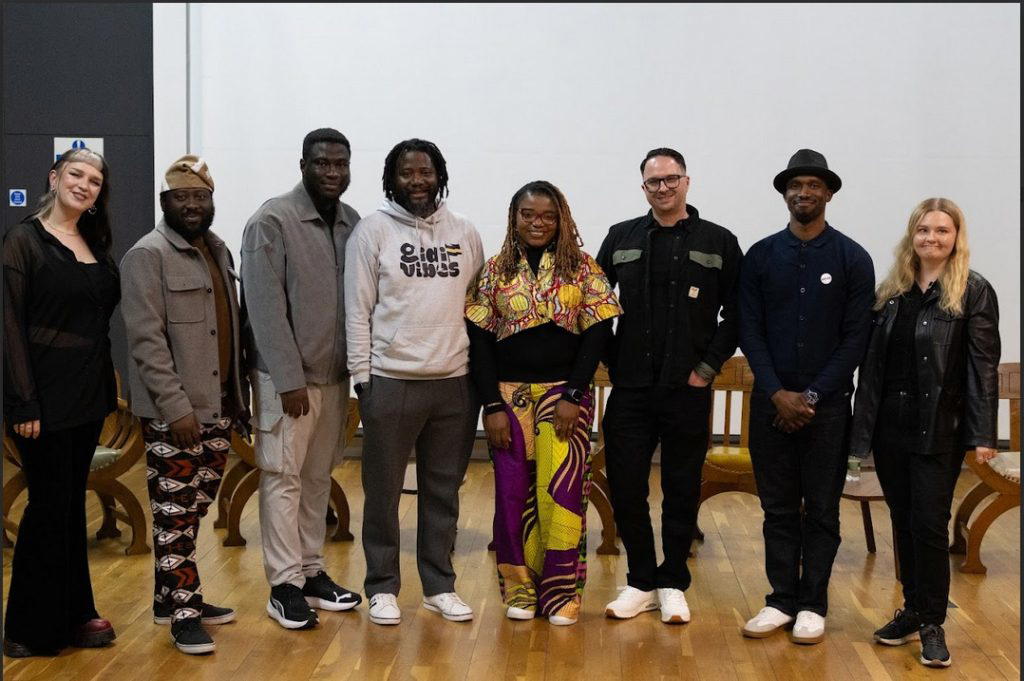
Felabration, which celebrates African creativity and heritage across the diaspora, also featured Thought Leadership Panels at Ferens Art Gallery, Queen Victoria Square, Hull, North England.
The conversation explored Afrobeat’s journey and the future of distribution, Fela Kuti’s influence on music, arts, media, and fashion; and the business of music and city identity. The session had thinkers in diverse fields, including Gui Morais (Manager, A&R and Business Development, Europe & UK Symphonic Distribution), Rikki Stein, Lolade Nwanze, Abolore Sobayo, Tolu Olafimihan, Olamide Jasanya, Tuoyo Amuka, Jenni Harrison, Realbeats, and Fágbèmí Ọ̀ṣìnúgà, in conversation.
The choice of Hull as the city for the exhibition, according to the curator—himself a lifelong student of Afrobeat—was informed by the fact that the area has a deeper Black story. The Black story, he noted, is one that stretches back long before multiculturalism became a buzzword.
“This port city has always been a gateway. From African and Caribbean sailors who travelled through here centuries ago, to abolitionists who fought against slavery, to artists and students who found their creative pulse here, Black lives have been woven into the city’s rhythm for generations.
“Even William Wilberforce, Hull’s most famous son, was shaped by that connection. His lifelong campaign against the slave trade began here, where trade ships once sailed to the same coasts that would later give birth to Afrobeat. That tension — between oppression and freedom, silence and song — is what makes Hull such a fitting place to host Felabration,” he said.
Continuing, Ọ̀ṣìnúgà disclosed: “When we first brought Felabration to Hull in 2024, I did not know what to expect. The goal was simple: to celebrate Fela Kuti’s music, message, and movement. But what happened went deeper. The people of Hull embraced it. The energy was raw and curious, giving a sense of recognition, like something long-forgotten had finally come home.
Hull understands rhythm and resistance. This is a city of tides — of movement, exchange, and evolution. In that way, it mirrors Lagos: both cities know what it means to wrestle with identity, to find beauty in struggle, and to turn chaos into creation.
This year, we are not just staging a festival. We are honouring a lineage. Hull’s Black history is not an import; it is a continuation.”
Afrobeat, he said, “was born as a mirror — reflecting truth to power, challenging injustice, and celebrating resilience and joy even in the face of hardship. Felabration in Hull is not nostalgia. It is a connection across continents, generations, and struggles. It is what happens when a sound born in Kalakuta meets a city shaped by Wilberforce. When African rhythm meets English rebellion. When art becomes activism all over again.”
Felabration has been deliberately timed to take place around October 15, Fela Kuti’s birthday — a moment to honour not only his music and legacy but the spirit of resistance and joy he championed.
“Walking along Hull’s docks, primarily a trading dock, also central to other major industries such as whaling and fishing, I think about the ships that once carried enslaved Africans across oceans and about how history has a strange way of looping back. The same waters that once carried pain now carry rhythm. The same city that once hosted abolitionist speeches will now host Afrobeat’s defiant joy. That is not irony — it is restoration.
“So, if you are reading this from Lagos, Accra, London, or anywhere in between, know that something special is happening in Hull. Felabration here is not an export of African culture. It is a reawakening of shared history,” he stated.
Ọ̀ṣìnúgà further maintained: “Felabration is more than a festival — it’s a bridge between Africa and the diaspora, a creative act of remembrance and renewal. Bringing it to Hull — the home of William Wilberforce — makes it profoundly symbolic. Fela used his music to free the mind; Wilberforce fought to free the body. Both challenged oppression in their own time.”
The post Felabration UK: When Art Birthed in Kalakuta Meets a City Shaped by William Wilberforce appeared first on Vanguard News.