Employers raise alarm over threats to industrial peace
 SKAiF NewsNG SNN
By Victor Ahiuma-Young
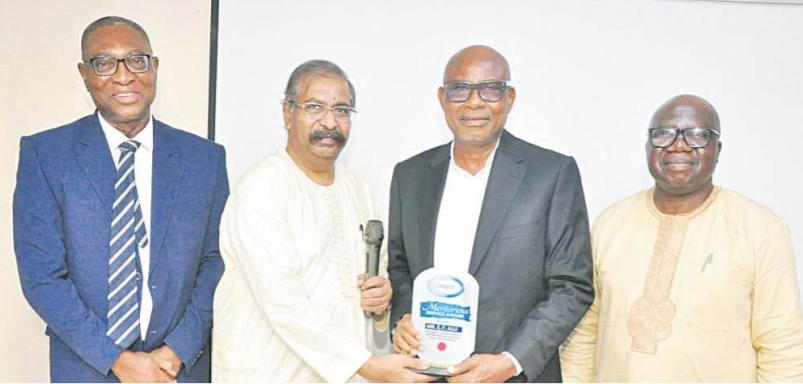
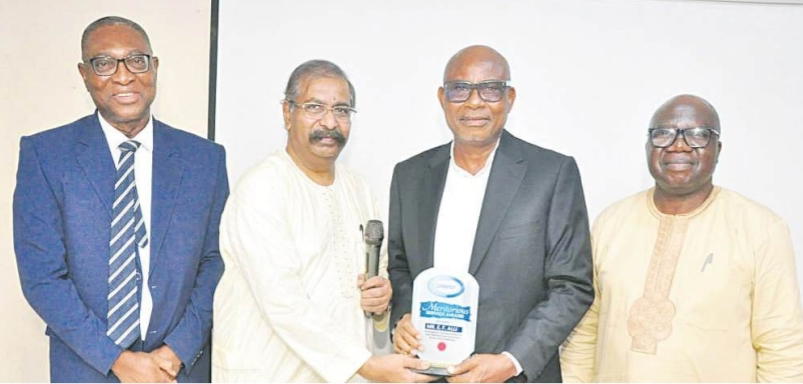
The 46th Annual General Meeting, AGM, of the Chemical and Non-Metallic Products Employers’ Federation, CANMPEF, held in Lagos, lived up to expectations.
Read Also: Education: Assessing Okpebholo’s one year in office
Beyond attracting key stakeholders in the industry, the event also provided employers in the sector with an opportunity to critically assess the state of the industry and set an agenda for the future.
Appraising the industry in his secretariat report, CANMPEF’s Executive Secretary, Mr. Femi Oke, warned that Nigeria’s fragile industrial peace is under serious threat as rising production costs, multiple taxation, and foreign exchange volatility continue to cripple manufacturers and weaken their capacity to sustain jobs.
According to Oke, 2024 has been one of the most turbulent years for Nigerian manufacturers, marked by “unprecedented economic headwinds, regulatory overlaps, and structural challenges.”
According to him, members of the Federation operated in a “perfect storm” of fuel price shocks, electricity tariff hikes, high interest rates, and an unpredictable foreign exchange market — all of which threatened job security and industrial stability.
“The combined effect of these developments severely constrained production, increased costs, and dampened growth. Yet, our members continued to demonstrate resilience and a commitment to maintaining industrial harmony,” Oke said.
Threats to industrial peace
Oke noted that the Central Bank of Nigeria, CBN’s aggressive monetary policy, which raised the Monetary Policy Rate, MPR, from 18.75 to 27.5 per cent by the end of 2024, drastically increased borrowing costs and limited manufacturers’ access to credit.
He lamented that the 230.8 per cent electricity tariff hike for Band A customers, announced by the Nigerian Electricity Regulatory Commission, NERC, in April, worsened production costs barely a year after the removal of fuel subsidy. The energy and financing crises combined to squeeze margins and strain employer-employee relations,” he stated. “Industrial peace cannot thrive where businesses are struggling to stay afloat.”
Recurring fuel shortages, high logistics costs, and poor road infrastructure further compounded hardship for industries, forcing many firms to depend heavily on diesel and alternative energy sources.
The CANMPEF Executive Secretary also decried the proliferation of taxes and levies from multiple regulatory bodies, which he said had become “a major threat to competitiveness and job sustainability.”
He cited overlapping mandates from agencies such as NESREA (National Environmental Standards and Regulations Enforcement Agency), SON (Standards Organisation of Nigeria) and NAFDAC (National Agency for Food and Drug Administration and Control), and various state environmental and safety regulators that impose duplicative compliance costs on manufacturers.
“In Lagos State alone, our members pay fees to LASEPA (Lagos State Environmental Protection Agency), LASWARCO (Lagos State Water Regulatory Commission), LASPARK (Lagos State Parks and Gardens Agency), LAWMA (Lagos State Waste Management Authority) and LASAA (Lagos State Signage and Advertisement Agency), and local councils in addition to federal levies. This duplication must stop. There is an urgent need for harmonisation of these regulatory functions,” Oke emphasised.
He warned that if not addressed, the rising cost of compliance and poor policy coordination could erode investor confidence and disrupt industrial peace, as companies struggle to meet both regulatory and labour obligations.
AI reshaping industry, workforce relations
Oke also highlighted that Artificial Intelligence, AI, is rapidly transforming global manufacturing and workforce relations.
While some stakeholders fear job losses, others are leveraging AI to enhance efficiency, innovation, and safety.
“The rise of AI presents both opportunities and challenges. CANMPEF encourages members to adapt proactively — using AI for smarter production systems, predictive maintenance, and supply chain optimisation — while retraining workers to prevent displacement, Oke said.
He called on government to develop a national AI policy framework to guide ethical adoption and support local industries in transitioning into the digital era.
Despite the tough environment, CANMPEF maintained strong advocacy, working with regulatory agencies and the Nigeria Employers’ Consultative Association, NECA, to promote stable and predictable industrial relations.
Oke commended CANMPEF’s Committee of Chief Executives and Committee of Human Resource Practitioners for their active participation, describing collaboration as vital to maintaining peace and productivity.
“Our resilience continues to define us. With renewed collaboration, we remain confident that CANMPEF will continue to be a formidable voice and catalyst for Nigeria’s industrial growth,” he added.
The post Employers raise alarm over threats to industrial peace appeared first on Vanguard News.