Despite school abduction, Kebbi govt approves half of security budget for Hajj
 SKAiF NewsNG SNN

By Bayo Wahab
The Kebbi State Government’s approval of a ₦10 billion intervention to support intending pilgrims for the 2026 Hajj recently reignited debate over fiscal priorities. The approval came barely weeks after bandits abducted 25 students from the Government Girls Comprehensive Secondary School in Maga.
Governor Nasir Idris approved the funds following a shortfall in payments for Kebbi’s allocated Hajj seats, after the National Hajj Commission of Nigeria closed sales on December 6, 2025.
The intervention was intended to prevent the state from losing its remaining slots and to enable the Pilgrims Welfare Agency to procure over 1,000 additional seats.
The Executive Chairman of the Kebbi State Pilgrims Welfare Agency, Alhaji Faruku Aliyu Yaro, said the number of fully paid pilgrims had dropped sharply this year, largely due to economic pressures on farmers who make up about 60 per cent of intending pilgrims.
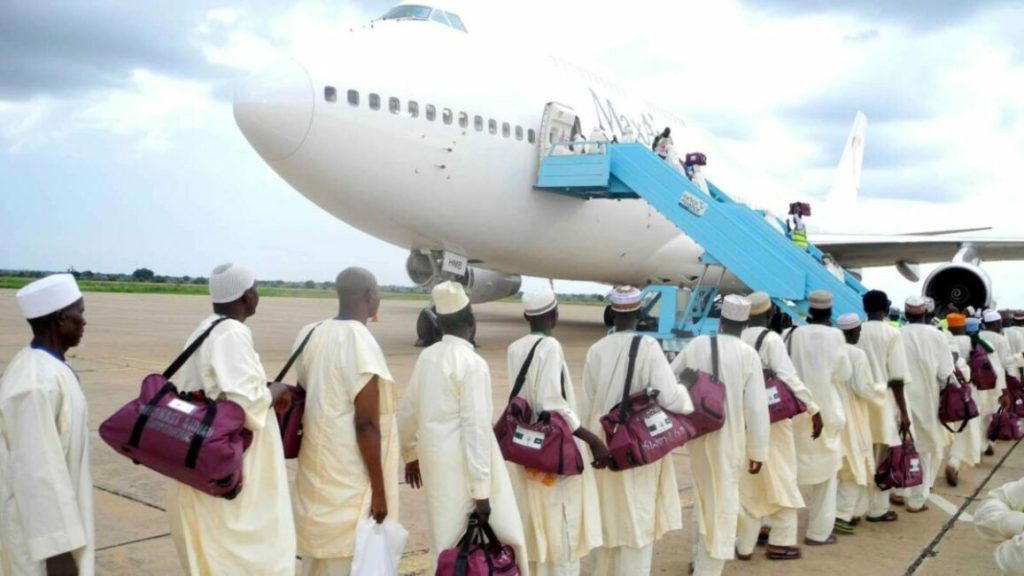
“Before the intervention, only about 2,000 intending pilgrims had completed their payments,” Yaro said, explaining that falling food crop prices had affected farmers’ ability to raise funds.
“With the ₦10 billion support, we have opened a new window for more intending pilgrims to procure their Hajj seats,” he added.
While the intervention has been welcomed by religious stakeholders, it has drawn criticism when viewed against the backdrop of Kebbi’s security challenges and budgetary choices. The abduction of schoolgirls in Maga underscored the fragility of security in parts of the state, yet the Hajj support now rivals — and in some respects exceeds — key security allocations in the 2026 budget.
Kebbi’s 2026 Security Budget
On Tuesday, December 16, Governor Idris signed the 2026 Appropriation Bill of N642.9 billion into law, following its passage by the Kebbi House of Assembly.
Under the Ministry of Home Affairs and Internal Security, the state government proposed a total capital expenditure of ₦20.18 billion.
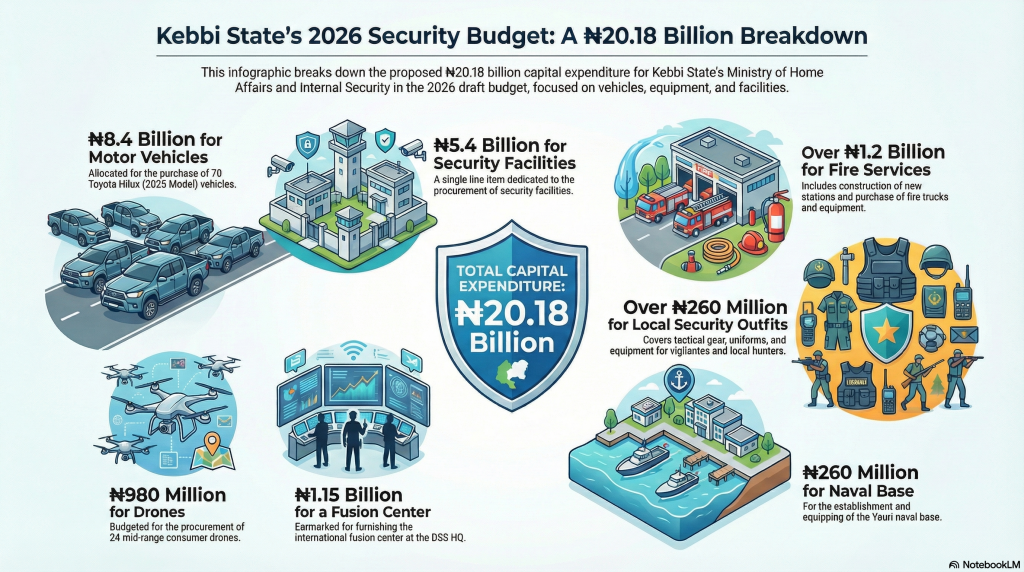
The single largest item in the budget is ₦8.4 billion for the purchase of 70 Toyota Hilux patrol vehicles, representing just over 40 per cent of the ministry’s capital spending.
Other major items include ₦5.4 billion for procurement of security facilities, ₦1.15 billion for CCTV and digital cameras, ₦980 million for furnishing an international fusion centre at the DSS headquarters, and ₦750 million for 500 motorcycles for security agencies.
In effect, the ₦10 billion Hajj intervention is larger than the state’s biggest individual security investment, and amounts to roughly half of the entire capital budget proposed for internal security.
The contrast raises concerns about the state government’s priorities, particularly because Kebbi’s internally generated revenue remains limited.
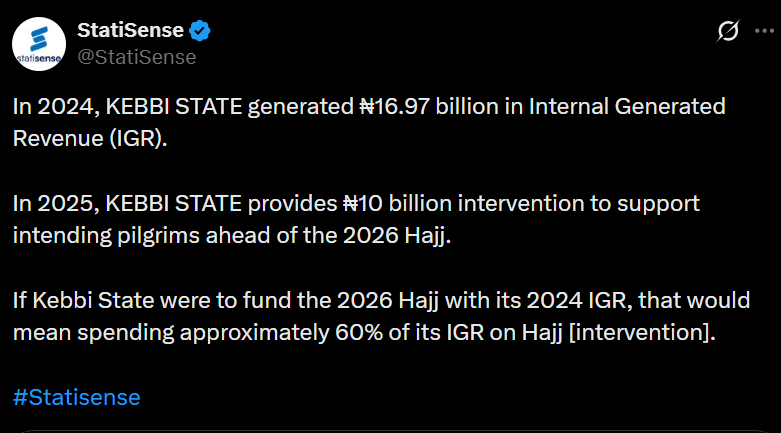
Data from Statisense indicate that the state generated about ₦16.97 billion in IGR in 2024. Against that benchmark, the Hajj intervention alone represents close to 60 per cent of one full year’s internally generated income.
Supporters of the government argue that the Hajj intervention is a temporary measure to cushion economic hardship among intending pilgrims and prevent the loss of Kebbi’s allocation. Critics, however, contend that committing such a large sum to religious travel, at a time of persistent insecurity and constrained revenues, reflects a misalignment of priorities.
The debate also touches on broader questions about social spending versus security investment. While Kebbi’s 2026 budget shows a clear emphasis on mobility, logistics and surveillance for security agencies, the scale of the Hajj support has eclipsed those efforts in public perception, especially coming so soon after a high-profile abduction.
The post Despite school abduction, Kebbi govt approves half of security budget for Hajj appeared first on Vanguard News.