BAR AND BENCH BOMBSHELL: About 15% of judiciary is clean, two women at the top should clear the rot – Senator AKINYEDE
 SKAiF NewsNG SNN
By Matilda Ikediobi
Sola Akinyede is a lawyer and a former senator who represented Ekiti South. In this monitored interview,
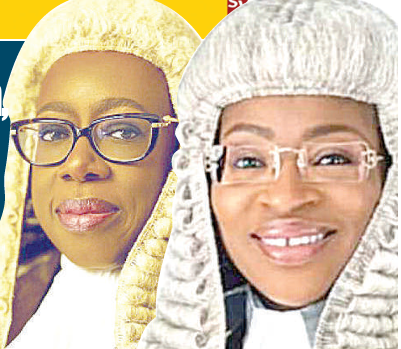
Akinyede discusses the potential benefits of having women lead both the National Judicial Council,
NJC, and the Nigerian Bar Association (NBA). He also talks about reasons the NJC needs to be reformed.
Excerpts:
For the first time in Nigeria’s history, women now lead both the Bench and the Bar. How much of a historic moment is this beyond the symbolism?
I think it’s historic in the sense that women are wired to be nurturers. They tend to take care of people and society in general. You don’t have as many pressures on them trying to make money and cut the rules out and all that. They tend to be better at providing service.
Are you sure you’re talking about women in the 21st century?
To every rule, there is an exception. But that’s the general trend. I find support in the first female Chief Justice of Nigeria, Justice Aloma Mukhtar. She was the first female Chief Justice of Nigeria. She was well regarded by everybody, judicial community, legal community, as a fearless, independent person and incorruptible. Under her tenure, there were more judges who were reprimanded and removed from the judiciary than we have had in the past 10, 15 years. Her tenure was regarded as the most impactful out of all the Chief Justices of Nigeria that we have had. That’s why I said that it is historic. When Justice Aloma Mukhtar was the Chief Justice of Nigeria, the president of the Bar Association was a man. But now, you have two women who presumably are nurturers and would want to leave a legacy and nurture society.
That’s why I’m optimistic.
You have repeatedly argued that the Nigerian judiciary is badly damaged. In your view, what has done more harm to public confidence in that regard?
Well, what the judiciary doesn’t seem to know is that Nigerians are not fools. Nigerians can see what is happening. When you go on social media, you see a lot of cynicism. Sometimes you see something that is disturbing. You see a judge of the Supreme Court with an ‘Emilokan’ cap on his head. I don’t like that. But that shows the contempt to which Nigerians hold the judiciary. It is not without reason, I’m sorry to say.
I’ll give you examples of cases. 2020 Imo governorship election. That decision, you couldn’t just justify it. The Supreme Court, in some political cases, has given decisions that have no bearing with reality. You had a case where some senators who contested for the presidency on the platform of the All Progressives Congress, APC, did not participate in the primaries. But the Supreme Court ended up using technicality to give them the ticket. Nigerians were really shocked and disappointed. Then you have another example.
The governorship cases in Kano in 2023, where you had the Court of Appeal giving conflicting and opposite judgments in the same case. In the oral judgment, they declared the APC candidates as duly elected. But in the certified true copy of the same judgment, they declared the NNPP as duly elected. Those are the things that make you ask questions. Of course, you have the Kano emirate cases. A two-year-old lawyer knows that the Federal High Court has no jurisdiction. But yet, the Federal High Court went on appeal and wasted time, and there was no sanction. As I said once, there is no judiciary that is sustained by the appellate system. All judicial systems in the world are sustained by decency and integrity.
Integrity is key, isn’t it?
You mentioned the issue of independence. Look at the El-Rufai case, for instance. You just wonder. I don’t know whether he has committed an offence or not, but even if he has, the offence is billable. And then, the court’s granted conditions, which everybody knows, cannot be met. To me, that is trying to deny the accused of what is constitutionally guaranteed. And then, you begin to wonder whether the judiciary is working in concert with the executive. Of course, you have the issue of judicial corruption. There’s a tendency of the appellate courts, a very worrisome tendency, to deploy superior technicalities and manufacture technical immunity when judicial officers are prosecuted. For instance, there was a judge of the Federal High Court that the security agencies found foreign exchange in his account (a lot of money) and all that. He couldn’t explain how he came about the money. He just set up a technical defence and said he is a judicial officer and cannot be prosecuted unless the National Judicial Council first investigated him. There’s no such thing under the constitution, under any law. According to international best practices, there is no such thing. In America and the UK, for instance, sometimes judicial officers are first prosecuted, and it’s after they are prosecuted that, based on if they are found guilty, then those bodies now carry out disciplinary action. In this particular case, the court at the first instance made the right decision and threw out the technicality. The Court of Appeal agreed with that technicality and the Supreme Court now agreed. I was shocked. So, the appellate courts are using spurious technicality, I have to say, to grant themselves, manufacture immunity for themselves so that they cannot be prosecuted. And that’s why you have all these spurious judgments still persisting to today.
You were a member of the Senate Committee on the Judiciary. What is the role of such a committee in oversighting the judiciary? What would you have done or what did you do at that time to try and correct some of these things that you point out and a lot of people would agree is a terrible blight on this country’s legal system?
The Committee on the Judiciary, I was a member, but there isn’t much they could do because as far as I’m concerned, what Nigerian judiciary needs is structural. Those changes can be effected through new laws, constitutional changes.
I can see the passion with which you want to correct things. I’m wondering how much that passion was brought to the fore when you were in the National Assembly…
I was a member of the Senate Constitution Review Committee, and if you were going to make any structural changes then or now, you need a constitution amendment. I proposed amendments in 2010 because when I read the constitution, I said, how can you have the Chief Justice of Nigeria appointing 19 members of the NJC out of 23? That’s 82 per cent.
Do you think the NJC clearly needs reform?
Absolutely. I proposed an amendment, but I never imagined for the life of me the kind of rot we have now. In about 2005, 2007, 2010, you could say that maybe 10 per cent of the judiciary was rotten. But now, I can’t say 10 per cent. In fact, some people would say it’s the reverse now. Maybe 10 per cent or 15 per cent are clean. That’s worrying. Nobody ever imagined the kind of rot that we have today.
There is not a scientific study carried out to determine what the percentage is…
No, no, definitely. Some of the things that we see today, we never imagined them 15, 20 years, 30 years ago. For instance, judges lobbying or arranging to have their children to be made judges. FCC High Court, eight out of 12 appointments were children or relatives of senior judicial officers or former judicial officers. That’s a statistical improbability without any manipulation. Things that were unheard of about 20, 30 years ago, you see them now. When I made those amendments, people did not take me seriously.
You want to reform the National Judicial Council. You’ve gone further than many lawyers by calling for the NJC to be reconstituted beyond just reforming it. What exactly is wrong with the way it is presently constituted and how is it allegedly abusing its powers?
As I said before, out of 23 members, 19 are appointed by one person, Chief Justice of Nigeria. That includes the five members of the Nigerian Bar Association. He or she appoints them. Two, 88 per cent of the members of the NJC are judicial or ex-judicial officers. There is no country in the world where you have that kind of situation. Then you have a situation whereby the Chief Justice of Nigeria is the head of the Federal Judicial Service Commission and also the head of the NJC. Now, the Judicial Services Commission is the body that selects and shortlists candidates for judicial positions.
The Chief Justice of Nigeria is the chairman of that body and the President of the Court of Appeal is the Deputy Chairman of that body. Now, the body that interviews and selects those candidates is the NJC. It’s the body that sends the names of the judicial people to the President.
So, when you have the person who shortlists the candidate, he shortlists his candidate and then he brings his list to the NJC, where he’s also the chairman, where he has the power to appoint 82 per cent of the members. And where 88 per cent of the members are former judicial officers whom he also appointed. Which of them will have the guts to challenge him? That is one of the reasons why, number one, the NJC seems to lack the political will to discipline erring judicial officers.
It’s like a club, a gentleman’s club. Two, that same NJC, the problem they have is that they are like a small group of people. I remember Olumide Akpata, former President of the Nigerian Bar Association, saying when he was a member of the NJC, he was shocked that simple questions that were posed to some candidates for the Court of Appeal couldn’t be answered.
What shocked him further was that when he expressed his surprise, he was told that they would learn on the job. So, it is obvious that what is happening is that because it’s a small circle of judicial officers, they determine what happens. My proposed reform is that the headship of the two bodies be split. The headship of the Federal Judicial Service Commission should be by the Chief Justice of Nigeria. And, the headship of the NJC should be by the Nigerian Bar Association. All the judicial and ex-judicial officers on that council should not be appointed by the Chief Justice of Nigeria, but by the justices of the Supreme Court themselves. That disperses and diffuses the appointment. Those are the issues. The five members, as I said, of the Nigerian Bar Association who are members of the NJC are appointed by the Chief Justice of Nigeria, not by the NBA itself. And, what makes it particularly worse is that those five members of the NJC, when it comes to disciplining judges, are not allowed to participate in the process. They can only participate when it comes to appointing judges.
But when it comes to discipline, they are not allowed to participate. Then the other members who are not there, are non-lawyers. Also, three members are appointed by the Chief Justice of Nigeria. If the Chief Justice of Nigeria goes and says: ‘you, I want you to be the non-lawyers in the NJC’.
Would they have the guts to question the Chief Justice of Nigeria? It’s a case of who watches the watchmen?
One of the measures I proposed was that rather than the Chief Justice of Nigeria appointing three non-lawyers, those three non-lawyers should be members of the trade union. For instance, the Academic Staff Union of Universities, ASUU, and the Nigeria Labour Congress, NLC, who must be educated to at least university level. The idea, again, is to disperse the appointments so that you don’t have 80 to 90 per cent of them being appointed by one man. That is a major problem of the NJC.
The incoming NBA president has spoken about professionalism and reform. What should be the first issue on her desk if she genuinely wants to leave the kind of legacy that you’ve been talking about?
Well, I’m sorry, I don’t want to go back to what we have been discussing, but you can never have professionalism in the bar as long as lawyers are able to allegedly bribe judges and judges take bribes. I remember Justice Dattijo Ahmed, second-in-command to the preceding Chief Justice of Nigeria, said so openly in a session in 2023. It’s an open secret. What she should do is that she should come together with the Chief Justice of Nigeria and propose this reform to the National Assembly. I have sent my reform to the National Assembly, but I am not an institution, and it’s an election year this year. So, I don’t see them attending to it. But the President of the Nigerian Bar Association and the Chief Justice of Nigeria should come together and propose it.
In terms of the NBA’s responsibility, should the Nigerian Bar Association be far more confrontational in defending judicial independence in other words, I don’t mean defending the people who are there, but defending the principles that you’re talking about…
The problem I see with the bar is that many people who want to be President of the Nigerian Bar Association have personal agendas or maybe political agendas and ambitions. And many of them don’t want to rile the judges. I’m sorry to say. In the UK where I was educated, people openly criticised judges’ judgment. It’s not a big deal. But I find that there’s so much reticence, so much reluctance of lawyers in Nigeria.
It is because of the potential for punitive sanctions…
Yes. What I will say is that if there is a loud voice from the majority of lawyers, it would be difficult for the judges to punish 90 per cent of lawyers in Nigeria. So, I’m sorry, lack of courage. But most importantly, many people have a personal agenda to be President and because of that, they are not able to. And many of them want to cosy up with the judges in the NJC so that they can put in their own men also in the judiciary. Some of them are Senior Advocates of Nigeria. I find that many of them don’t seem to have the courage to criticise judges. They are always defending them. It doesn’t happen in the UK or in the US.
We are approaching crucial presidential elections in a few months’ time. Given these things that you’ve talked about, given the fact that the reforms you’re proposing are not going to happen before the elections take place, how do you see the landscape?
Well, not very exciting, I must say.
You’re not encouraged?
Yes, I am not. As I said, especially at the lower courts and sometimes even at the appellate courts, you get this feeling that the court takes instruction from the executive. I gave you the example of Nasir El-Rufai’s case. I mean, there’s just no basis for those decisions.
But that’s an assumption, though. However, you’re right that a lot of Nigerians share in that assumption. Many Nigerians now assume that politically sensitive cases, such as the one that you just mentioned and a host of others, are decided less by law and more by political calculations…
Well, the judiciary is not doing what it should do. Let me give you an example. The building of houses for judges in the Federal Capital Territory, FCT, Abuja. 30 years ago, that would never have happened. There are constitutional provisions. In fact, deliberately, there are some provisions in the constitution to insulate the judiciary from the executive. The idea is that whatever they want to do with the money, you give it to them, let them do it themselves. So I believe that if the federal government wanted to have houses for judges, they should have given the money to the NJC. And the NJC decides how many units. Not that federal government would build the houses and give it to the judges. It could never have happened 30 years ago. Those are the things that people see. As I mentioned in the case of the issue of Justice Mukhtar, she was firstly independent.
If she was the chief justice of Nigeria, she would never have allowed that kind of thing to happen. The constitutional provisions are there. You make the money available to the judiciary and they decide how they want to use it.
You’ve spent years in both the legal profession and the National Assembly. Looking honestly at where Nigeria is today, are you optimistic that this country’s justice system can still be reformed from within? Or has the rot become so deep that it requires a form of constitutional surgery?
No, I don’t believe in incremental or piecemeal reforms. Justice Mukhtar made a lot of reforms. But those reforms have been thrown out of the window. You need to have structural reforms. Justice Kekere-Ekun has a fantastic pedigree, a judge of unimpeachable integrity, but what happens when she leaves? You can have another judge coming to undo all that she has done. That’s why I believe that you need structural reforms.
The post BAR AND BENCH BOMBSHELL: About 15% of judiciary is clean, two women at the top should clear the rot – Senator AKINYEDE appeared first on Vanguard News.