₦70,000 wage inadequate for workers — Keyamo
 SKAiF NewsNG SNN
By Johnbosco Agbakwuru
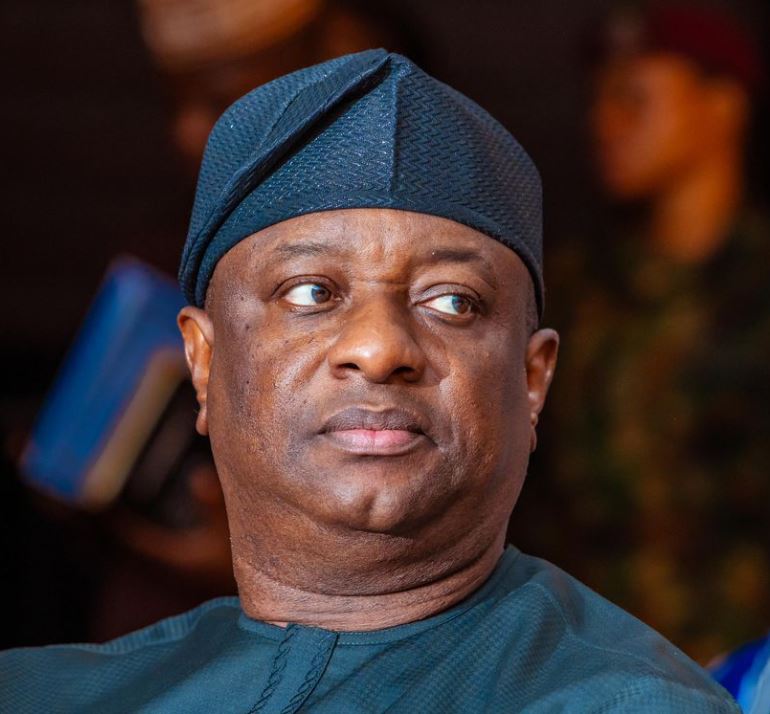
ABUJA — Minister of Aviation and Aerospace Development, Festus Keyamo, SAN, has said the N70,000 national minimum wage is inadequate to withstand the economic pressures confronting Nigerian workers.
Keyamo, who spoke at the 2026 National Pre-Retirement Summit organised by XEM Consultants Limited, said the rising cost of living had eroded the purchasing power of workers, making an upward review of wages imperative.
He urged the Federal Government to meet organised labour halfway in ongoing discussions on workers’ wages, noting that unions were demanding as much as N500,000.
The minister, a former Minister of State for Labour and Employment, recalled the negotiations that preceded the increase in the national minimum wage from N30,000 to N70,000 in 2024.
He said the current wage was still insufficient to absorb the economic shocks confronting workers.
Keyamo also criticised what he described as poor treatment of workers by some government agencies, particularly situations where workers were denied basic allowances while senior officials allegedly approved large sums for international trips.
“I will have none of it. Without these workers, we will not have a country,” he said.
The minister stressed that national development depended on prioritising the welfare of workers, describing the human factor as central to productivity and effective public service.
“It’s not the machines or everything that you [have]; it’s the human factor. Without that, no machine will move,” he said.
Keyamo said issues affecting workers’ welfare and productivity should receive priority over bureaucratic considerations, urging ministers and heads of government agencies to make workers’ interests a priority.
Also speaking at the summit, President of the Nigeria Labour Congress (NLC), Comrade Joe Ajaero, called on the Federal Government to use increased oil revenues to cushion workers and other Nigerians from the impact of rising fuel prices.
Ajaero said the recent increase in international oil prices had created additional revenue for oil-producing countries and urged the government to deploy part of the gains to support citizens facing higher transportation and food costs.
“As one of the oil-producing countries, they are making trillions because of the problem in the Strait of Hormuz. You can see that oil was pegged at maybe $70 or whatever dollars. It’s $100, so they are making an extra $30 or $40.
“Now, can’t you use this money to embark on some interventionary measures like other countries where this is affected, so that we’ll now be alive till the time when they will say minimum wage?”
Ajaero said minimum wage negotiations should focus on workers’ real purchasing power rather than nominal figures, taking into account inflation, fuel prices, food costs and other economic factors.
“Negotiations are not just figures,” he said.
He illustrated the point by saying that a nominally high wage could lose its value if the prices of basic commodities rose sharply.
“Assuming one naira is equal to $1, I would advise Nigerian workers to remain at ₦70,000 because that would be big money for them, but you can see that you can equally get one million naira and a bag of rice is ₦500,000, so what of that? What happens?”
Ajaero also advocated the indexation of wages and pensions to inflation or the cost-of-living index, arguing that such a mechanism would enable workers’ incomes to adjust automatically as economic conditions change.
“Unless you index it either based on cost of living index or inflation, immediately inflation goes like this, automatically it will adjust to this, as it is affecting pension, so it affects salaries; and those are some of the things that will enable us to agree on something.”
On minimum pension, the NLC president said it should be negotiated alongside the minimum wage because workers and pensioners were both affected by prevailing economic conditions.
He explained that the reduction of the minimum-wage review cycle from five years to three years was intended to allow wages to respond more quickly to changing economic conditions.
Ajaero said the next minimum-wage review was expected around March or April and that discussions should commence early.
“This minimum wage is supposed to expire March–April, so the conversation ought to start early. That’s a three-year cycle,” he said.
He, however, said labour’s immediate concern was how workers could cope with the current economic pressures before the next review.
“But now we are more concerned on ‘give us this day’ — how to survive today before that time. Because these policies of the fuel going up, jumping up, and the Nigerian government is making a whole lot of money from it.”
Ajaero also questioned the effectiveness of government measures designed to reduce transportation and energy costs, including the Compressed Natural Gas (CNG) programme.
“Are we even producing enough in terms of food, reliance on food? Now, between that time and now, the most troublesome problem for a worker, which happened to be transportation — the CNG policy, did it work? Where and where can you refill your tank? How many vehicles have been converted to CNG? How many electric vehicles are on the road?”
He said controlling factors such as inflation, transportation costs, food prices and currency pressures would make it easier for workers to cope with prevailing economic conditions.
Meanwhile, the Chief Executive Officer of XEM Consultants Ltd. and convener of the summit, Dr. Eugenia Ndukwe, said the event was designed to equip senior professionals with strategies and skills for a productive and fulfilling retirement.
Ndukwe said the summit focused on financial management and planning, health and wellness, entrepreneurship and investment, estate and wealth management, as well as agricultural enterprise systems.
She added that digital innovation was changing how people worked and earned income, creating opportunities for senior professionals to remain productive beyond formal employment.
According to her, XEM Consultants partnered Galaxy Backbone to provide participants with digital skills, knowledge and tools to explore opportunities created by technology.
Ndukwe said the summit was aimed at promoting a new approach to retirement in Africa and helping participants develop personalised retirement plans based on their financial circumstances, career goals, health needs and post-service aspirations.
The post ₦70,000 wage inadequate for workers — Keyamo appeared first on Vanguard News.