
Why Greenland is important to NATO, US
 SKAiF NewsNG SNN
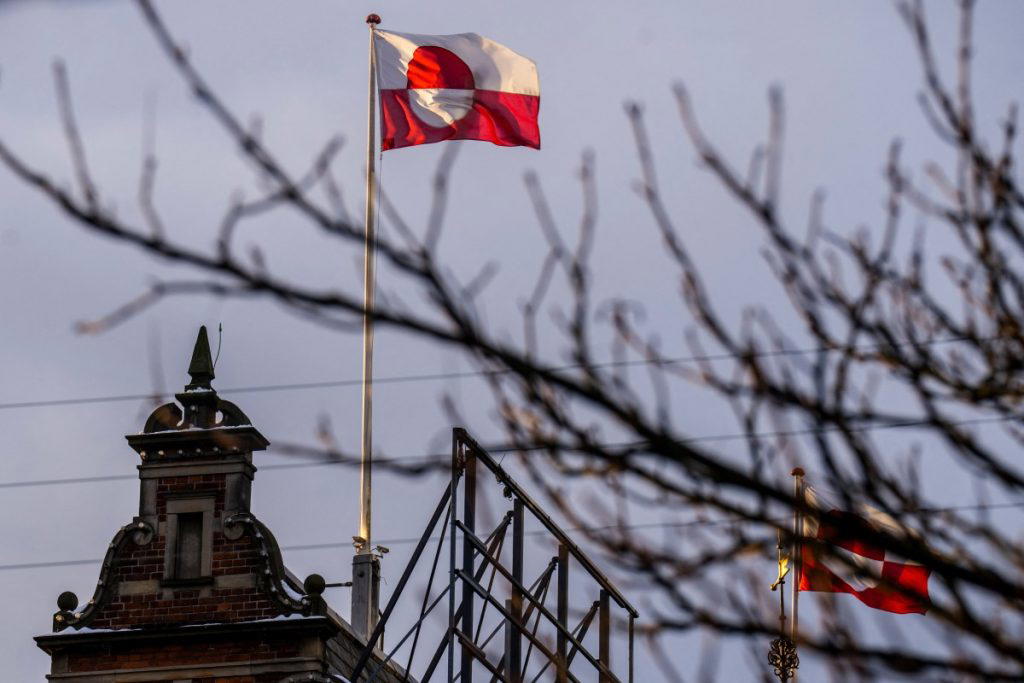
During his first tenure as US President, Donald Trump floated the idea of buying Greenland in 2019; the suggestion was widely mocked as outlandish and unserious. Denmark, which administers the autonomous Arctic territory, swiftly rejected it, while Greenland’s leaders insisted the island was “not for sale”.
In March 2025, while giving a speech before the United States Congress, Trump declared, “One way or the other, we’re going to get Greenland.” Ever since, Greenland, the world’s largest island, has moved from the fringes of international affairs to the centre of transatlantic tensions.
History
The United States’ fixation on Greenland dates back more than a century. After purchasing Alaska in 1867, US officials began eyeing Greenland for its strategic location and mineral wealth. During the Second World War, the U.S. occupied Greenland after Nazi Germany took control of Denmark, arguing that the island was vital to protecting the Western Hemisphere. When the war ended, Washington was reluctant to leave.
That reluctance hardened during the Cold War. In 1949, Denmark and the United States became founding members of NATO, and in 1951 they signed a defence agreement that allows the U.S. to operate military facilities in Greenland. Two years later, Washington built Thule Air Base now known as Pituffik Space Base which remains the U.S. military’s northernmost installation.
A strategic arctic location
Greenland sits between North America and Europe, astride the Arctic and North Atlantic sea routes. This position makes it a critical gateway for monitoring movement between Russia and the Western Hemisphere.
During the Cold War, the island was central to US defence planning against the Soviet Union. That logic has returned as Russia expands its Arctic military footprint and as melting ice opens new shipping routes across the polar region.
For NATO, Greenland helps anchor the alliance’s northern flank, linking North America to Europe and reinforcing collective defence at a time when Arctic security is no longer theoretical.
US military presence and early warning systems
The United States already maintains a major military presence in Greenland through Pituffik Space Base (formerly Thule Air Base), operated under agreements with Denmark.
The base hosts radar systems that form part of the US ballistic missile early warning network. These systems can detect missile launches from Russia, providing crucial seconds or minutes of warning in the event of an attack.
In an era of renewed nuclear tensions, this capability makes Greenland indispensable to US homeland defence and NATO’s broader security architecture.
Russia, China, and the arctic competition
Greenland’s significance has increased as global powers turn their attention northward. Russia has reopened Soviet-era bases, deployed new weapons systems, and expanded its military infrastructure across the Arctic. China, while not an Arctic state, has declared itself a “near-Arctic power” and has sought influence through scientific research, infrastructure investment, and mineral interests.
Western governments worry that Chinese investment in Greenlandic airports, ports, or mining could create long-term strategic leverage. For the US and NATO, preventing adversarial powers from gaining a foothold in Greenland is now a security priority.
Rare earths and natural resources
Greenland is believed to hold significant deposits of rare earth minerals, uranium, and other critical resources essential for modern technologies, including renewable energy systems and defence equipment.
As the US and its allies seek to reduce dependence on China for critical minerals, Greenland’s resource potential adds an economic and strategic dimension to its importance.
However, resource development remains politically sensitive within Greenland, where environmental concerns and debates over independence from Denmark shape policy decisions.
NATO’s broader arctic calculus
With Finland and Sweden joining NATO, the alliance now has a stronger presence in the High North. Greenland complements this shift by strengthening transatlantic defence links and supporting surveillance, deterrence, and rapid response capabilities in the Arctic.
As climate change accelerates ice melt and geopolitical rivalries sharpen, NATO and the US view Greenland not as a distant outpost but as a frontline territory in the defence of the Western alliance.
The post Why Greenland is important to NATO, US appeared first on Vanguard News.