UAE says OPEC exit ‘not directed against anyone’
 SKAiF NewsNG SNN
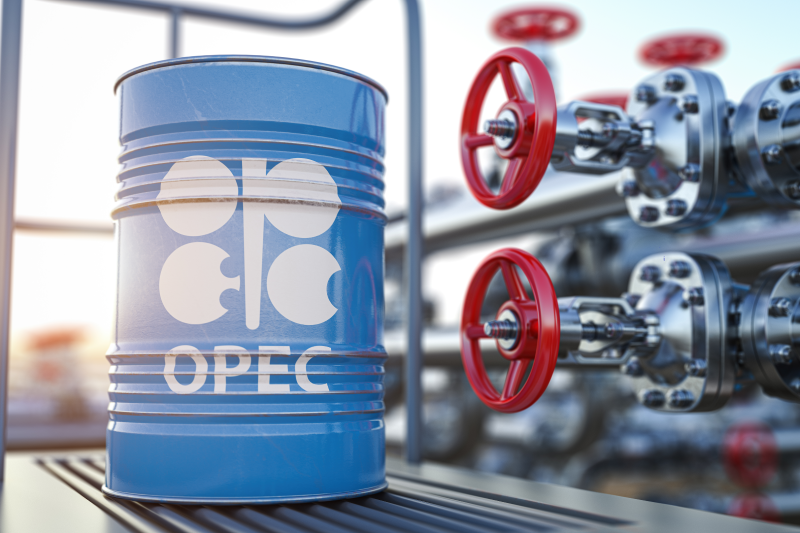
The UAE’s departure from OPEC, dominated by ally-turned-rival Saudi Arabia, was not targeted at anyone but is part of a broader plan to future-proof its economy, the country’s oil chief said Monday.
The move was part of the long-term project to diversify beyond fossil fuels, said Sultan Al Jaber, CEO of state oil giant ADNOC and the UAE’s industry and advanced technology minister.
The shock decision, which took effect on Friday, followed months of tensions with Saudi Arabia, the world’s top oil exporter and OPEC’s de facto leader, over foreign policy, oil output and the Middle East war, which has strained Gulf economies.
The once close partnership between the Gulf neighbours has turned into a simmering rivalry since a public falling-out in December over Yemen, where they back rival militias.
The UAE has long chafed at OPEC production limits championed by Saudi Arabia. But Jaber said the decision to withdraw had purely national considerations in mind.
“The United Arab Emirates’ sovereign decision to reposition itself within the global energy landscape, and to exit OPEC and OPEC+, is not a decision directed against anyone,” he told a conference in Abu Dhabi.
The exit of the UAE, which was OPEC’s fourth-largest producer, deals a blow to the cartel’s ability to control oil prices.
It also puts further strain on UAE-Saudi ties. Riyadh has yet to comment on the UAE’s departure.
Leaving OPEC “serves our national interests and long-term strategic objectives, aligns with our industrial, economic, and developmental ambitions, and gives us greater ability to accelerate investment, expand, and create value”, Jaber said.
“This move was not done in isolation,” he told the Make It In The Emirates conference on UAE industry.
“It is part of a broader effort to reshape our economy and industrial base through a vision that connects energy, technology, and industry, aligning our resources with national priorities to build a stronger, more resilient economy.”
– Drone jammers –
UAE Energy Minister Suhail Al Mazrouei also said the country had left OPEC “on good terms”.
The UAE had been frustrated with OPEC’s quotas, which sought to cap Emirati production at 3.4 million barrels a day, while Abu Dhabi seeks to raise production capacity to five million barrels a day by 2027.
The move comes at a time when the UAE is seeking to boost oil production to finance investments into non-oil sectors including artificial intelligence, analysts said.
On Sunday, ADNOC pledged to spend $55 billion on new projects over the next two years.
The UAE is also seeking to produce more locally made missiles and air defences, said Faisal Al Bannai, an adviser to the UAE president and chairman of the Emirati EDGE Group, a military and defence conglomerate.
The UAE has largely relied on domestically produced jammers and is now self-sufficient in that technology, he said.
“Eighty-five percent of the drones were “tackled through jammers developed and produced in the UAE”, Al Bannai said.
He said in the near future, “part of the missile air defence will become local UAE air defence”.
“Over the next few years, we definitely have a determination that anything to do with air defence will be fully a UAE capability… produced in the UAE,” he added.
The post UAE says OPEC exit ‘not directed against anyone’ appeared first on Vanguard News.