Sachet ban: Solving a health crisis, worsening mass poverty?
 SKAiF NewsNG SNN
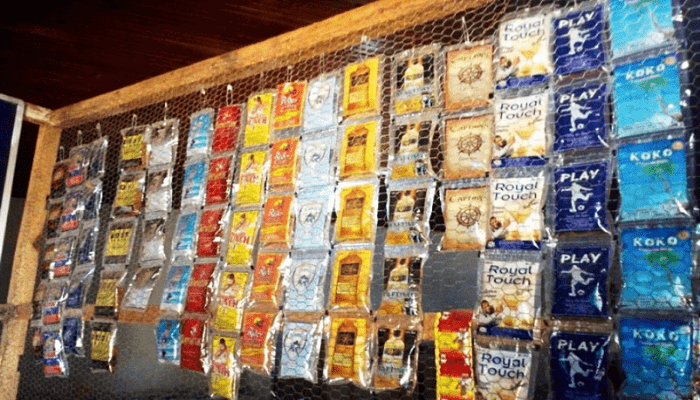
By CHIKE ALOZIE
By 6:30 am., Mama Bose’s wooden stall in Mushin is already open. Bread on one side. Sachet water in a cooler. Small provisions stacked carefully. And tucked in a basket beneath the counter, sachets of legal, NAFDAC-approved alcohol that sells quickly and keeps her daily cash flow alive. Remove those sachets, and you do not just alter consumer choice. You puncture her income. Multiply Mama Bose by thousands across Lagos, Kano, Aba and Port Harcourt and the scale of the sachet alcohol ban begins to look less like a public health adjustment and more like an economic shock with national consequences.
Professor Mojisola Adeyeye, Director General of the National Agency for Food and Drug Administration and Control, NAFDAC, has defended the ban as a necessary intervention. Her case rests on accessibility and affordability. Sachets are cheap, portable and too easily within the reach of minors. She is right about the danger. Underage drinking is real. Organ damage, addiction, impaired judgement, and social harm are not abstract risks. Any serious society must confront them.
The critical question, however, is whether the packaging is the true driver of the problem or whether enforcement failures at the retail level are being mistaken for structural defects in manufacturing. Nigeria’s spirits and wines sub- sector forms a significant slice of the broader food and beverage manufacturing industry, one of the largest contributors to manufacturing GDP. The food and beverage sector contributed about N21.6 trillion to GDP in 2023 and remains one of the biggest employers across formal and informal value chains. Within that ecosystem, sit distilleries, bottling plants, plastic and flexible packaging manufacturers, glass suppliers, label printers, logistics firms, distributors, and thousands of micro retailers. Conservative industry estimates suggest that tens of thousands of direct and indirect jobs are tied to the low unit packaging segment alone. Beyond employment, the sector generates substantial excise duties and value-added tax revenues for the government. For micro retailers, sachets are not symbolic products. They are working capital. Fast turnover. Small margins. Daily liquidity. A blanket ban does not merely trim excess. It severs an economic artery that connects factories to street corners. Prohibition does not kill demand. It simply relocates it.
That is where the behavioural displacement risk becomes urgent. Over the last two decades, NAFDAC has achieved measurable progress in formalising segments of Nigeria’s alcohol market. Consumers gradually moved away from hazardous, unregulated backyard brews toward factory produced, quality controlled alternatives.
The sachet format, controversial as it may be, was part of that transition because it provided regulated affordability. It brought consumption within a monitored framework. It attached batch numbers, expiry dates, and accountability to a segment that previously operated in shadows. Remove the N100 regulated sachet, and what fills the vacuum is unlikely to be abstinence. It is more likely to be the N50 cup of ogogoro brewed behind a zinc fence or an unlabelled paraga mixture mixed without hygiene standards or dosage control. When legal supply contracts abruptly, informal supply expands opportunistically. The tragic irony is that a policy designed to protect public health could reverse years of standardisation by pushing vulnerable consumers back toward unregulated products that carry higher toxic risk and zero traceability.
International experience reinforces this caution. In India, outright bans in certain states generated smuggling networks and illicit distribution chains, prompting policy shift toward calibrated taxation and tighter licensing instead of total prohibition. South Africa’s temporary alcohol restrictions during the COVID-19 period revealed severe losses for small businesses and growth in underground trade, which later required recalibrated regulatory approaches. Kenya responded to youth drinking concerns by raising the legal drinking age and tightening advertising rules while preserving regulated manufacturing and packaging structures. Even the Prohibition era in the United States demonstrated that suppressing legal supply without confronting demand often strengthens informal markets rather than eliminating consumption.
The counter-argument deserves direct engagement. How else do we stop minors from drinking?
The answer lies primarily at the point of sale. Alcohol does not place itself into the hands of a minor. An adult retailer completes that transaction. If underage access is the core issue, then enforcement must be concentrated where the breach occurs. Retailers who sell to minors should face licence suspension, heavy fines and publicised sanctions. Compliance inspections should be routine rather than reactive. Digital age verification tools can be integrated into licensing frameworks. Targeted enforcement deters misconduct without dismantling compliant manufacturing structures. Punishing the product format because of retail non- compliance risks misdiagnosing the source of failure.
History offers a useful methodological contrast. Under Dora Akunyili, NAFDAC earned public trust through precision targeting. Counterfeit pharmaceuticals were identified, traced and eliminated through focused enforcement against criminal actors.
The intervention was specific and evidence-driven. The sachet ban operates differently. It applies a broad restriction across compliant producers and rogue operators alike. Precision builds legitimacy. Over-extension invites economic strain and regulatory pushback.
None of this diminishes the seriousness of alcohol abuse. It remains a public health concern that demands coordinated action. Yet policy must balance protection with economic stability. Nigeria’s informal sector employs more than 80 percent of the workforce. Small scale beverage distribution is embedded within mixed product kiosks and roadside stalls that sustain daily income flows. Abrupt removal of sachets without a structured transition risks factory slowdowns, packaging plant contractions and cascading retail closures. The downstream effects include reduced household purchasing power, unpaid school fees and heightened social tension in an already pressured economy.
A constructive path forward exists. A clearly defined three year phased transition would allow manufacturers and retailers to adjust investment and inventory cycles responsibly. A multi stakeholder taskforce that includes regulators, industry operators, public health experts and civil society representatives could design calibrated safeguards rooted in data. Excise restructuring could discourage excessive consumption while preserving legal production and tax revenue. Stronger retail enforcement could directly confront underage sales. Sustained public education campaigns in schools and communities could address behavioural drivers more effectively than packaging elimination alone.
Public health and economic survival are not opposing goals. They are interdependent pillars of social stability. Nigeria must regulate alcohol firmly and intelligently. The choice is not between action and inaction. It is between broad prohibition and targeted regulation. If the sachet ban proceeds without recalibration, it risks solving one problem by creating another. Protecting young Nigerians should not require impoverishing working households. The true measure of leadership will lie in crafting a solution that shields the vulnerable while sustaining livelihoods and preserving regulatory credibility.
•Alozie, an economic analyst, wrote from Lagos
The post Sachet ban: Solving a health crisis, worsening mass poverty? appeared first on Vanguard News.