‘Omotaku’ terror: Highway wolves of Lagos
 SKAiF NewsNG SNN
•Demand N10,000 to N50,000 from stranded motorists; drivers share tales of sudden, terrifying sieges
•Former union members part; task force arrests 47 suspects in one day
By Evelyn Usman
To drive the roads of Lagos is to navigate the arteries of a relentless beast. A permanent haze of diesel
fumes hangs over the routes leading in and out of Apapa, while stretches from Orile to Satellite Town and other roads thrum with the deafening symphony of a megacity in motion.
For truck drivers, bus drivers, as well as commuters using these roads, the biggest danger is not the potholes or the traffic. It is the silent threat that appears the moment a vehicle breaks down: a hiss from the radiator or the slump of a flat tire.
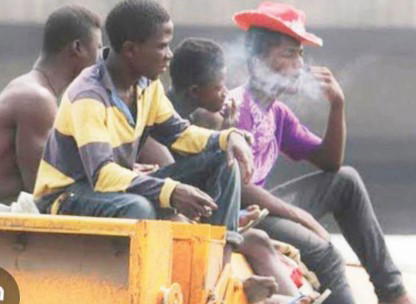
They are called ‘Omotaku.’ From industrial areas to major bridges, they see every breakdown as a chance to attack. They turn a driver’s moment of weakness into an exchange based on fear.
Omotaku is a Yoruba word meaning forceful extortion by any means, or taking something from someone at all costs.
These street urchins are like ghosts on the highway. Saturday Vanguard gathered that some of them are former union officials who were expelled for misconduct. Now they use their inside knowledge to intimidate people.
They don’t just hide; they actively watch the roads. From the wide Third Mainland Bridge to the busy streets of Ojuelegba and other parts of Lagos, they look for drivers in trouble.
“As soon as they reach you, they start making threats,” a weary truck driver told Saturday Vanguard. “If you try to stop and fix your vehicle yourself, especially to change a flat tyre, they gather around you. They say the spot belongs to them. Late at night, especially between midnight and 1 a.m., they are in control. You could be adding water to your radiator and suddenly find yourself surrounded.”
Modus Operandi
Their method is a brutal and calculated shakedown. It often begins with a “parking fee” for the space a stranded motorist occupies. A space the urchins brazenly claim as their own. Then comes a second charge for “assistance,” whether to push the stricken vehicle aside or to call a mechanic from their own network. Crucially, they maintain total control: no outside mechanic brought by the driver is permitted to work until the Omotaku’s demands are fully satisfied. This two-tiered extortion establishes their authority before the situation escalates further, often to the seizure of batteries or tools ,personal belongings , or the siphoning of fuel, from truck drivers,holding these items hostage in nearby shanties while negotiating a ransom.
This scenario also plays out when a motorist stops to relieve himself. These urchins surface, demanding payment for using their terrain.
They demand sums from ¦ 10,000 to ¦ 50,000 and beyond, depending on the victim’s perceived worth. On the isolated stretches of the bridges, especially the Third Mainland Bridge, the stakes and the fear are highest.
Surprisingly, these street urchins possess the contact details of some truck owners, whom they call directly to demand money before their vehicles are released to the drivers.
They do not take no for an answer. They insist on getting what they want from their prey and even suggest they reach out to friends and relatives to meet the demand.
Victims harrowing tales
For countless Lagosians, the Omotaku are not a news headline but a personal horror story. One of the victims, in a video that went viral, recounted a harrowing ordeal that unfolded on January 3, 2026. Laying bare the brutal mechanics of the Omotaku’s operation, he stated categorically:
“They are bandits operating all over Lagos, and if the Lagos State Government does not take action by putting the Neighborhood Watch on 24-hour duty, these boys will spoil the work of Governor Sanwo-Olu.”
He began: “At a mobile filling station in Obanikoro, my small vehicle broke down. The shaft had pulled out. Before I knew it, four of them came out of nowhere and started harassing me. I told them I needed help to get a towing vehicle before I could give them any money, but they didn’t listen.”
His attempt at reason was met with a rapidly escalating mob. He said: “The crowd kept growing. By the time I realized, there were 15 of them, and they were becoming more aggressive, insisting that I pay N50,000. I called some friends to help me get a towing vehicle, and soon there were 20 boys around me. The first set accused me of delaying them, and then they started hitting me. I was completely overwhelmed.”
In a desperate bid for safety, he transferred N50,000. But payment was not an exit ticket; it was an invitation for more.
“I had to call a friend to send me money before I transferred the ¦ 50,000, hoping they would leave, but some stayed, demanding to see the balance on my phone. I didn’t know what to do. In the end, I had to run for my life.
“They started shouting ‘thief!’ and chasing me. Luckily, a Korope driver stopped for me. I jumped in and found myself in Maryland, where I called the Army for help. If the driver had not intervened, I would not only have been beaten, but they would have taken my phone and forcibly collected more money. The trauma alone is unbearable. I am appealing to the Lagos State Government to act before this situation gets completely out of hand.” Another motorist, who identified himself simply as Jide, also shared his ordeal.
“I had an encounter with these urchins in November last year. I was on my way to Apapa and stopped briefly to pick up a friend at Toyota Bus Stop on the Oshodi–Apapa Expressway when I was suddenly swarmed by about seven rough-looking boys who claimed ownership of the spot where I parked. They demanded I pay ‘owo ile’ [land fee].
“It was my first time encountering them, and I tried to explain that the road was a government-owned facility. Before I knew it, they threatened to remove my side mirror. I initially parted with N1,000, but they insisted I must pay N7,000.
“More of them soon arrived, raising the demand to ¦ 10,000. As I looked ahead and noticed even more approaching, I hurriedly handed over N4,000 in N200 notes, telling them it was N7,000. While they gathered around the money to confirm the amount, I quickly got back into my car and sped off.”
Task force strikes
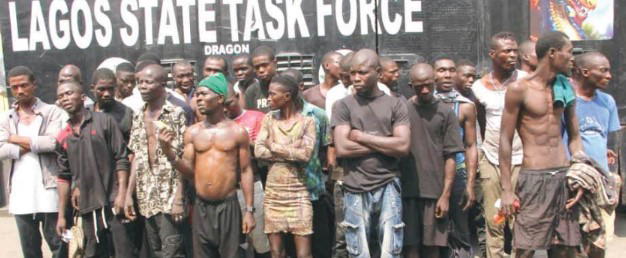
Heeding such desperate appeals, the Lagos State Taskforce moved from reports to raids. In continuation of its ongoing clean-up and enforcement operations aimed at ridding Lagos State of criminal elements, the agency on Tuesday, January 6, 2026, embarked on a coordinated operation across both the Island and the Mainland.
The operation was said to have followed repeated reports and concerns raised by the public through various platforms regarding the growing menace of the “Omotaku.”
Areas covered during the enforcement exercise included Apongbon, Fadeyi, Jibowu, Yaba Phase 1, Lagos Island, Palmgrove, Ojuelegba, Surulere, and other adjoining roads.
The Director of Public Affairs, Lagos State Taskforce, Gbadeyan AbdulKareem, explained that: “In these locations, the Taskforce observed the illegal activities of these miscreants who were unlawfully stopping articulated vehicles such as petroleum tankers, lorries, trucks, trailers, and private cars.
“During the raid, a total of 32 suspects were apprehended for constituting a public nuisance, illegal road obstruction, and violating the Transport Sector Reform Law of 2018 as well as the Environmental Management and Protection Law of 2017. Some were also found smoking substances suspected to be hard drugs.”
He added that the same evening, 15other suspects were arrested in other areas, in addition to the ones earlier arrested on the Oshodi- Apapa exoressway,noting that the operation was not the first.
Chairman of the Taskforce, CSP Adetayo Akerele, reiterated the agency’s resolve in a statement issued.
He said: “No stone will be left unturned in combing all nooks and crannies of Lagos to bring offenders to justice,” adding that the operation successfully restored sanity to all areas visited, with all suspects charged to court accordingly.
These arrests have ignited a demand among Lagosians, particularly its long-suffering motorists, not just for a momentary respite, but for sustained, proactive measures to finally and fully reclaim the highways.
The post ‘Omotaku’ terror: Highway wolves of Lagos appeared first on Vanguard News.