Nigeria’s wealth lies in Its people, not Oil -Shettima
 SKAiF NewsNG SNN
By Gift ChapiOdekina
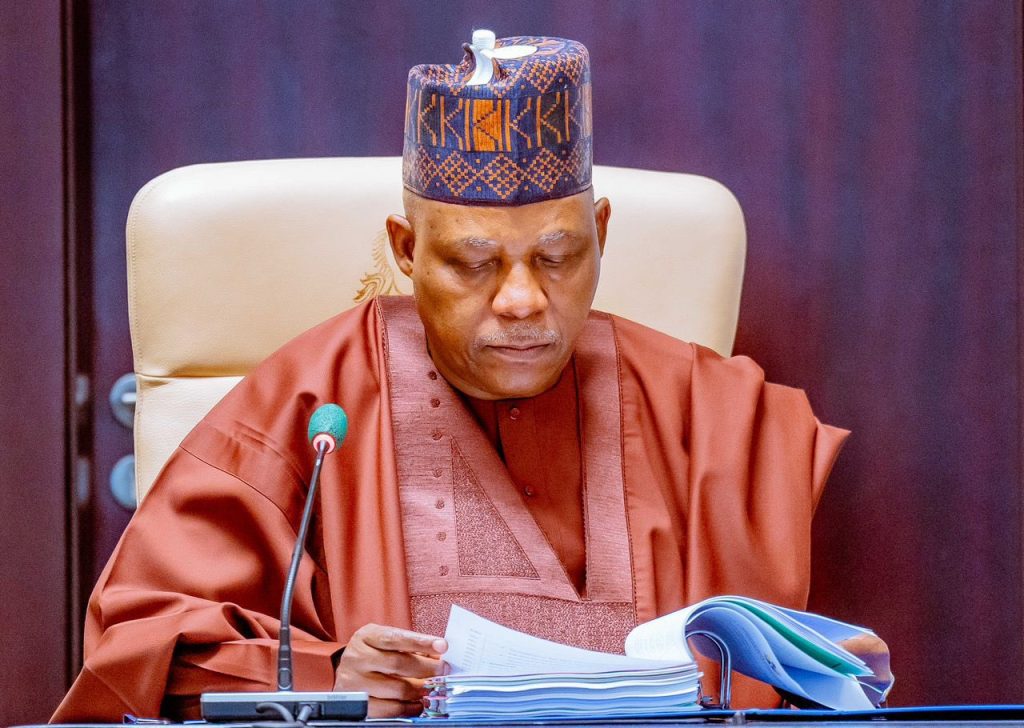
Vice President Kashim Shettima has reaffirmed the Federal Government’s commitment to deepening support for local production.
Shettima, represented by the Special Adviser, Special Duties, Dr. Aliyu Modibbo Umar, said this at the Made in Naija Trade Exhibition organised by the House of Representatives Committee on Commerce on Tuesday.
He said Nigeria’s economic identity and global relevance will be defined by what it creates.
The Vice President said Nigeria’s future depends on the creativity, ingenuity, and enterprise of its people.
“There is nothing that advertises the pride of a nation as much as the craft, creativity and conceptions of its people,” Shettima said. “They do more than signal the capability of the people. They serve as a fertilizer for the economy. They nourish every sector and give life to dreams yet to be imagined.”
He said the gathering was more than an exhibition; it was a statement of intent.
“This is both the assurance of our readiness to make Nigerian brands appeal to the world and a promise of the government’s commitment to work with you through this journey of transformation.”
Shettima stressed that the country’s wealth does not lie in oil fields, fertile land, or mineral deposits, but in what Nigerians can turn those resources into.
“Our fortune is what we make of these resources, the ambition that turns potential into prosperity. It rests on the shoulders of our most valuable asset, our human capital.”
He highlighted that Nigerian brilliance has already been demonstrated in multiple sectors, from agro-processing to architecture, textiles to technology, and manufacturing to music. But he warned that creativity is not enough if Nigerians fail to support what they produce.
“It is not enough for us to produce. We must patronize what we produce. Every time we choose a product manufactured here, we are making an investment in a Nigerian entrepreneur, an artisan, a factory worker, a young graduate building a future.”
According to him, buying Nigerian strengthens the naira, supports jobs, reduces dependence on global supply chains, and nurtures a sustainable middle class.
Yet Shettima noted that the target goes beyond self-reliance.
“Made in Nigeria must become synonymous with quality, innovation and competitiveness on the global stage. We have the resources, we have the creativity, we have the human capital. What remains is our resolve.”
The Vice President said President Bola Ahmed Tinubu considers local creators and producers as essential partners in national renewal, describing his administration as “a dreamland for those who create.”
He outlined ongoing government efforts to make Nigeria a manufacturing and innovation hub, including interventions built to remove barriers and expand market opportunities for MSMEs and local industries.
“Our administration is committed to providing the infrastructure, stable policies and essential finance needed for our local industries to scale up, meet international standards, and proudly export Nigerian excellence to the world.”
He said the government is establishing special economic zones, expanding access to financing, reforming ports, and ensuring certification systems meet global benchmarks.
“With the world’s highest quality, we want the answer to be Nigeria,” Shettima said.
He described the Made in Naija exhibition as a symbolic declaration of confidence in Nigerian talent, and a refusal to let others define the country’s global identity.
“Nigeria is not a country waiting to be defined by others. We are determined to define ourselves. If we remain steadfast, producers and consumers, government and industry, artisans and policymakers, we will build a Nigeria where Made in Nigeria is not a sentimental choice, but a global reference.”
Speaker of the House of Representatives, Rt. Hon. Abbas Tajudeen reaffirmed the National Assembly’s full support for policies that prioritise Nigerian-made goods, saying the country’s future depends on local production, value addition, and reduced dependence on imports.
Abbas praised the initiative as a timely response to Nigeria’s urgent need for industrial growth and economic self-reliance.
He commended the committee’s chairman, Hon. Ahmed Munir, for conceptualising and delivering the exhibition, describing it as a practical expression of the nation’s industrial ambition.
“Their efforts represent a timely response to the national call for industrial growth and economic self-reliance,” Abbas said.
With the theme “Reshaping the Future of Commerce,” the exhibition aligns directly with Nigeria’s development objectives, the Speaker stated.
He said the country must now shift from an import-dependent economy to one built on domestic production, value creation, and inclusive growth, especially under the African Continental Free Trade Area (AfCFTA), which offers huge opportunities, but only for competitive economies.
“We must position Nigerian goods as competitive, dependable, and reasonably visible,” Abbas noted.
The Speaker also highlighted the significance of the Nigeria First Policy, launched by President Bola Ahmed Tinubu and endorsed by the National Assembly.
The policy mandates government ministries, agencies, and institutions to give priority to locally manufactured goods in all public procurement processes.
“Its goal is clear: to boost domestic industrial output, reduce over-reliance on imports, and create sustainable employment,” he said.
Abbas stressed that full compliance is expected, noting that the exhibition itself is evidence of the policy being implemented.
Recalling his recent visit to China, the Speaker said Nigeria must learn from countries that built global competitiveness through sustained local manufacturing.
“Nigeria must follow a similar path. We need to process our raw materials, add value domestically, and confidently promote Nigeria-made goods in regional and global markets,” he said.
Weakening reliance on imports, he noted, is not only an economic choice but a national obligation.
“Strengthening local production is not just a tactic for survival. It is a duty we owe to the present and future generations,” Abbas declared.
He reaffirmed that the National Assembly has already passed and amended several pieces of legislation targeting industrial growth, ease of doing business, and support for small and medium-sized enterprises.
Still, he cautioned that increased output must not come at the expense of quality.
“Nigerian manufacturers must ensure their products meet global standards. Quality assures credibility and consumer trust,” he said.
Abbas also urged Nigerians to embrace their civic role in economic development.
“Each time we choose locally made goods, we strengthen our economy and reinforce our identity,” he said. “These decisions are powerful expressions of economic responsibility and national solidarity.”
Chairman of the House Committee on Commerce, Hon. Ahmed Munir, Nigeria, stands on the brink of an industrial and economic rebirth driven by local manufacturing, innovation, and strong legislative support.
Munir said the country must now “forge prosperity with our own hands,” transforming raw potential into globally competitive products made in Nigeria.
He noted that the focus on local content is projected to create over five million new jobs by 2030, shifting Nigerian youths from the unemployment line into factories, workshops, and innovation hubs across the country.
According to him, this shift represents not just economic growth, but the “restoration of the dignity of labour.”
Munir emphasized that substituting key imports with locally made alternatives remains central to stabilizing Nigeria’s foreign reserves.
He stated that by reducing dependency on foreign goods, the country could save up to $20 billion annually in foreign exchange, a move that aligns with the strategic priorities of President Bola Ahmed Tinubu’s administration.
The lawmaker described the non-oil sector’s expansion as “no longer aspirational, but a policy pillar,” noting that products made in Nigeria are expected to contribute an additional 5 percent to the country’s GDP within five years.
“Our vision extends beyond our borders,” he said. “Nigerian products must be ready to compete not just in Lagos, Port Harcourt, or Abuja, but in London, Beijing, and New York.”
Munir also highlighted ongoing legislative efforts under the 10th National Assembly, led by Speaker Abbas Tajudeen, including work on domesticating the African Continental Free Trade Area (AfCFTA) agreement, which opens access to a $3.4 trillion market.
Other priority areas include establishing a national Weights and Measures Centre and strengthening regulatory frameworks that support industrial competitiveness.
He affirmed that the House remains committed to building a strong economic base “brick by Nigerian-made brick,” with policies designed to sustain growth, attract investment, and ensure long-term national prosperity.
The post Nigeria’s wealth lies in Its people, not Oil -Shettima appeared first on Vanguard News.