Nigeria’s health system faces crisis amid financing, workforce shortages – Public physicians warn
 SKAiF NewsNG SNN
…Say out-of-pocket payments push families into poverty
By Chioma Obinna
Nigeria must urgently overhaul its health financing, workforce policies, and governance systems if it hopes to stop the country’s worsening health indicators from spiralling further, Public Health Physicians warned.
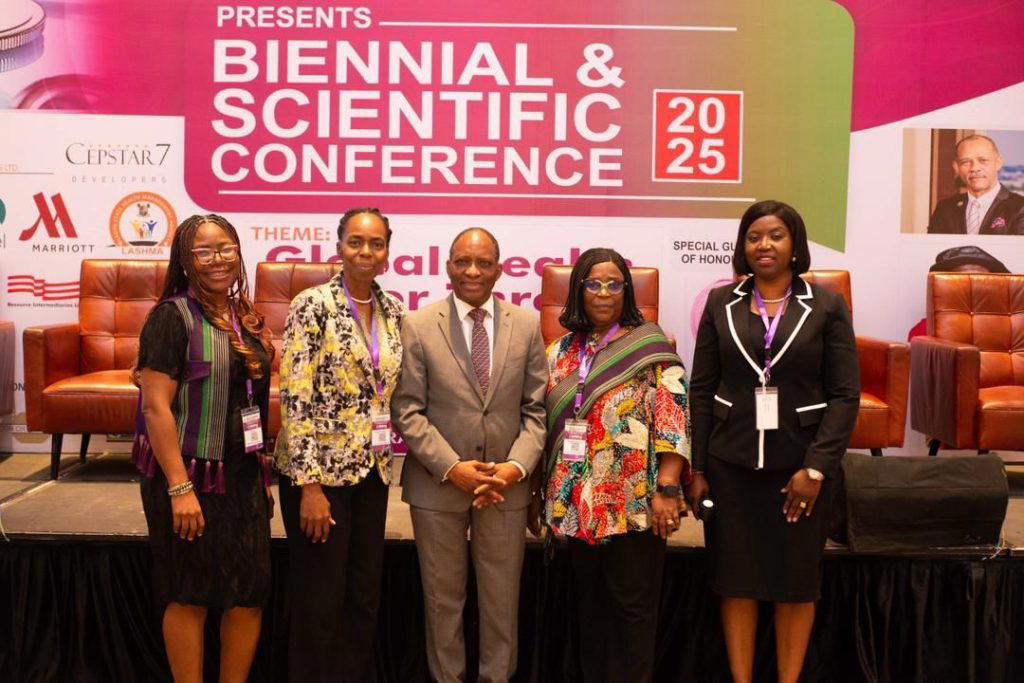
The experts who spoke at the Biennial & Scientific Conference of the Association of Public Health Physicians of Nigeria, APHPN, Lagos Chapter.
Speaking at the conference, Chairman of the Lagos Chapter of APHN, Prof Yetunde Kuyinu, described the theme: “Global Health Under Workforce Threat: Advancing Sustainable Financing & Workforce Capacity for Equitable Healthcare Delivery in the Global South” as “timely and unavoidable” given the global movement of diseases, the country’s strained health workforce, and the rising cost of care.
“The world is a global village. Diseases don’t need visas. “COVID-19 came from outside; Ebola came from outside. Emerging diseases, non-communicable conditions, and emergencies are putting our systems under intense pressure.”
Kuyinu warned that Nigeria’s heavy dependence on out-of-pocket payments remains one of the biggest barriers to health equity.
She explained that patients often pay for consultations, tests, and medicines directly, especially those battling chronic conditions such as hypertension. Many, she said, arrive late for treatment because they cannot afford the cost of care.
“Health cannot be free. Without good financing, we can’t get there,” she insisted. “Most people do not understand health insurance, and many cannot afford it. Some think care will be quick if they pay on the spot, but they still end up presenting late, and by then they have no money left.”
She noted that although the federal government has mandated all states to establish health insurance schemes, including Lagos through LASHMA, enrolment remains far below the level needed to reduce the financial burden on households. Strengthening insurance, she argued, is key to ending catastrophic health spending and ensuring access for Nigerians “whether in the rural, the waterlogged areas or the city centre.”
In his presentation on universal health coverage, Prof Akin Osibogun, Professor of Public Health at the College of Medicine, University of Lagos, said Nigeria’s financing model is fundamentally flawed.
“An effective health financing system gives citizens access to care without throwing them into jeopardy,” he said.
“Out-of-pocket spending forces families to choose between paying for health and paying rent or buying food. They end up seeking care late, and outcomes are far poorer.”
He explained that countries with high levels of out-of-pocket payments consistently record the worst health outcomes globally. Nigeria’s maternal mortality ratio remains among the highest in the world, while infant mortality—currently around 75 per 1,000 live births exceeds European rates by more than twentyfold. Under-five mortality stands at about 125 per 1,000, compared with single-digit rates in high-income countries.
Osibogun said shifting to pooled-risk systems is urgent.
He pointed out that Nigeria and Rwanda began their national health insurance journeys around the same time, nearly two decades ago. While Rwanda now covers over two-thirds of its population, Nigeria remains stuck.
Osibogun also warned of a worsening workforce crisis as Nigerian doctors continue to emigrate. “We train excellent health workers, but other countries attract them with better pay and conditions. We must expand training capacity, employ more trainers, offer incentives, and reduce burnout. This is how we retain talent,” he said.
He emphasised the value of the postgraduate fellowship programme, which equips doctors with advanced clinical, research, and leadership skills.
“The fellowship is rigorous, exceeding 300 credit units—much higher than a typical PhD. Fellows are central to medical education and research output, yet many still face poor remuneration and working conditions,” he said.
Also speaking, Dr Sunday Mgbejume, Management Consultant with PharmAccess Nigeria, stressed the need for impact-driven healthcare investments.
“Over 70 percent of Nigerians pay out of pocket, pushing many into poverty. Current investments focus on buildings and equipment, not on access and affordability. We must prioritise people,” he said.
He criticised fragmentation of the health system, noting that small, isolated facilities struggle to attract funding. “If ten small facilities come together, banks will listen. Aggregation reduces risk and attracts capital. Digital integration across state health insurance schemes is critical. If someone enrolled in Lagos seeks care in Kano, the system should instantly recognise them,” he said.
On his part, Prof Adesegun Fatusi, President of the Society for Adolescent and Young People’s Health in Nigeria (SAYPHIN), warned that demographic pressures, climate change, weak infrastructure, and declining donor funding are placing Africa under severe strain. He noted that per-capita health expenditure remains among the lowest globally and that donor dependency is high, especially for HIV, TB, and reproductive health commodities.
“Health needs are rising, donor funding is shrinking, and systems remain fragile. Countries must rethink how health is financed, governed, and delivered,” he said, calling for stronger domestic financing, improved primary healthcare, expanded workforce production and retention, and community-rooted governance.
Earlier, Kuyinu urged participants to focus on actionable solutions, saying: “This conference is about solutions. We must strengthen financing, build workforce capacity, embrace innovation, and create resilient health systems that leave no one behind,” she said.
The post Nigeria’s health system faces crisis amid financing, workforce shortages – Public physicians warn appeared first on Vanguard News.