Nigeria will not fall — Gowon
 SKAiF NewsNG SNN
By Luminous Jannamike
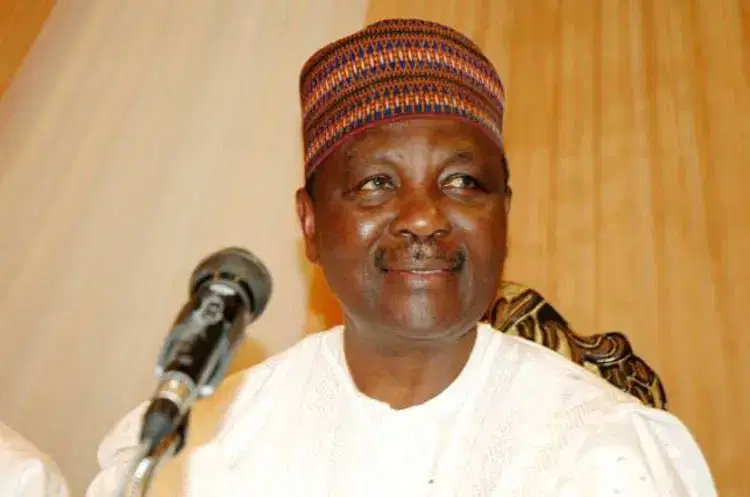
Former Head of State, Yakubu Gowon, on Tuesday declared that Nigeria ‘will not fall’ despite mounting political, economic and security pressures, as the country’s political, military and traditional elite gathered in Abuja for the public presentation of his autobiography, ‘My Life of Duty and Allegiance.’
What began as the unveiling of a memoir quickly evolved into a wider national conversation about leadership, memory, reconciliation and the anxieties surrounding Nigeria’s future ahead of the 2027 general elections.
Throughout the gathering, speaker after speaker returned to themes of unity, distrust, political desperation and the unfinished business of nation-building more than five decades after the civil war.
Among those who spoke were Vice President Kashim Shettima, who represented President Bola Tinubu; former President Goodluck Jonathan; elder statesman Theophilus Danjuma; the Sultan of Sokoto, Muhammadu Sa’ad Abubakar; the Emir of Kano, Muhammadu Sanusi II; and Bishop of the Catholic Diocese of Sokoto, Matthew Kukah, who reviewed the book.
For much of the event, Gowon spoke less like a retired military ruler revisiting history and more like an elder statesman worried about the future of the country he once led through war, uncertainty and near collapse.
“During my time as Head of State, the country did not fall, and I remain confident that despite all her challenges, Nigeria will still not fall,” he said.
The former military ruler warned against the desperation that increasingly defines Nigerian politics during election cycles.
“Today, Nigeria has once again entered another cycle of preparation towards the 2027 general elections. It goes without saying that we must all strive to contain the desperation frequently displayed by the political class, who engage in what they describe as ‘do-or-die politics,’ alongside their inability to conduct free, fair, and transparent elections, even in matters as minor as intra-party contests,” he stressed.
Gowon said the autobiography was partly intended to address misconceptions surrounding his administration and the civil war years.
“My belief is that this book, ‘My Life of Duty and Allegiance,’ will help correct misconceptions and fill the gaps in public narratives,” he said.
Gowon Revisits Burden Of One Nigeria
At another point during his remarks, Gowon reflected on the emotional burden of keeping the country together during the civil war years.
He said, “I remember reading in the pages of a newspaper: ‘Do you know the meaning of Gowon?’
“When I read the paper, I saw where it said: ‘The meaning of Gowon is Go On With One Nigeria.’
“It gave me renewed courage and determination to ensure that this country remained united.”
The former Head of State also paid tribute to traditional rulers, military officers and ordinary Nigerians who stood by his government during the war.
“I can assure you that Nigerians from all parts of the country truly rallied round in support,” he said.
He particularly remembered traditional rulers who encouraged their communities to support peace and national unity at a time the country stood dangerously close to collapse.
Jonathan: Leadership is Tested in Times of Crisis
Former President Jonathan described the autobiography as more than a personal memoir, saying it represented a living account of some of the defining moments in Nigeria’s history.
He said, “Today’s event is not merely the unveiling of a book; it is the presentation of a living testimony.
“It reflects the life of a leader who stood at the centre of some of the defining moments in our national journey.”
Jonathan said Gowon assumed office at one of the country’s most dangerous periods and distinguished himself under extraordinary pressure.
“Many people can appear to be good leaders when circumstances are favourable. It is during moments of crisis that you truly distinguish the men from the boys,” he said.
Reflecting on the civil war years, Jonathan said Gowon’s ‘No Victor, No Vanquished’ declaration helped prevent deeper national bitterness after the conflict.
“That philosophy laid the foundation for healing, reconstruction and reintegration at a time when bitterness and division could easily have prevailed,” he said.
Jonathan also praised the establishment of the National Youth Service Corps, NYSC, describing it as one of the most enduring legacies of the Gowon administration.
“The NYSC was designed to unite our country and reorient young Nigerians so that we would begin to see ourselves first as Nigerians,” he said.
Recalling his secondary school days shortly after the civil war, Jonathan said two youth corps members posted to his school transformed learning at a time graduate teachers were scarce.
“One taught Mathematics, Further Mathematics and Chemistry, while the other taught Biology. Their contribution helped us tremendously,” he recalled.
The former President said Gowon’s role in establishing the Economic Community of West African States, ECOWAS, also demonstrated the long-term impact of visionary leadership.
“These are the kinds of policies that continue to shape societies long after leaders leave office,” he said.
Jonathan said the autobiography arrived at a time when countries across the world were struggling with division, insecurity and political polarisation.
“There is much that contemporary leaders and future generations can learn from the experiences captured in this book; especially the virtues of vision, restraint, dialogue, courage and reconciliation,” he said.
He urged younger Nigerians to study the experiences of leaders who governed during difficult periods in the country’s history.
Shettima Warns Against Politics of Division
Representing President Tinubu, Vice President Shettima delivered one of the day’s most politically charged speeches, repeatedly warning against division, suspicion and the weaponisation of identity.
“Countries do not endure by accident. They endure because, in moments when collapse appears possible, some men and women choose duty over banditry,” he said.
Drawing on Gowon’s background as a Northern Christian who rose to lead a deeply divided country, Shettima said the former Head of State represented a different idea of Nigerian identity.
“His life proved that identity can be carried without hostility,” he said.
The Vice President praised Gowon’s role in the creation of ECOWAS, saying the regional bloc reflected an understanding that African countries could only survive through cooperation.
“In that vision, General Gowon saw Africa as a community of shared burdens and shared possibilities,” he said.
At several points, Shettima returned to the issue of worsening distrust among Nigerians, lamenting the erosion of older bonds across communities.
“Today, however, the situation is different. Suspicion has crept into our relationships, and it ought not to be so,” the Vice President said.
He urged communities in Plateau State and other violence-prone areas to embrace peace and coexistence.
“We must make peace because there can never be development without peace, and there can never be peace without development,” he added.
In one of the event’s defining moments, Shettima urged Nigerians to engage honestly with their history instead of reducing it to ceremonial nostalgia.
According to him, “A serious nation does not merely cheer its history. A serious nation studies it, argues with it, learns from it, and uses it to build a wiser future and policy agenda.”
Kukah Says History Depends on Perspective
Reviewing the autobiography, Bishop Kukah reflected on the limits of personal testimony and the complexity of historical memory.
“No autobiography summarises history in totality. Nobody tells the whole truth because a point of view is a point from a view,” he said.
The cleric said readers dissatisfied with autobiographical accounts should document their own versions of events instead of demanding a single uncontested narrative.
“And if you respond negatively to an autobiography, the answer is: go and write your own,” he said.
Kukah also reflected on Gowon’s roots in Wusasa, Zaria, describing the community as an important part of Northern Nigeria’s intellectual and political history.
He recalled figures linked to the community, including RAB Dikko (first medical doctor in Northern Nigeria), Michael Angulu (first JAMB Registrar) and Rhoda Muhammad, Nigeria’s first female ambassador, before ending his review with the phrase most associated with Gowon’s wartime leadership.
“To keep Nigeria one is a task that must be done.”
Sanusi: Character Outlives Power
In one of the event’s most personal interventions, Emir Sanusi argued that history ultimately remembers leaders less for infrastructure and more for character.
He said, “What remains in the memory of the people is the character of their leaders. Do they remember you for integrity or for corruption? Do they remember you as a patriot or as a parochial figure? Do they remember you for justice or injustice?”
Sanusi recalled how Gowon maintained personal contact with the family of the late Colonel Pam, one of the victims of the 1966 coup, even while serving as Head of State.
He said, “What I remember vividly, even at that age of 8, was that General Gowon, as Head of State, would send handwritten letters to Yusuf (Pam’s son), signed ‘Uncle Joe’.
“That gesture revealed the kind of man he was, that even as Commander-in-Chief and Head of State, he still found the time to write personally to the son of his late friend so the boy would continue to feel he still had a father.”
The Emir thanked Gowon for offering younger Nigerians an example of leadership rooted in empathy, restraint and humanity.
Danjuma Pays Tribute, Donates N3bn
Launching the book with a donation of N3 billion, retired Lt.-Gen. Danjuma described Gowon as one of the defining figures of post-independence Nigeria and reflected emotionally on a relationship that began more than seven decades ago in Wusasa, Zaria.
He recalled, “As a student in St. Bartholomew’s Primary School, Wusasa, I was always excited to see him in Government College Zaria uniform whenever he visited his parents in Wusasa.
“General Gowon became a mentor, role model, leader and boss whose impact on my career was quite profound.”
He praised Gowon’s handling of the post-war reconciliation process.
“His well recorded slogan of ‘no victor, no vanquished’ after the Civil War set the tone for his highly effective post-war policies of reconciliation, reconstruction and rehabilitation.”
Danjuma described the autobiography as a treasure trove of history that would remain valuable to historians, policymakers and younger Nigerians seeking to understand the country’s past.
Sultan Urges Nigerians To Preserve Trust
The Sultan of Sokoto praised Gowon for documenting his own version of history while still alive.
He said, “Launching your biography while you are still alive is one of the most important things anyone can do,” he said.
“Too often, people write about someone’s life only after the person is gone and unable to defend himself.”
The monarch said Gowon remained respected across regional and religious divides because of his humility and sincerity.
“You are a good man, and I pray that you will continue to enjoy many more years in good health and happiness,” he said.
Meanwhile, Africa’s richest man, Aliko Dangote, donated N500 million towards the launch.
By the end of the event, the atmosphere inside the hall had shifted beyond celebration into something heavier and more reflective.
Beneath the tributes, donations and memories of war and politics was a quiet but unmistakable concern among many of the country’s elder statesmen that Nigeria was once again entering a period of strain, distrust and dangerous political tension.
And yet, through the speeches, memories and appeals for reconciliation, one refrain kept resurfacing, from the battlefields of the civil war era to the uncertainties of the present moment: Nigeria must endure.
The post Nigeria will not fall — Gowon appeared first on Vanguard News.