Lagos moves to curb dredging abuse
 SKAiF NewsNG SNN
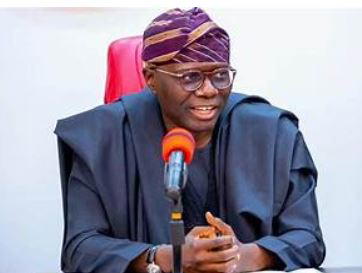
…Commissioner says state adopts data-driven, preventive approach to waterfront management
By Olasunkanmi Akoni
LAGOS — The Lagos State Government has intensified efforts to tackle flooding, regulate sand dredging and improve the management of its waterfronts and waterways to protect lives, infrastructure and the environment.
The State Commissioner for Waterfront Infrastructure Development, Dayo Bush-Alebiosu, disclosed this during an interactive session with newsmen in Maryland, Lagos.
Bush-Alebiosu said the administration was moving away from reacting to floods after they occur to identifying the root causes of water accumulation and putting preventive measures in place.
He said the measure of success in flood management should be how quickly floodwater drains after rainfall, rather than simply whether flooding occurred.
According to him, “Flooding happens everywhere. But what you should look at is how quickly the water drains. Some of these interventions should have been addressed before the problems explode. The issue, for me, is about understanding the factors responsible and putting the right interventions in place.”
Dredging
On the challenge of dredging, Bush-Alebiosu stressed that Lagos could not effectively manage its aquatic resources without knowing the quantity of sand in its waters, where dredging was taking place and where excavated materials ended up.
“How can we not know the amount of sand in our waters? How can we not know where the sand is going? What Lagos State has is land and water.
“How do we utilise them? If we cannot say, ‘This area, let us leave it. Let it replenish itself,’ you cannot do that if you do not have the necessary information,” he said.
The commissioner said the ministry was working to capture data and conduct studies that would provide a scientific basis for decisions on dredging, reclamation and waterfront development.
He expressed concern over what he described as damaging practices by some sand-mining operators, citing extensive excavation around the Lagos airport that had left craters and degraded land.
Using drone footage covering about five kilometres within the airport area, he said officials observed large excavated areas that had not been properly restored.
“The expectation is that once you are done excavating, the materials should be properly managed and the site restored appropriately. But that did not happen in some places.
“Now we have very large excavated areas, and fixing them will cost a significant amount of money,” Bush-Alebiosu said.
He also linked some premature road failures to dredging and sand-mining activities, noting that some roads designed to last for decades had deteriorated in less than 10 years due to activities around them.
The commissioner acknowledged past challenges arising from overlapping responsibilities among the Ministry of the Environment, Lands Bureau and Physical Planning, which he said had slowed waterfront management.
“But that is now in the past. We are working together better with the relevant agencies,” he said.
Bush-Alebiosu expressed optimism that the proposed Lagoon Authority and Lagoon Policy could now be pursued following a Supreme Court judgment that clarified state and federal responsibilities over waterways.
“Now, with the Supreme Court judgment clarifying the position, we can look forward to those things happening because they are necessary,” he said.
Reclamation projects
On reclamation, the commissioner said the state was reviewing approvals granted to companies that had delayed commencement of projects for between three and five years.
He said the government had to investigate dredging activities around bridges and other sensitive areas to confirm their safety before allowing projects to proceed.
“I am still insisting on getting an express letter confirming that, so that years after we are no longer there, there will be something on the file to refer back to,” Bush-Alebiosu said.
Water transport
Bush-Alebiosu said investment in jetties and waterfront infrastructure was aimed at expanding water transportation, reducing pressure on roads and lowering the cost of transporting goods.
He cited a new jetty project expected to serve Bariga, Gbagada, Maryland, Anthony, Ketu and Shomolu, with a water journey of between 12 and 15 minutes.
He added that the proximity of the facilities to markets would also ease the movement of goods.
The commissioner said the ministry had commenced the renovation of inherited jetties, with emphasis on location, accessibility and functionality.
Defending the pace of projects, he said: “Some call me slow. I work differently. I like to make sure we get things right… For me, it is about continuing to achieve and making sure that what we are doing is sustainable.”
Bush-Alebiosu assured that the ministry would continue working with stakeholders to harness Lagos’ land and water resources for mobility, economic growth, environmental protection and sustainable benefits for residents.
The post Lagos moves to curb dredging abuse appeared first on Vanguard News.