Lagos engages stakeholders on new education policy for non-state schools
 SKAiF NewsNG SNN
By Olasunkanmi Akoni
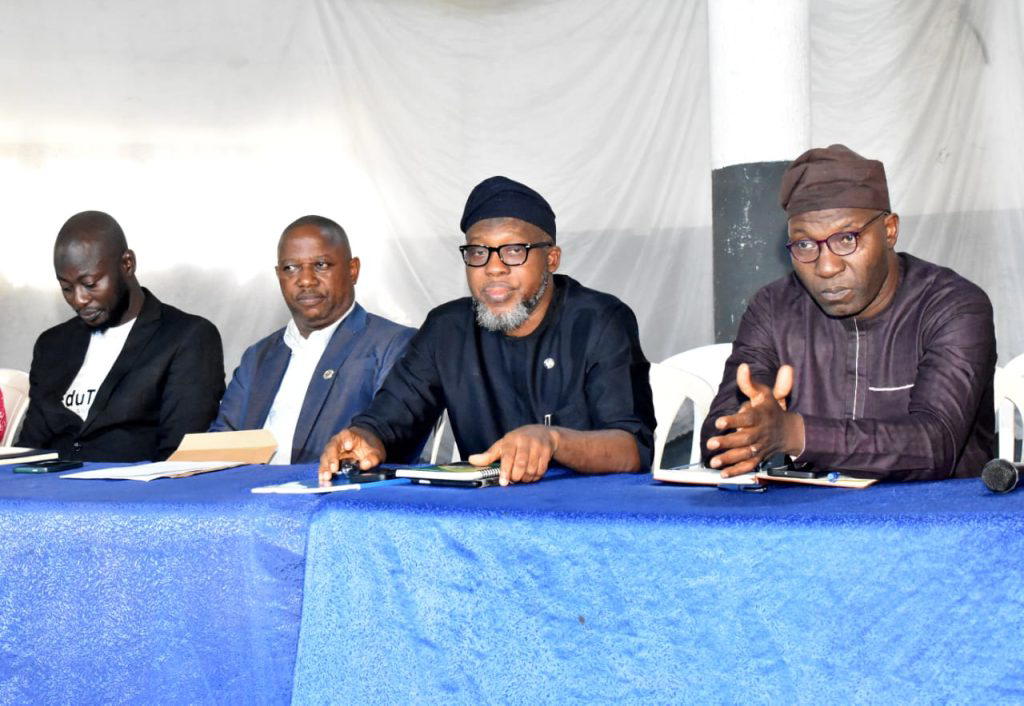
The Committee on the Lagos State Policy on Non-State Schools (LSPNS) has held a public hearing with about 200 Education Stakeholders, who shared their contributions and perspectives on the draft framework aimed at improving the regulation and quality of education across non-state schools (private schools) in the State.
The session, held at Alausa, Ikeja, provided a platform for participants to engage with key provisions of the draft policy, with stakeholders commending its comprehensive nature while also advocating specific additions to strengthen the final policy, designed to enhance regulation, support, and the integration of non-state schools into the broader Lagos education ecosystem.
Addressing the participants at the public hearing, the Chairman of the Committee, who is also the Director, Private Education and Special Programmes of the Office of Education Quality Assurance, OEQA, Dr Sulaimon Ogunmuyiwa, stated that the Commissioner for Basic and Secondary Education, Mr Jamiu Tolani Alli-Balogun, is committed to developing a holistic policy that accommodates the interests of all relevant stakeholders.
Ogunmuyiwa assured school owners of a fair and unbiased evaluation, stressing that the Lagos State Government seeks both quality education and an environment in which school owners can thrive.
While stating that the final approval of the policy rests with the Commissioner for Basic and Secondary Education, Ogunmuyiwa said that the Committee will conduct its due diligence and present its position in the most professional manner for the Commissioner’s approval.
Speaking further, Ogunmuyiwa stated that, following the Commissioner’s approval, the draft policy will be presented to the State Executive Council for consideration and the Mr Governor’s assent.
He, however, assured participants that all substantive inputs would be reviewed and integrated into the final policy if it align with the goals of quality, equity and sustainability.
The Head, Research Unit (OEQA), who also doubles as the Committee Secretary, Mr David Ojelade, described the forum as a pivotal moment in the educational advancement of Lagos State.
Ojelade observed that as non-state schools expand access to education, ease the burden on public schools, and provide innovative learning alternatives, it has become essential to create a harmonised regulatory framework that guarantees quality, safety, and accountability.
He explained that the LSPNS is crafted to align with national standards, clarify roles and responsibilities within the sector and foster stronger collaboration between government and non-state actors.
Ojelade stressed that the public hearing serves as an avenue for stakeholders to interrogate the draft, raise concerns and recommend improvements in a process guided by transparency, fairness, and inclusive participation.
In his remarks, the Southern Region Lead for the Partnership for Learning for All in Nigeria (PLANE), Dr James Fadokun, described Lagos State as a model for the entire South-West in education reform.
He applauded the State Government for the seriousness and commitment accorded to the policy, even though it originates from a federal framework.
Fadokun expressed confidence that the concerns raised by school owners, most of which he said were in the interest of learners and institutions, would receive due attention from the state government.
He further commended Governor Babajide Sanwo-Olu for prioritising education under the THEMES+ Agenda, particularly the focus on Education and Technology.
Throughout the session, stakeholders presented oral and written submissions, sought clarifications from the drafting committee and highlighted issues requiring further deliberation.
Prominent among their concerns was a call for a review of the tax obligations placed on schools to prevent multiple taxation affecting both proprietors and parents.
Participants also advocated exemptions or special considerations for charitable, non-profit and faith-based schools that operate primarily to support government efforts.
Additionally, some school owners proposed that the State should allow schools to obtain approval as specialised schools, whether science, arts or commercial-focused, to promote excellence and streamline their operational mandates.
Once finalised and adopted, the Lagos State Policy on Non-State Schools is expected not only to strengthen oversight and improve educational outcomes, but also to stand as a model of effective collaboration between government and stakeholders in the best interest of the Nigerian child.
Stakeholders present include: Private school associations, Homeschoolers, tutorial Centres, virtual/online schools, and school proprietors.
Others include NGOs, faith-based organisations, parents, education professionals, and members of the media, among others.
The post Lagos engages stakeholders on new education policy for non-state schools appeared first on Vanguard News.