Inside Nigeria’s secret kitchens of power, by Stephanie Shaakaa
 SKAiF NewsNG SNN
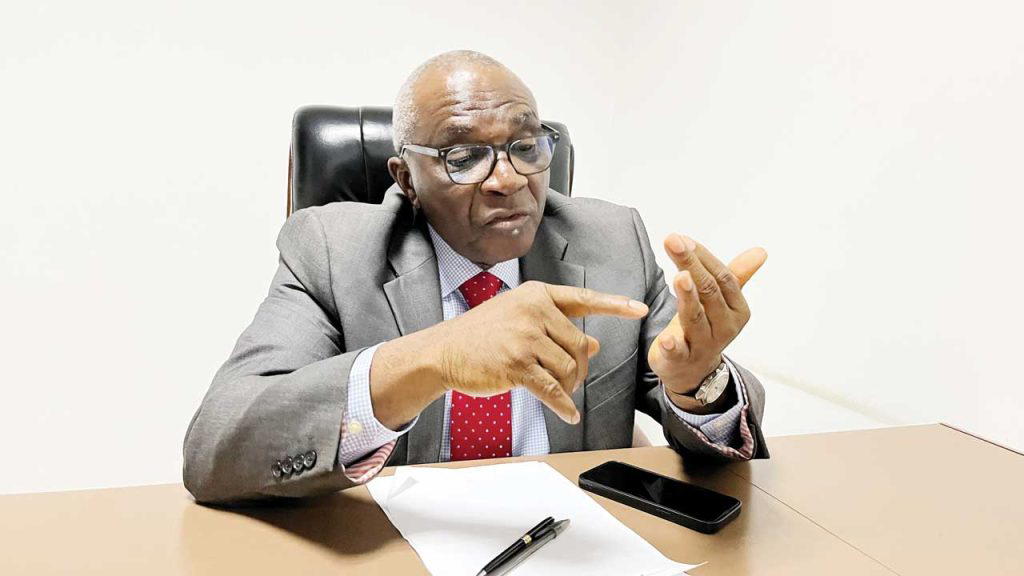
Every throne has its whisperers. Every president has a kitchen. The idea is hardly new. Leaders everywhere surround themselves with trusted advisers who quietly shape decisions, filter information, and sometimes determine who rises or falls.

In American political history, it was called the kitchen cabinet, a term traced to Andrew Jackson’s era. In Nigeria, however, the concept has not just endured, it has been perfected. Across military and civilian governments alike, the inner circle has often mattered more than formal institutions.
From Babangida to Tinubu, power in Nigeria has never resided solely in the office of the president. It has lived and often thrived in the kitchen. Ibrahim Babangida was the master strategist of Nigeria’s military era.
His kitchen cabinet was a carefully constructed mix of loyal generals, intelligence operatives, and political fixers who understood power beyond uniforms and ranks. Figures like Augustus Aikhomu and a rising Sani Abacha knew the corridors of influence better than most members of the Armed Forces Ruling Council.
Babangida was famous for sudden political maneuvers that left military governors, ministers, and sole administrators scrambling. These moves were never accidental. His inner circle filtered intelligence, advised on loyalty, and prepared the ground long before decisions were announced. Access to Babangida was everything. Without it, even the boldest power holder quickly learned how irrelevant they could become.
Sani Abacha’s regime was tighter, darker, and ruled by fear. His kitchen cabinet was built on absolute loyalty rather than brilliance. Mohammed Abacha, Ismaila Gwarzo, and Hamza Al Mustapha controlled access, information, and fate. Careers ended quietly. Some people simply disappeared from relevance.
Even Abdulsalami Abubakar, Abacha’s deputy, had to navigate the inner web carefully. Abacha’s kitchen was not advisory, it was the engine of the regime, deciding who prospered, who was protected, and who was erased.
When Abdulsalami Abubakar took over, his time was brief but historic. He understood the value of a trusted inner circle and surrounded himself with discreet military officers and advisers. The transition to civilian rule was not accidental or spontaneous. It was planned, guarded, and executed behind closed doors.
The decision to hand power to Obasanjo was secured long before Nigerians watched the swearing in. The kitchen worked quietly, but with precision. Olusegun Obasanjo’s return in 1999 ushered in a civilian kitchen cabinet that was louder, more visible, and deeply political. He had many people around him, but only a few truly sat close.
Andy Uba’s access to Aso Rock became legendary. A word from him could open doors or shut them permanently. Within the PDP inner circle, Tony Anenih, famously known as Mr Fix It, operated as one of the most powerful unelected men of the era, neutralizing political obstacles with ease. Family mattered too. Iyabo Obasanjo, simply by proximity, had influence. Those who understood Obasanjo’s temperament shaped appointments, legislation, and party direction.
The kitchen was not always visible, but it was constantly felt. Umaru Musa Yar’Adua was a quiet president with a powerful inner circle. His kitchen cabinet revolved around what Nigerians loosely called the Katsina group.
Tanimu Yakubu and Sayyidu Mohammed served as advisers and gatekeepers, but the most influential figure was his wife, Hajiya Turai Yar’Adua. Soft spoken yet formidable, she controlled access during his prolonged illness. For months, power flowed through filters, silences, and withheld information. Nigeria was effectively governed from the shadows. Influence during Yar’Adua’s era was understated, but decisive. Goodluck Jonathan’s kitchen cabinet reflected his presidency personal, emotional, and regionally grounded.
Diezani Alison Madueke wielded extraordinary autonomy as Petroleum Minister, becoming both powerful and controversial. Chief Edwin Clark served as a political guardian and loud defender. Patience Jonathan was not just First Lady but a political force who intervened openly in appointments and strategy. Access to Jonathan’s inner circle meant access to opportunity. Exclusion often meant political extinction.
Muhammadu Buhari’s presidency normalized the word cabal. Power rested in the hands of a few: Abba Kyari, the powerful chief of staff; Mamman Daura, the seasoned cousin; and Isa Funtua, the behind the scenes power broker.
Ministers, governors, and diplomats quickly learned that their path to Buhari ran through this circle. Decisions on appointments and policy flowed through them. They were feared, resented, and sometimes hated, but their influence was undeniable.
Bola Ahmed Tinubu arrived not with a kitchen cabinet, but with a full pantry. His inner circle is the product of decades of political engineering. At its core is Remi Tinubu, a political heavyweight in her own right. Seyi Tinubu has emerged as one of the most influential young men in Nigeria by virtue of blood and proximity.
Around them are loyalists and strategists who understand Tinubu’s instincts and patience: Femi Gbajabiamila as chief of staff, James Faleke as the fierce defender, and Bayo Onanuga as the message manager. Decisions are shaped quietly, narratives controlled firmly, and power exercised with long term calculation.
Across Nigeria’s history, the pattern is unmistakable. Military or civilian, influence clusters around the leader. The kitchen cabinet shapes policy, directs appointments, and often controls the story the nation hears. It can strengthen governance when loyalty meets competence, and weaken institutions when personal power eclipses the state. It is neither myth nor accident. It is real. Every throne has its whisperers. Every presidency has its kitchen.
Nigeria did not invent the kitchen cabinet, but it has refined it. Those who sit closest to the president are not merely advisers. They are makers and breakers of destiny. To understand Nigeria, one must look beyond the president and listen closely to the kitchen that beats behind him.
The post Inside Nigeria’s secret kitchens of power, by Stephanie Shaakaa appeared first on Vanguard News.