ICYMI: ‘What laws say about US action in Venezuela’ – UN, dons react
 SKAiF NewsNG SNN
By Nkiruka Nnorom & Henry Ojelu
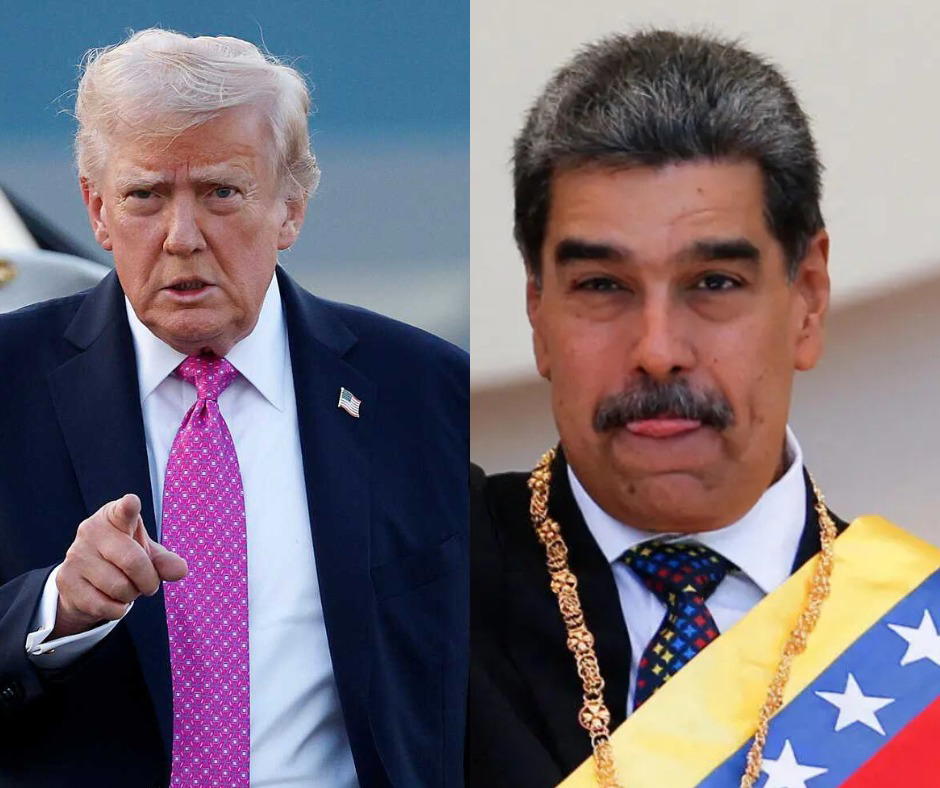
The dramatic capture of Venezuelan President, Nicolás Maduro, by US forces has sent shockwaves around the world, raising fundamental questions about the principles of international law and respect for sovereignty.
Trump posts photo of handcuffed, blindfolded Maduro
Earlier today, US President Donald Trump announced that Maduro had been captured by US forces and taken to New York City in a “large-scale strike” against the South American country.
Addressing a press conference after the attack, Trump said that the US would run Venezuela until “safe transition of power takes place” and does not rule out boots on ground in the country.
Trump added that US companies would now run Venezuela’s oil industry following Maduro’s capture.
The operation, which included multiple explosions and low-flying aircraft in the capital Caracas, has been met with widespread international condemnation with some experts arguing that international law and sovereignty of other countries were now being put on trial.
Meanwhile, Maduro’s government has denounced the action as an “extremely serious military aggression” and declared a state of emergency, while several countries, including Russia, China, and Iran, have expressed support for Venezuela’s sovereignty.
UN kicks
“The deadly and treacherous U.S. military attack is being carried out against a country that is at peace,” Venezuela’s U.N. Ambassador, Samuel Moncada, wrote to the Security Council on Saturday, warning that it “has serious implications for regional and international peace and security.”
This is even as the US has justified its actions as a pursuit of justice against Maduro, who faces narco-terrorism charges.
UN Charter
International law does not authorise one state to use military force to capture the leader of another sovereign state as if executing its own criminal law abroad.
Any lawful transfer for prosecution normally must occur through consensual extradition, a UN mandate, or recognized legal frameworks, not unilateral military abduction.
Under the United Nations Charter, states must not use force against the territorial integrity or political independence of another state.
Article 2(4) of the UN Charter prohibits such military coercion except in three narrow exceptions: With UN Security Council authorization;
In self-defense after an armed attack (Article 51);
At the invitation of the legitimate government of the target state.
Any other use of force, including unilateral invasions or raids is legally unlawful.
Capturing a sitting head of state by military assault in his own country without these conditions would generally violate this central principle of international law.
It’s a call for countries to maintain internal stability, cohesion – Prof. Ochogwu
Reacting to the development, Prof. Joseph Ochogwu, Director General, Institute for Peace and Conflict Resolution, IPCR, said the US action in Venezuela was a signal to other countries about the importance of maintaining internal stability, building local cohesion, national consensus, and good governance to maintain sovereignty.
Emphasising the need for countries to prioritise citizens’ welfare, Ochogwu said that when a country has a strong foundation of democracy, rule of law, and development, it’s less likely to be subjected to external intervention.
He attributed US action to realpolitik and influence of powerful nations, saying that they (powerful nations) might use various means to interfere in the internal affairs of other countries, often citing humanitarian or democratic reasons.
He also highlighted the country’s ideological differences, loss of popular legitimacy, and alignment with Russia and China as factors contributing to the crisis.
The IPCR boss also notes the importance of oil wealth and the US’s concerns about narco-terrorism.
“There is an extent to which we define sovereignty. You can maintain your sovereignty when everything about your country is in shape in terms of national cohesion, and in terms of the lives and properties of people to be safe. You can see that Venezuela is sharply divided.
“The popular vote of the people has been subverted, at least, in two electoral processes by Hugo Chavez and his groups. And also he’s increasing militarisation, suppression and repression of the Venezuelan people by a lot of his militias that he has set up over the years and all that.
“So, when you don’t follow domestic rules in the governance of your people, then, of course, you are calling for some level of intervention by, of course, powerful nations like America.
“I think that, largely, it sends signals to a lot of other countries on why they need to build local cohesion, national consensus, and begin to get people to build their nation in terms of development, good governance, rule of law, democracy, and all that.
“But once you don’t have that in place, you can have people question the issues of sovereignty because first and foremost, there are people living within Venezuela that have been calling for this action for years. So, what the government needed to have done was to have increasingly and openly and transparently engaged in some kind of reforms to begin to rebuild.
“But you see, at times, it’s difficult for people who are in power to listen to voices of other people, particularly voices that come from citizens or from oppositions,” he said.
Continuing, he said: ‘In terms of geopolitical realities, Latin America is one of the spheres of influence of the United States. So, when you find players like Russia and China play a more prominent role in that place. Of course, it will give cause for concern.
“Another component that you need to look at also is the area of natural resources, which is the oil wealth of Venezuela. Which of course,
you know that the American companies were dominant in the oil industry. Like reports have it, their licences already expired as of May last year, so the Chinese were actually coming in. And in real politics, there is no big power that watches itself being sidelined in the area where it has exerted influence over the years, particularly economic influence.”
He, however, said that the US action in Venezuela had implications for the global order, potentially emboldening other powerful nations to pursue similar strategies.
It’s disregard for Venezuela sovereignty – Prof Babatunde
Also reacting, Prof. Babatunde Ayeleru, Department of European Studies, University of Ibadan, said he was not surprised by Trump’s action given his antecedent of taking bold measures when convinced on a mission.
However, he questioned the legitimacy of the action under international law.
He stressed that it was a disregard for Venezuela’s sovereignty unless the US had complied with relevant regulations and prerequisites.
He said the action raised questions about the role of powerful nations in international relations and potential for abuse of power.
Prof. Babatunde warned that this action would send a signal that the US can invade countries on slight provocation, potentially leading to a breakdown in global geopolitics and international relations.
He said: “It’s as if the so-called international law and the respect for sovereignty of other countries are now put on trial. This action appears to be a clear disregard for the sovereignty of Venezuela except it is confirmed that America had complied with all laid down regulations that are prerequisites for such an invasion and the attendant removal of the Venezuelan president. That is when such an action could be justified.
“It will, no doubt, send a strong signal to many countries that the United States of America can invade any country on a very slight provocation. This is a disguised form of re-colonization.
“Obviously, this action will negatively impact global geopolitics and international relations. It will definitely breed suspicions, lack of trust, animosity and breakdown of diplomacy between the US and many countries. It must also be emphasized that there is a tendency for other countries to misinterpret or interrogate the genuineness of the intentions of the US in carrying out the invasion and regime change.”
He expressed concern for Nigeria, advising the government to prioritize dialogue and diplomacy in dealing with issues, including those raised by President Trump.
“I am afraid for Nigeria and that is why I have always been encouraging the Nigerian government to embrace dialogue and diplomacy in dealing with the issues of alleged Christian genocide in Nigeria which President Trump raised some weeks ago,” he added.
It sets dangerous precedent – UN
Meanwhile there has been global condemnation of the attack. Reacting, the United Nations Secretary-General Antonio Guterre expressed deep concern over the US military action, warning it would set a dangerous precedent.
“These developments constitute a dangerous precedent,” Guterres’ spokesperson, Stephane Dujarric said in a statement.
“The Secretary-General continues to emphasize the importance of full respect by all of international law, including the UN Charter. He’s deeply concerned that the rules of international law have not been respected.”
“The EU called for restraint and respect for international law, with EU’s top diplomat, Kaja Kallas, emphasizing the importance of upholding the UN Charter.
Also, countries like Colombia, Mexico, and Brazil have condemned the US strikes, citing concerns about regional stability and sovereignty.
The post ICYMI: ‘What laws say about US action in Venezuela’ – UN, dons react appeared first on Vanguard News.