How APC ‘hollowed’ out PDP in 2025
 SKAiF NewsNG SNN
By Luminous Jannamike, Abuja
AT sunrise in Abuja Municipal Area Council (AMAC), Hauwa Musa unlocked a narrow party office she once helped sustain with her own savings. For nearly a decade, the widow and petty trader doubled as a PDP ward mobiliser in Kabusa; organising meetings, feeding volunteers, escorting elderly voters on election day.
By late 2025, the room had gone quiet. Phones no longer rang. Meetings were no longer fixed. The chairman she campaigned for had walked away from the party.
“When he left, everything changed. Nobody called us together to explain. You just wake up and realise the work you were doing no longer exists,” Musa told Vanguard in Hausa language, lowering her voice.
In Abuja Municipal Area Council, the political shift is not abstract. Christopher Zakka Maikalangu, elected chairman on the PDP platform, defected to the APC and is now the ruling party’s candidate for a second term ahead of the February 2026 FCT elections.
For ward organisers like Musa, the defection did not simply alter party balance; it dismantled a fragile ecosystem of belonging and survival built around grassroots politics.
“We were not important people. But at least you felt useful. You felt counted,” she said.
Her experience mirrors a national story often reduced to numbers ., ,. The APC did not formally consume the PDP in 2025. There was no merger, no legal absorption. Yet by year’s end, the opposition’s governing backbone had almost collapsed.
By late 2025, the PDP’s number of governors had fallen from 13 after the 2023 elections to just five or six, marking a near-total erosion of its regional dominance. The decline was driven by a wave of defections to the ruling APC, largely by southern governors seeking proximity to the federal government’s ‘Renewed Hope’ agenda.
The exits came steadily. Delta Governor Sheriff Oborevwori defected in April, followed by former governor Ifeanyi Okowa and the party’s structure in the state. In June, Akwa Ibom Governor Umo Eno crossed, triggering mass defections in the legislature. October delivered twin shocks: Peter Mbah ended the PDP’s 26-year hold on Enugu, while Douye Diri moved in Bayelsa.
The exodus peaked in December. After months of emergency rule and political paralysis in Rivers State, Governor Siminalayi Fubara joined the APC. Days later, Taraba Governor Agbu Kefas formally registered as an APC member on December 14, 2025.
In a separate rupture, Osun Governor Ademola Adeleke quit the PDP to seek re-election on the Accord Party platform, further shrinking the PDP’s map. By year’s end, the party’s remaining core was largely confined to Adamawa, Bauchi, Oyo, and Zamfara, with Plateau Governor Caleb Mutfwang widely rumoured to be finalising his exit.
Below the governors’ level, the aftershocks were immediate. Commissioners recalculated futures. Councillors drifted quietly. Ward organisers like Musa were left in political limbo.
“No one tells you…. You just notice that nothing is happening anymore,” she said.
The National Assembly reflected the same pull. In the Senate, defections by Francis Fadahunsi, Olubiyi Fadeyi, Aniekan Bassey, and Ekong Samson expanded APC numbers to around 70 seats, at times nearing 78 after additional Rivers defections. In the House of Representatives, six PDP members from Rivers State crossed over. In Akwa Ibom, 24 of 26 state lawmakers defected in one sweep. By mid-2025, monitoring groups estimated that over 140 elected PDP officials nationwide had defected.
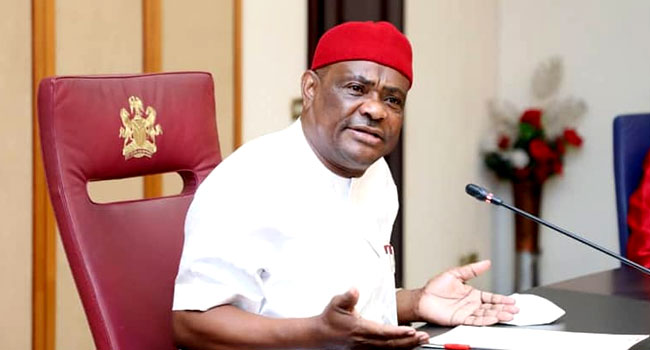
Inside the shrinking opposition, the implosion turned sharply personal. Oyo State Governor Seyi Makinde accused former ally and APC-aligned FCT Minister Nyesom Wike of working to weaken the PDP ahead of 2027.
“I was in a meeting with the President and Wike… and I’m saying this, you know, in an open chat. The President’s Chief of Staff was also in that meeting and few others… and Wike said to the President, ‘Sir, I will hold PDP for you, you know, in 2027.’ I was in shock. So we got up, we got to the verandah and I said, ‘Wike, did we agree to this?’… That is why I will not be supporting the President for 2027.
Wike can support him; it is within his right. But it is also within my right… to ensure that democracy survives in Nigeria and that we don’t drift into a one-party state and we want to ensure that PDP survives,” he said.
Wike has categorically denied the claim
“First of all, you ask yourself, what was that meeting? What was the purpose of that meeting that would have led me to say, ‘Mr President, I will hold PDP down for you?’… There was no such meeting. Rather, my humble self… and Seyi Makinde went to see the President… There was nothing like a meeting we booked to go and see Mr President… So it is completely out of place for anybody to say that in that meeting I told Mr President that I would hold PDP down for him… It’s not correct,” the FCT MInister said.
Beyond the PDP–APC feud, opposition figures now speak in the language of urgency. Former Vice President Atiku Abubakar, operating through the ADC, has framed 2025 as a moment that demands collective action.
“I emphasised that there was no time to waste in our rescue mission and encouraged other members and leaders of the coalition to register with the ADC formally… There can be no sitting on the fence. I am indeed pleased to see that leaders of the party at the state level are thinking with the future of our country in mind. Together, we are committed to our resolve to work towards a secure, united, and prosperous Nigeria. The APC is bent on wrecking our country, and we are ready to stop them from doing so,” the ex-VP said.
Back in AMAC, Musa no longer waits for meetings that may never hold. Politics, she says, now feels distant.
That quiet defines 2025: not a takeover by law, but a slow evacuation of opposition life, until a party still exists on paper, while its people quietly fade from view.
The post How APC ‘hollowed’ out PDP in 2025 appeared first on Vanguard News.