Global energy body discusses releasing strategic oil reserves
 SKAiF NewsNG SNN
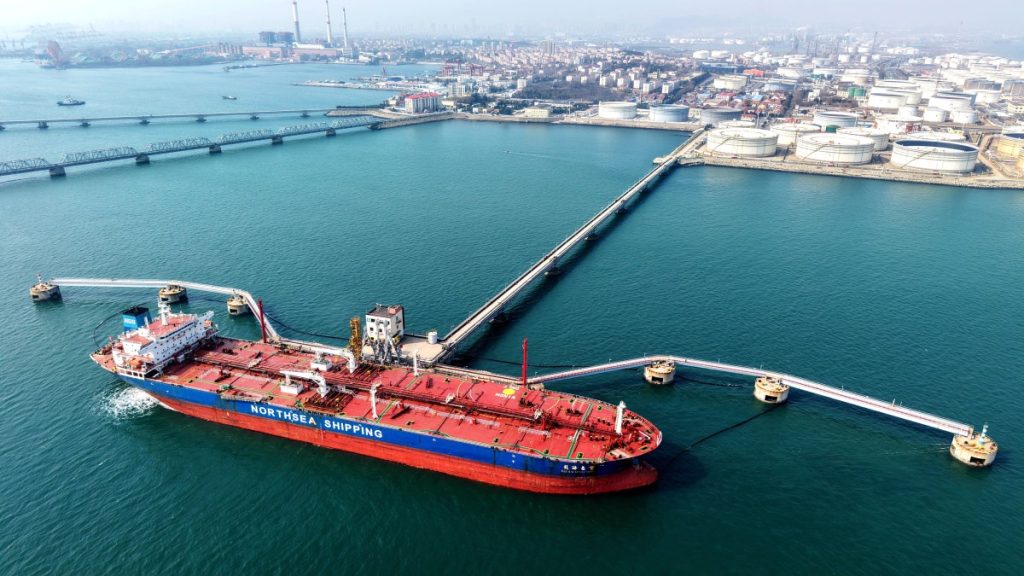
Member states of the International Energy Agency (IEA) met on Tuesday for crisis talks to assess security of supply and the potential release of emergency stocks as the Middle East war roils markets, the body’s chief said.
In a statement following a Paris meeting of G7 energy ministers on the economic fallout of the conflict, IEA executive director Fatih Birol said he was “in close contact” with energy ministers from key energy producers and consumers regarding the situation.
“In oil markets, conditions have deteriorated in recent days. In addition to the challenges of transit through the Strait of Hormuz, a substantial amount of oil production has been curtailed. This is creating significant and growing risks for the market,” he said ahead of the meeting.
“I have convened an extraordinary meeting of IEA member governments, which will take place later today to assess the current security of supply and market conditions to inform a subsequent decision on whether to make emergency stocks of IEA countries available to the market,” Birol added.
He said the G7 meeting addressed “all the available options, including making IEA emergency oil stocks available to the market”.
Italy’s Environment and Energy Minister Gilberto Pichetto Fratin said that regarding the closure of the Strait of Hormuz, “countries have committed to showing solidarity by using stockpiled reserves in order to compensate for the lack of availability at the global level.”
The IEA did not announce any decision after Tuesday’s meeting.
Crude prices have seen sharp fluctuations due to supply disruptions, jumping 30 percent on Monday to nearly $120 per barrel before retreating later that day.
They fell further on Tuesday, reassured by US President Donald Trump stating Monday that the US-Israel war on Iran was “going to be ended soon”.
Nevertheless risks remain, with Iran vowing earlier Tuesday that not one litre of oil would be exported from the Gulf while the United States and Israel press ahead with their bombardment of the country.
IEA member countries currently hold over 1.2 billion barrels of public emergency oil stocks, with a further 600 million barrels of industry stocks held under government mandates.
– ‘We want to be ready’ –
A meeting of G7 finance ministers on Monday discussed a possible release of strategic oil reserves, but French Finance Minister Roland Lescure, whose country holds the rotating presidency of the Group of Seven advanced economies, said later the situation was “not there yet”.
On Tuesday, Lescure said the G7 nations wanted to prepare for any developments.
“We have asked the International Energy Agency to start working on scenarios and, of course, to update its stock data so that we have the most recent information,” he told reporters.
“We want to be ready to react at any moment,” he added.
He said there were no supply issues in North America and Europe, unlike in Asia, which is dependent on oil supplies flowing through the Strait of Hormuz.
About 100 million barrels of oil are consumed globally every day.
The Paris-based IEA was created to coordinate responses to major supply disruptions after the 1973 oil crisis.
In order to ensure energy security, the IEA imposes on its members an obligation to hold emergency oil stocks equivalent to at least 90 days of net oil imports.
The post Global energy body discusses releasing strategic oil reserves appeared first on Vanguard News.