
Gains of Akpabio’s new year resolution, by Tonnie Iredia
 SKAiF NewsNG SNN
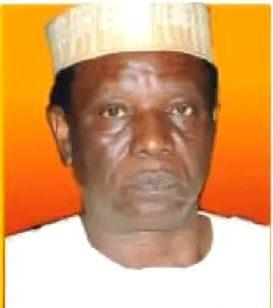
The beginning of a new year is usually an opportunity for some people to solemnly proclaim a new behaviour for the next 365 days. Although not many are able to keep to the declarations they make on the fateful day, the beginning of another year once again ushers in fresh declarations – a trend which has turned the first day of every year into a ritual for annual behavioural resolutions. This year, many made theirs, some privately while a few others made theirs public. Among the latter, one which made the headlines was that of Nigeria’s Senate President, Godswill Akpabio whose declaration was made at the Sacred Heart Parish in Uyo, Akwa Ibom State.
Akpabio who was at the Church to attend a New Year Mass announced a directive to his legal team to withdraw all pending lawsuits he had instituted against certain individuals who had allegedly defamed him. According to the foremost Nigerian lawmaker, the soul-searching sermon which was credited to Very Reverend Father Donatus Udoette, the officiating clergy at the Mass appeared to have been directed at him thereby prompting him to have a deep reflection with a conviction to let go, stories and reports depicting a negative past relationship with some Nigerians. Such persons must no doubt include Senator Natasha Akpoti-Uduaghan (Kogi Central) against whom he had filed a N200 billion defamation lawsuit over certain allegations she had made against him.
Even if the sermon was merely an excuse for attaining what the Senate President had been inwardly striving to accomplish, his decision to make peace with persons with whom he had had bitter relationships is commendable. Unlike him, there are many Nigerians especially politicians who have remained in unending acrimony with their rivals and opponents. They need to know that politics and electoral contestations are a game and not a battle. As a result, such citizens must learn to follow Akpabio’s type of example because the new year day’s sermon had persuasively admonished all “to let go of the past no matter what it was; all of us carry some luggage of pain and hurt, you have to let go if you want to move on.”
To let the past go and move on is one of the leadership traits that should feature prominently in induction courses in Nigeria because not many know the value of such traits. Instead, those in leadership positions in our clime behave as if their elevation is an opportunity to oppress and lord it over their compatriots. I wonder quite often when a leader diverts all his might and attention to deal with ordinary people supposedly for wanting to pull him down. Most leaders forget that it is only persons who are up that can be pulled down. As a result, Nigerian leaders should learn to be egalitarian servant-leaders. One of the lessons of today therefore is that we must emulate other countries where broad-minded leaders ignore those who abuse them because to do otherwise is to come down to the level of those, they had ordinarily surpassed.
A leader should not just be patient, tolerant and compassionate, he must endeavour to improve on the level of development of his society. It is therefore not enough for the Akpabios of Nigeria to let go of the past; they need to reform society so as to dissuade the negative and centrifugal factors which always adversely control people’s disposition. For example, Akpabio’s decision to discontinue his lawsuits will not bring the cases to an end because ours is a society where bad laws which enable the powerful to oppress the poor are allowed to thrive. Nigeria is indeed, one of the few countries of the world where defamation is also a civil wrong and a criminal offence which enabled government to take sides with Akpabio against Natashia.
Put differently, while we are commending Akpabio for withdrawing his civil lawsuit against Natashia and others, the government may on its part fail to end criminal charges against the same defendants. This can happen if the Akpabio-led National Assembly does not take steps to repeal criminal libel which has been part of the law of defamation introduced to Nigeria during the period of colonial rule by the British. Although part of the goal was to stop people from publishing statements that can tarnish the image of colonial officers, the real intention of the draconian law was to incarcerate leaders of nationalist movements who were fighting for independence for the then colony.
Even after independence, Nigerian leaders have continued to sustain such obnoxious laws because they can easily use the manipulative provisions of the law to suppress opponents. This explains why the law of defamation has not changed in Nigeria despite the fact that we are now in a democracy and no longer under colonial or military rule. In our type of democratic society where freedom of speech is guaranteed in the constitution, free speech can be constrained if defamation remains criminalized. We are however not unaware that there are people who can take advantage of the freedom of speech to make reckless statements that can tarnish the image of others. Luckily, this can be controlled if defamation is just a civil wrong where those wronged can sue for damages.
But the situation is completely different where defamation is also classified as a criminal wrong. Apart from the fact that such a situation provides double sanctions for a wrong, it elevates the defamation of certain persons beyond a personal matter such as case CR/297/25 in which the federal government filed criminal charges against Senator Akpoti-Uduaghan for allegedly making defamatory statements against Akpabio and other prominent political figures. Truth, as we hear, is the highest defence to charges of defamation because a true statement cannot tarnish the image of a person about whom it was made. But once the state is involved, it becomes practically impossible to arrive at the truth because under the guise of investigation, the state would have brutalized the accused person well before trial.
A good example of the pointlessness of criminal libel came to light in the recent case of Afe Babalola V Dele Farotimi. If all we had was defamation as a civil wrong, Farotimi would have had his day in court to justify his attempt to justify tarnishing the reputation of Babalola a legal giant. But because we had defamation as both a civil wrong and criminal offence, the police in Ekiti kept Farotimi in detention while investigating Babalola’s complaint. But bearing in mind that Farotimi publicly claimed authorship of the alleged offending statement no one knew what was missing to be investigated. Yet, before trial, the alleged offender remained in detention for longer than makes sense at the instance of a law enforcement agency. At the end, Farotimi was not made to establish whatever justification he had for his action.
From what we have said so far, efforts should be made to enable Nigerians enjoy the freedom of speech provided for in our constitution. At the same time, no one should be allowed to tarnish the hard-earned image of others. Those who choose to make reckless statements about other people should be sanctioned but only after they must have failed to establish reasonable defences for their indiscretion. On its part, the state should not complicate cases of defamation by using procedures to aid one party against the other. Consequently, the legislature should take genuine steps to make good laws while repealing obnoxious provisions and updating others for the good governance of society. The task of repealing criminal libel and other bogus legislations can be achieved with ease if the leadership of the current National Assembly decides to be more people-oriented.
It is hoped that Senate President Akpabio will among other things ensure that his decision to drop all defamation lawsuits against different people is well executed by getting the federal government to also drop the criminal dimension of the same suits. He should also reform the present federal legislature by shifting the attention of its members away from only politics to all other areas of human endeavour. There is therefore no better time than now for the legislature to appropriately handle more than the Electoral Act which in spite of frequent changes is yet to serve as a genuine law. Akpabio can make history if under his leadership, a level playing field is established for elections in Nigeria inclusive of transparent electronic transfer of votes.
The post Gains of Akpabio’s new year resolution, by Tonnie Iredia appeared first on Vanguard News.