FCT ‘ll reflect Nigeria’s growing population, national identity – Tinubu
 SKAiF NewsNG SNN
By Johnbosco Agbakwuru
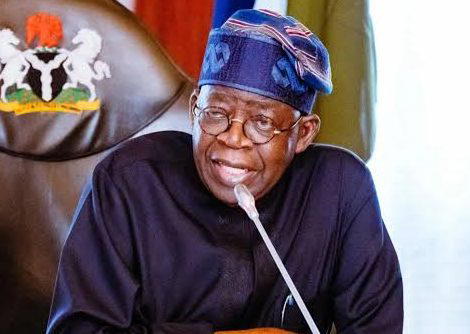
President Bola Tinubu has assured that the Federal Capital Territory (FCT) will evolve into a capital city that reflects Nigeria’s growing population, economic aspirations and national identity.
To this effect, he reaffirmed his administration’s commitment to infrastructure-led development, noting that improved transport connectivity in Abuja is expected to reduce logistics costs, encourage investment and support job creation.
President Tinubu stated this on Wednesday in Abuja when he commissioned the full-scope development of Arterial Road N5, Obafemi Awolowo Way, connecting Life Camp Junction to Ring Road III in Dape District, Abuja.
The Nigerian leader, who was represented by his deputy, Vice President Kashim Shettima, described infrastructure as a measure of national seriousness and state capacity.
The President said government would continue to invest in strategic projects that improve connectivity, support economic activity and restore public confidence in governance.
“Infrastructure is the measure by which every civilised nation announces its seriousness. No capital can carry the weight of national ambition if its arteries are blocked by neglect, excuses and abandoned promises,” he stated.
He assured that his administration remained determined to transform Abuja into a capital city capable of matching the ambitions of the federation and serving as a model of planned urban development.
“We will never rest until we have made the Federal Capital Territory not only a functional seat of government, but a capital worthy of our federation, our growing population and the dreams that brought Abuja into being,” he added.
President Tinubu noted that the road infrastructure inherited by his administration required sustained intervention, pointing out that the government has maintained continuity in construction and rehabilitation efforts without interruption.
“There has been no break, no pause and no retreat in the construction and rehabilitation of the roads we inherited. That is why we have ended the tradition of abandoned projects and restored faith in the power of government to finish what it starts,” he maintained.
Speaking specifically on the Dape District section of Arterial Road N5, the President said the project was conceived, funded and completed under the current administration following its award to Julius Berger with a fifteen-month execution timeline after its flag-off in October 2024.
He said the completion of the project demonstrates a deliberate departure from a culture in which public infrastructure became trapped in prolonged delays and repeated budget cycles.
“In the past, projects like this became permanent budget items with ten or fifteen years of excuses. Under this administration, that era is over,” he stated.
Tinubu commended the Minister of the Federal Capital Territory, Barrister Nyesom Wike, for driving infrastructure execution across the capital city and praised the contractor for delivering according to expectation.
“The Honourable Minister has shown what happens when political will meets accountability. We fund projects to see results, not to hear explanations for failure,” he said.
He described the newly completed road as more than a transport corridor, noting that it serves as an economic asset capable of improving mobility and reducing productivity losses associated with congestion.
For years, he said, Life Camp Junction represented a major traffic bottleneck that imposed significant time and economic costs on residents and businesses.
“With the completion of this N5 corridor, we are delivering the seamless district connectivity envisioned in the Abuja Master Plan,” he said.
According to the President, the corridor now creates faster connections across Dape, Karmo, Gwarinpa I, Kado, Idu and Mbora while also improving access to the Idu Industrial District.
President Tinubu, however, stressed that infrastructure sustainability requires shared responsibility between government and citizens.
Calling on residents and businesses benefiting from the development, he urged greater compliance with tax obligations and land-related payments to strengthen the capacity of the FCT Administration to deliver more projects.
The President also appealed to traditional rulers, community leaders and residents to protect public infrastructure and prevent vandalism.
Earlier, the Minister of FCT, Barr. Nyesom Wike, applauded President Tinubu’s support for improving the state of infrastructure in the FCT, particularly in the satellite towns, and taking governance closer to the people of the territory, urging more support for the administration.
He said the pace and state of development in sattelite towns and communities under the Tinubu administration was unprecedented and the most visible evidence of the Renewed Hope Agenda in the FCT.
On her part, the Minister of State for FCT, Dr Mariya Mahmud, also thanked President Tinubu for his visionary leadership and support for the implementation of critical infrastructure projects in the FCT over the past three years.
She applauded Vice President Shettima’s steadfast commitment and support for the developmental initiatives and people-oriented projects in the FCT and across the country.
For his part, the Executive Secretary of the Federal Capital Development Administration, Engr Richard Yunana Dauda, said the completion and inuaguration of the current phase of the road project adds to the list of impactful projects completed under the Tinubu administration and will significantly improve the state of road infrastructure in the territory, particularly connecting adjourning towns and communities in the FCT.
Also present at the event were federal legislators and top officials of the FCT administration, among others.
The post FCT ‘ll reflect Nigeria’s growing population, national identity – Tinubu appeared first on Vanguard News.