Enabling housing supply and affordability through infrastructure development
 SKAiF NewsNG SNN
By Oluseyi Okeyode
Housing is a basic human need, next to food. Housing plays a vital role in the development of the society, with a profound impact on a person’s living standard, health, welfare and output. Housing enhances access to education, employment opportunities, productivity and income for the people and for the society.
Housing is the basis of stability and security for an individual or family. One can now begin to understand why governments in the developed economies and more civilized countries made housing provision a priority and most fundamental objective. Housing is not only prioritized as key component of social policy and urban development in these climes, it is embedded in various policies, with concrete initiatives and concerted efforts deployed into making quality and affordable housing available to all citizens.
It should also be noted that housing is increasingly viewed as a commodity, for which reason it is most importantly a human right. Article 25 of the Universal Declaration on Human Rights, and many other international instruments, such the International Covenant on Economic, Social and Cultural Rights (Article 11), Convention on the Elimination of All Forms of Discrimination Against Women (Article 14) and a few others recognized the right to decent and affordable housing. Countries across the globe, including Nigeria have in their constitutions inserted provisions which provides right to adequate housing. Even the Ecuador 2016 adopted New Urban Agenda (NUA) emphasized the right to adequate housing as a component of the right to an adequate standard of living. The NUA promotes sustainable urbanization that enhances the quality of life for all urban residents, ensuring access to basic services, housing and infrastructure.
In the 2023 United States presidential election, housing affordability was a key issue, as the two contenders to the office of the President copiously illustrated what they would do to increase the supply of affordable homes and people’s ability to buy them. The countries of Europe are known for long standing commitment to public and social housing. The European Commission’s plan aimed at boosting supply, mobilization of investment, and driving reforms to enhance housing affordability for European Union citizens has since been put in motion. Included in the plan are European Affordable Housing Plan and European Strategy for housing construction, which emphasizes innovation and initiatives in construction, with a clear aim of creating more affordable and sustainable homes. In a nutshell, housing provision is made a priority in developed and civilized countries to ensure that all citizens have access to quality; affordable housing that supports their well-being and enhances overall development of the nation.
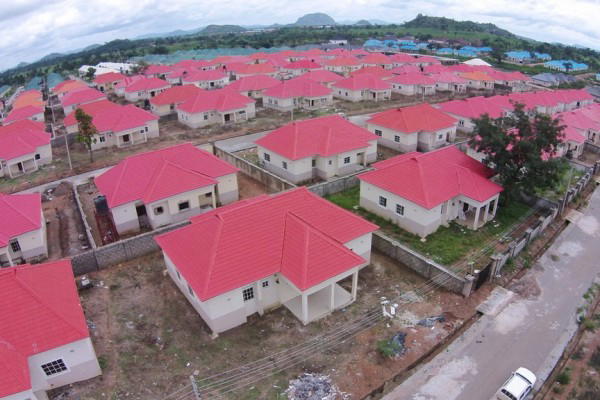
In Nigeria, housing affordability is a critical challenge, particularly for poor households and people at the low ends. With a deficit estimated at over 28 million housing units, millions of Nigerians grapple with inadequate living conditions. Population dynamics in Africa’s most populous nation have increased demand for housing, and even commercial spaces as more people migrate to cities in search of better opportunities, thus worsening and compounding the housing crisis.
Innovative solutions, collaborative and active participation of critical stakeholders, including the government are required if we want to frantically address Nigeria’s critical housing shortage which is a product of systemic failures in urban planning, inadequate infrastructure, financing, prohibitive construction costs, and policy implementation.
In all these, infrastructure plays a critical part in driving real estate investment and economic development. An insight into the more developed economies of the United States of America, Europe, and the Asian countries, particularly China reveals that several opportunities for housing development arise from infrastructure development. Some of the largest infrastructural projects in the world are located in the United States. China boasts of massive infrastructural facilities, such as the high-speed railway system and the hydroelectric three gorges dam. Massive and consistent investments in infrastructure over the years in these countries have translated into long-term benefit as seen in increase property development, productivity; improve jobs, income levels and several other benefits. Other emerging Asian economies are rapidly increasing infrastructure investments with the aim of catching up with the more developed world, and to make their economies more competitive and efficient.
No doubt, good and efficient infrastructure is a key influencer of where real estate investment goes and where real estate investors focus. And because real estate significantly drives the economy, government’s efforts are geared towards provision of basic infrastructure services, such as power, rail, road and bridges construction and rehabilitation with utmost intensity. In as much as infrastructure development is pivotal to unlocking large scale housing delivery, the importance of government-led infrastructure development in enhancing housing development, supply and reducing housing cost cannot be overstated.
The post Enabling housing supply and affordability through infrastructure development appeared first on Vanguard News.