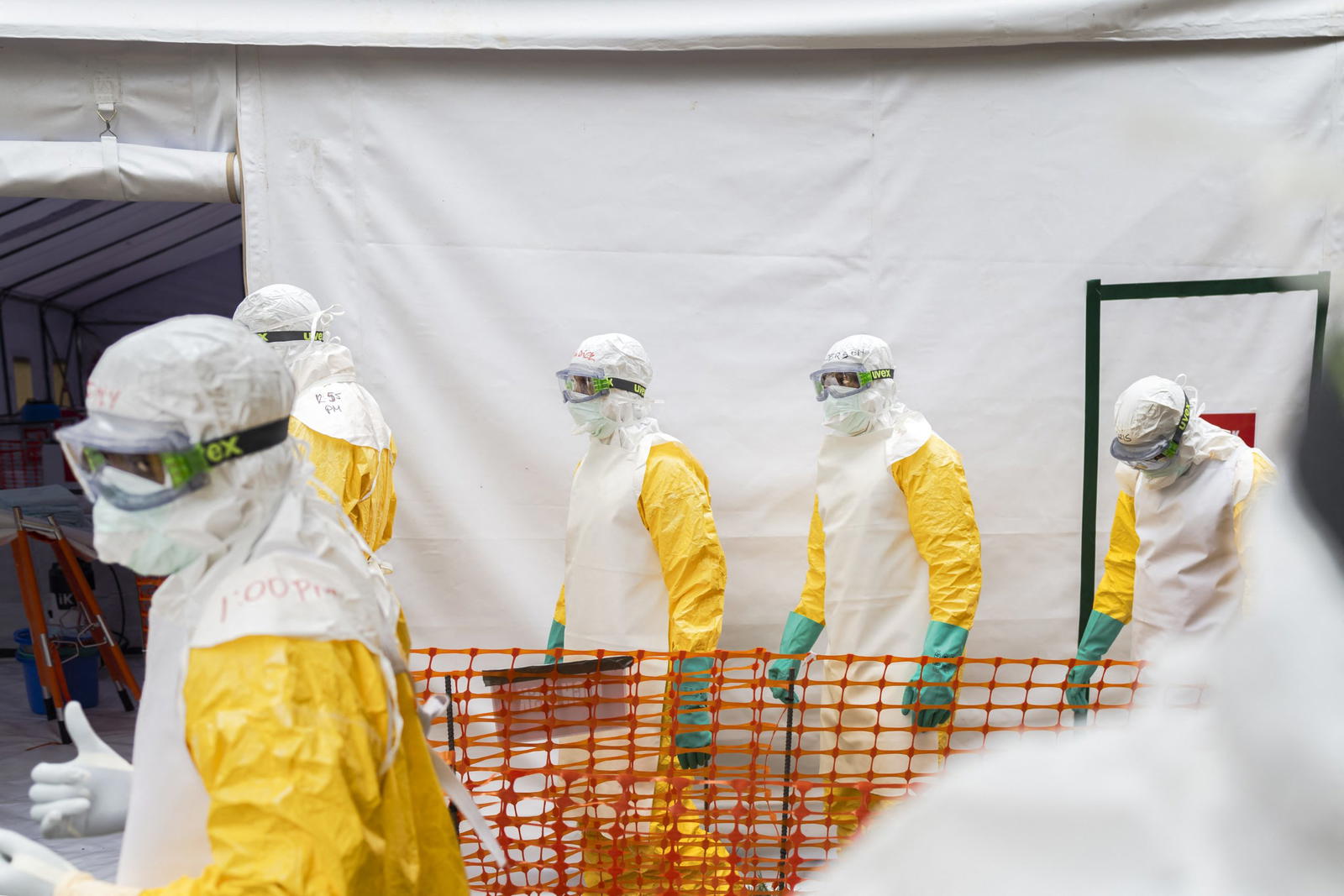
Ebola Threat: Nigeria only 59% prepared— NCDC DG
 SKAiF NewsNG SNN

…Says porous borders remain major vulnerability
The Director-General of the Nigeria Centre for Disease Control and Prevention, Dr. Jide Idris, has disclosed that Nigeria is only 59 per cent prepared for a potential Ebola outbreak, even as health authorities intensify surveillance and tighten entry protocols to prevent the importation of the deadly virus.
The disclosure comes amid renewed concerns over recent Ebola outbreaks in Uganda and the Democratic Republic of the Congo, which the NCDC has identified as a significant threat to Nigeria due to increased international travel and cross-border movements.
Speaking on Arise Television on Monday, Idris said a recent nationwide risk assessment conducted by the agency revealed critical gaps in the country’s preparedness, particularly at points of entry.
According to him, the assessment was aimed at evaluating Nigeria’s readiness level, identifying vulnerabilities and strengthening response mechanisms against any possible importation of the Ebola virus.
“Our latest assessment puts Nigeria’s preparedness level at about 59 per cent. But preparedness is dynamic; you can never be 100 per cent prepared because situations keep changing,” Idris said.
“To be frank, we are not fully ready, but we are continuously improving our readiness. This preparedness must cover the entire country, not just a few locations.”
The NCDC boss said the agency has deployed teams to assess the readiness of states and provide guidance to health authorities on areas requiring urgent attention.
He explained that the assessments focused on critical components such as isolation centres, public health emergency operations centres, healthcare infrastructure and emergency stockpiles required to manage suspected Ebola cases.
“We sent advisers to work with state commissioners and assess their level of preparedness. We are looking at infrastructure, isolation facilities, emergency operations centres and available stockpiles in the event of an outbreak,” he said.
Entry points under closer watch
Idris revealed that one of the major findings of the risk assessment was the vulnerability of Nigeria’s entry points, prompting the Federal Ministry of Health to issue fresh protocols for relevant agencies involved in border and airport operations.
He said the objective is to strengthen screening and monitoring systems to prevent infected individuals from entering the country.
“We carried out a dynamic risk assessment to determine where we are, what gaps exist and what actions are required. One area that clearly stood out was our points of entry, which are critical because our primary objective is to prevent the disease from entering Nigeria,” he said.
“Shortly after the assessment, the Federal Ministry of Health released protocols for various government agencies. The goal is to regulate incoming traffic, especially through airlines and international travel routes.”
According to him, states hosting international airports have been categorised as high-risk locations because they serve as major gateways into the country.
Porous borders remain major concern
Despite efforts to strengthen airport surveillance, Idris said Nigeria’s extensive and porous land borders pose an even greater challenge to disease control efforts.
He noted that many travellers enter the country through unofficial routes, making effective monitoring more difficult.
“The biggest challenge remains our porous borders. Not everyone enters Nigeria by air. Many people travel across borders by road and through informal routes. This is one of the major concerns and why preparedness is so important,” he stated.
Lessons from 2014 Ebola outbreak
The NCDC Director-General said Nigeria’s successful containment of the 2014 Ebola outbreak continues to guide current preparedness efforts.
He recalled that the country had little prior experience with Ebola at the time but benefited significantly from support and guidance provided by the World Health Organization and the Centers for Disease Control and Prevention.
“The 2014 outbreak was a unique experience for Nigeria. At the beginning, nobody fully understood the situation, but we learned quickly and adapted as events unfolded,” he said.
He added that since then, the country has significantly expanded its laboratory network and disease surveillance systems to improve its capacity to detect and respond to infectious disease outbreaks.
“Over the years, we have strengthened our laboratory systems and are extending these capabilities to more facilities, particularly those located in areas linked to international travel,” he said.
Multiple outbreaks stretching resources
Idris also disclosed that Nigeria is currently battling between seven and eight disease outbreaks simultaneously, including Cholera and Lassa Fever, placing additional pressure on the country’s public health system.
He, however, expressed confidence that ongoing investments in surveillance, laboratory capacity and emergency preparedness would enhance Nigeria’s ability to respond effectively to any future Ebola threat.
The NCDC had earlier warned that the continued transmission of Ebola in Uganda and the Democratic Republic of Congo, coupled with growing international mobility, increases the risk of the virus being imported into Nigeria, necessitating heightened vigilance across the country.
The post Ebola Threat: Nigeria only 59% prepared— NCDC DG appeared first on Vanguard News.