Delta: Stakeholders trade blame over Utorogun IPP failure seven years after
 SKAiF NewsNG SNN
By Akpokona Omafuaire
Seven years after the Utorogun Independent Power Project (IPP) was announced with high expectations, stakeholders are still arguing over why the project has not been completed.
The project, which was expected to improve electricity supply and support development in Otughievwen, Otor Udu and Iwhrekan communities, is widely seen as unsuccessful. However, there is no agreement on who is responsible for its current state.
Zik Gbemre, a native of Iwhrekan in April 25, 2026 while writing to set the record straight accused the Utorogu Project-Global Memorandum of Understanding (PGMoU) structure and formerly NPDC of not disclosing certain facts in the project.
According to him, “the people of Otor-Udu, Otughievwen, and Iwhrekan were promised a transformative independent power plant that would deliver uninterrupted electricity to their communities. Seven years later, that promise remains unfulfilled. It is time to present the facts clearly and demand accountability, transparency, and a path forward.
Key clarifications
“ND Western Ltd is not connected to the failed Independent power project under the Utorogu PGMoU. The project was fully funded by NEPL (formerly NPDC) and executed through the Utorogu PGMoU structure. Community members were led to believe the independent power plant would provide stable, uninterrupted power, with adequate technical design and support systems. The installed plan reportedly involved two gas generators without backup systems, contrary to best practice for independent power generation.
The communities were not informed they would be required to purchase gas from the Utorogu Gas Plant to run the facility once completed. No clear contingency, redundancy, or sustainability framework was communicated to the host communities.
Concerns raised
“Serious concerns have therefore emerged regarding: Lack of transparency between NEPL representatives and the PGMoU board at project inception; Secrecy surrounding key decisions and financial transactions; Failure to deliver on a project that was presented as a long-term solution to electricity challenges in the host communities; Absence of backup generation capacity, raising questions about the technical planning of the project and the fairness of requiring gas-producing host communities to pay for gas to power a local plant meant to serve them.
Call for accountability and investigation
“Given the scale of the failure and the public interest involved, there is a strong call for relevant authorities including law enforcement and anti-corruption agencies to review the project from inception to date, examine project funding and expenditure, contractual and technical decisions, the roles played by NEPL community relations personnel at the time and the NEPL community relations personnel at the time.
The way forward
“The three communities continue to host critical gas infrastructure that supports Nigeria’s domestic power supply, industries, and exports. It is only fair that they benefit from reliable electricity. There is a strong case for: A new, properly designed independent power plant of at least 10MW capacity; Transparent supervision and execution by a competent operator like ND Western Ltd; Clear agreements on gas supply terms that recognize host community contributions; Community inclusion in oversight and monitoring from start to finish and Technical design that includes redundancy and sustainability.
A plea for prevention, not crisis
“These issues should be addressed constructively and urgently to prevent frustration from escalating into wider unrest. Nigeria has seen how unresolved grievances in host communities can evolve into long-term crises. Dialogue, transparency, and corrective action now can prevent future conflict. The people of Otor-Udu, Otughievwen, and Iwhrekan deserve answers, accountability, and most importantly a working power solution. Setting the record straight is the first step toward justice and development”, Gbemre stated.
Management committee’s position
In his reaction, the Secretary of the Management Committee of the Project-Global Memorandum of Understanding (PGMOU) for the NAG-3 project in OML 34, Comrade Igho Onobraekpeyan, dismissed as misleading claims by activist, Chief Zik Gbemre regarding the Independent Power Plant (IPP) project initiated by host communities in Delta State.
Onobraekpeyan provided a detailed account of the conception, funding, execution, and current status of the power project serving the communities of Otor-Udu, Iwhrekan, and Otughievwen.
The PGMOU, involving NNPC Exploration and Production Limited (NEPL) and the host communities, is overseen by a Management Committee chaired by Dr. A. E. Ideh, with Onobraekpeyan serving as Secretary.
Project origin and funding structure
Onobraekpeyan explained that the IPP project was conceived following negotiations between the communities and NEPL in September 2020, stemming from the development of the NAG-3 gas plant in the Utorogun area. As part of the agreement, the communities receive an annual Community Development Support (CDS) fund of N200 million.
He noted that although the communities initially requested that NEPL directly provide electricity, the company declined, prompting the communities to independently channel the CDS funds into developing their own power infrastructure.
According to him, six annual payments totaling ¦ 1.2 billion have been made, though only 75 percent, about ¦ 900 million, was allocated directly to the IPP project after statutory deductions for administrative and community structures.
From vision to execution
A feasibility study conducted at the onset of the project in 2021 revealed that the combined energy needs of the three communities stood at approximately 1.4 megawatts. However, due to funding constraints, the committee opted to begin with a one-megawatt facility, with provisions for future expansion. “We deliberately started with one megawatt because of limited funds, but we have built the infrastructure to scale up to four megawatts and beyond,” Onobraekpeyan said.
He highlighted the impact of exchange rate volatility on project costs, noting that the naira’s depreciation significantly reduced the value of available funds. At the time of procurement, a single 500KVA gas-powered generator cost about ¦ 120 million, requiring full upfront payment.
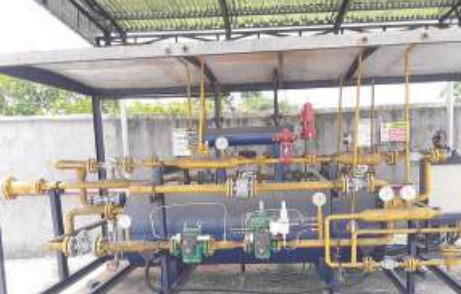
Despite these challenges, the committee proceeded with the acquisition of two generators, construction of the power plant, and supporting infrastructure, including administrative buildings, access roads, and flood mitigation structures.
The project reached completion in 2024, with technical testing conducted between October and December 2025 by representatives of the equipment manufacturers.
Onobraekpeyan confirmed that the facility successfully generated and distributed electricity during test runs, demonstrating its operational viability.
He explained that the plant is capable of supplying electricity to residential users and small businesses for up to 18 hours daily, though this may drop to about 12 hours when larger commercial users such as hotels are included.
Gas supply, the major constraint
He identified gas supply as the primary challenge hindering full operations, stating that reliance on compressed natural gas (CNG) is financially unsustainable.
“A single 7,500 standard cubic metre skid of gas costs about ¦ 4.8 million and lasts just three days. Monthly consumption could reach up to 100,000 SCM, making it impractical for continuous operation,” he said. He clarified that securing gas supply is the responsibility of community leadership, who have already engaged NEPL on the matter.
Metering and sustainability
Onobraekpeyan also stressed the importance of metering to ensure efficient electricity distribution and prevent wastage, revealing that discussions were ongoing with service providers to install meters across the communities.
Responding to Gbemre’s criticism that the project was a failure, Onobraekpeyan described the claims as inaccurate and driven by personal interests. He alleged a conflict of interest, claiming that Gbemre had recommended a company allegedly linked to his family for the project’s overhaul.
“It is misleading to label the project a failure when it has been completed and tested. The issue is not engineering failure but sustainability, particularly gas supply,” he stated.
He further argued that the project represents a significant achievement for the host communities, demonstrating local capacity in executing complex infrastructure projects.
While welcoming constructive criticism, Onobraekpeyan urged stakeholders, including activists and oil companies, to support efforts to secure gas supply and expand the facility. He noted that the current infrastructure can be scaled up to five megawatts, with additional land available for expansion to as much as 20 megawatts, potentially serving wider areas in Udu and Ughelli South Local Government Areas. “This is a work in progress. What the communities have achieved with limited resources should be encouraged and built upon, not discredited,” he said.
As the debate continues, many observers believe the focus should now shift from blame to accountability and solutions. Seven years on, the Utorogun IPP remains a symbol of both high hopes and unmet expectations in the power sector.
The post Delta: Stakeholders trade blame over Utorogun IPP failure seven years after appeared first on Vanguard News.