Day childhood died; we didn’t even notice because we were holding our phones, by Stephanie Shaakaa
 SKAiF NewsNG SNN
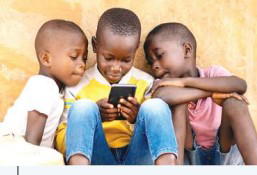
There is a kind of grief parents do not know how to speak about. A quiet heartbreak that sits in the throat when you watch your child staring into a phone for hours and you realize that childhood as we knew it has died a silent death. Screen by screen, click by click, the innocence of an entire generation is disappearing. We grew up in a world where childhood was a living thing. It was loud and dusty and filled with real laughter that echoed across compounds. It smelled of rain soaked sand and ripe mangoes picked on the floor, unripe ones plucked before their time and sun cooked playtimes. We read books with pages we turned with our fingers and we connected with people whose voices we heard and whose faces we looked into. We played until dusk chased us home.

We read books with pages that smelled like rain, not PDFs. We chased real friends, not usernames. We played outside until our mothers shouted our names like borrowed prayers. We invented tinini tinini games from stones, tins, sticks, and sand. Our imaginations were not apps, they were muscles, and we used them every day.
But this new generation? Their playgrounds vibrate, their friendships buffer, their memories auto-delete. Childhood has been outsourced to devices.
Our games were our worlds. Suwe drawn into the earth with sticks. Ten ten with its rhythm that made our feet dance without music. Police and Thief that turned the whole neighbourhood into a dramatic chase. Catcher and Tinko Tinko that tested who could run the fastest. Skipping rope with songs that every girl knew by heart. Swell on the brown earth. Kalokalo and Poko. Goat and Lion. Climbing guava and mango trees until our fingers smelled of sap. Racing old tyres with sticks down long dusty roads. Whot and Ludo and Ayo on verandas. Story nights under the moon where we sat at the feet of elders and listened to tales of the tortoise whose cunning always carried a pricethe wise Rabbit and the sneaky mouse.
We made toys out of broomsticks and nylon and called them kites. We built cars and pots out of clay. We created football leagues with bottle tops. We played in the rain until our clothes felt heavy and our joy felt light. Childhood trained our imaginations like muscles. Nothing was handed to us. We created everything. We lived everything.
Now we are raising children whose world exists inside a six inch prison. Children who know how to swipe before they know how to greet. Children whose friendships are measured by followers and whose emotions are controlled by algorithms. The average child today spends hours glued to screens and it shows in their eyes. They cannot maintain steady attention. They cannot hold conversations without checking their devices. They panic when the room is quiet because silence feels foreign. They do not play. They consume. They do not imagine. They scroll. Their lives are overstimulated yet their souls are underdeveloped.
And before anyone says Times have changed, let us be honest,children have not changed, the world around them has simply shrunk into a 6-inch glass window. They didn’t choose screens. Screens chose them. Screens seduced them. Screens replaced us when we were too busy, too tired, too stressed. Screens became the babysitter, the distraction, the emotional pacifier.
And the danger is not only what they are doing online. The real danger is what they are no longer doing offline. No more outdoor games. No more sweat and laughter and arguments that taught conflict resolution. No more teamwork learned through real human interaction. No more stories told in the warmth of human presence. No more understanding of life beyond the screen.
Something even darker has entered this generation. Children are falling in love with imaginary lovers. Virtual companions. Robotic programs. Chatbots that are designed to respond sweetly even though they have no heart and no soul. Children and teens are pouring their emotions into artificial partners who do not exist. When these programs change tone after an update or shut down or go offline or stop replying the children break. Truly break. Some sink into depression because their virtual boyfriend stopped calling them sweetheart. Some spiral because their online girlfriend blocked them. Some cry for days because the chatbot they confided in simply vanished. And some go further. There are children who have attempted suicide because an imaginary lover ended a relationship that never existed in the first place. They are experiencing real heartbreak from digital ghosts. Their emotions are bleeding from wounds caused by programs written by strangers in an office far away. And the world is acting like this is normal.
We are raising children whose first heartbreak will come from a device instead of a human and some may not survive it. We are raising children who feel emotionally abandoned offline and emotionally dependent online. Children who cannot face reality because reality feels empty compared to the artificial affection they get from screens. Children who never learned the warmth of community because we placed gadgets in their hands before we placed love in their hearts.
This is bigger than technology. This is the slow collapse of childhood. A generation growing up without the skills that make human beings whole. They are becoming digitally fluent but emotionally illiterate. Smart but not wise. Connected but desperately alone. Entertained but empty. Confident online but fragile in real life. They know everything about the world except themselves.
And the truth that stings the most is that they did not choose this. Screens replaced us when we were tired or busy or overwhelmed. Screens raised them when we could not. Screens became the storyteller the babysitter the comforter the distraction the silence giver. And now the bill has arrived and it is heartbreaking.
Today’s child doesn’t just play online they date online, they cry online, they break down online. Some are slipping into depression because a chatbot stopped calling them love. Some are contemplating suicide because their virtual boyfriend ghosted them. Children are now giving their hearts to programs, pouring their emotions into algorithms, and falling in love with people who do not exist. And when these illusions collapse as they always do the heartbreak is real, the wounds are real, and the consequences are terrifyingly real.
If we do not reclaim childhood now we will lose an entire generation. Not by banning technology but by restoring balance. By giving them books with real pages. By teaching them to play outside again. By showing them how to live in a world that does not need WiFi to be beautiful. By becoming present again so they do not go searching for affection inside programs.
Because childhood is not just a memory. It is the foundation of the human soul. And once it is lost no device on earth can restore it.
So the real question is not whether screen time is harming our children. The real question is how much of our children we are willing to sacrifice in exchange for convenience and silence and peace of mind. A generation that no longer knows how to look up may never learn how to rise.
The post Day childhood died; we didn’t even notice because we were holding our phones, by Stephanie Shaakaa appeared first on Vanguard News.