Construction of Abuja airport’s second runway back on track – Keyamo
 SKAiF NewsNG SNN
…courts global investment in Nigerian aviation
By Dickson Omobola
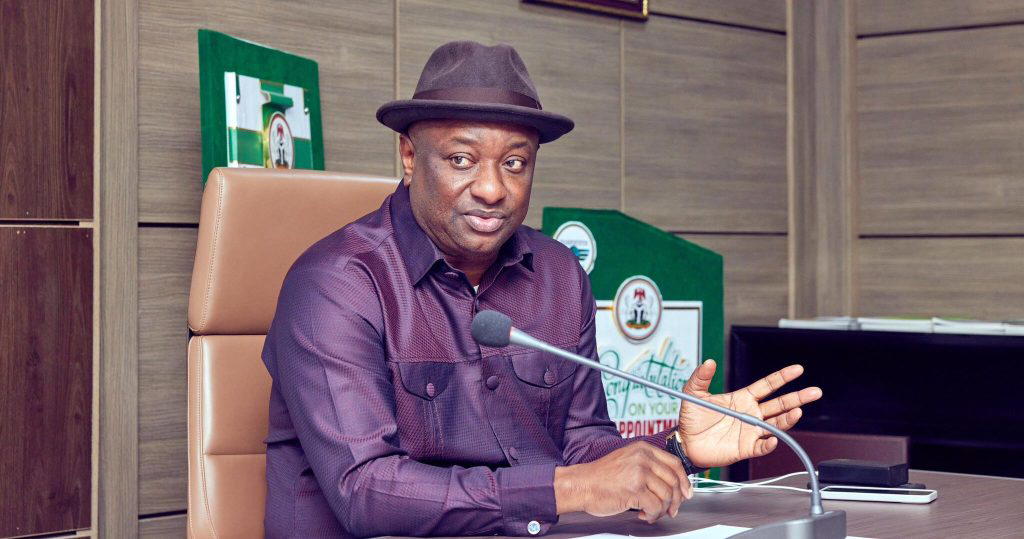
Minister of Aviation and Aerospace Development, Mr Festus Keyamo, on Wednesday, disclosed that President Bola Tinubu has approved the resumption of construction works on Abuja airport’s second runway.
In 2024, the contractor handling the project was told to stop after proposing a revised contract sum of N532 billion, up from N90 billion, due to inflation and the high foreign exchange rate.
Speaking at the Nigerian Aircraft Acquisition and Investment Summit, NAAIS, held in Lagos, he said, “We stopped the project before because of the volatility of the Naira, but Mr President has approved that we return to the site, and the second runway in Abuja will be ready in no time.”
Meanwhile, Keyamo lamented the disproportionate presence of foreign airlines in Nigeria, saying while the country welcomes over 460 international flight frequencies per week, Nigerian airlines struggle to access the same routes and markets due to limited fleet capacity and financing challenges.
He, however, called on global financiers, lessors, original equipment manufacturers, OEMs, development partners, insurers and investors, assuring them that all the reforms necessary to boost their confidence had been implemented.
According to him, there was a need for partnership that unlocks affordable aircraft financing and supports fleet renewal and expansion as well as strengthens maintenance, training and technical capability in the country’s aviation sector.
He said, “We have more than about 460 frequencies per week from international airlines coming here to feed on our market. There is a foreign airline that has more than 45 frequencies per week. Under all these bilateral air service agreements, we have the reciprocal rights to also service those routes.
“What is the difference between our flag carriers and these international airlines that come and feed on our markets? It is just the capacity. The capacity to acquire aircraft and equipment. Therefore, our duty is to ensure that we empower our local airlines. Airbus’ Global Market Forecast 2024 projects that Africa will need about 1,460 new aircraft between 2024 and 2043 to meet rising demand driven by urbanisation and a growing middle class in Africa.
“Meanwhile, Boeing projects that Africa will require 1,205 new aircraft deliveries, with air traffic on the continent growing at about six per cent annually to 2024, thus driving a demand for about 76,000 additional aviation personnel. This is a signal that the centre of gravity of future aviation growth is shifting towards emerging markets; by scale, Nigeria’s geography, population and economic relevance must be one of inclusive elevations.
“For decades, access to affordable and dependable aircraft financing has remained one of the most significant constraints for Nigerian operators; it has limited fleet deployment, constrained routes to development, weakened competitiveness and increased operating costs. Without modern and efficient fleets, Nigerian airlines cannot compete sustainably. Without financing certainty, they cannot scale. Without institutional confidence, global lessors and lenders will remain cautious. Without global maintenance capacity, asset productivity suffers. Without skilled people, growth cannot be sustained.”
The post Construction of Abuja airport’s second runway back on track – Keyamo appeared first on Vanguard News.