Can they own the road they divided yesterday?, by Stephanie Shaakaa
 SKAiF NewsNG SNN
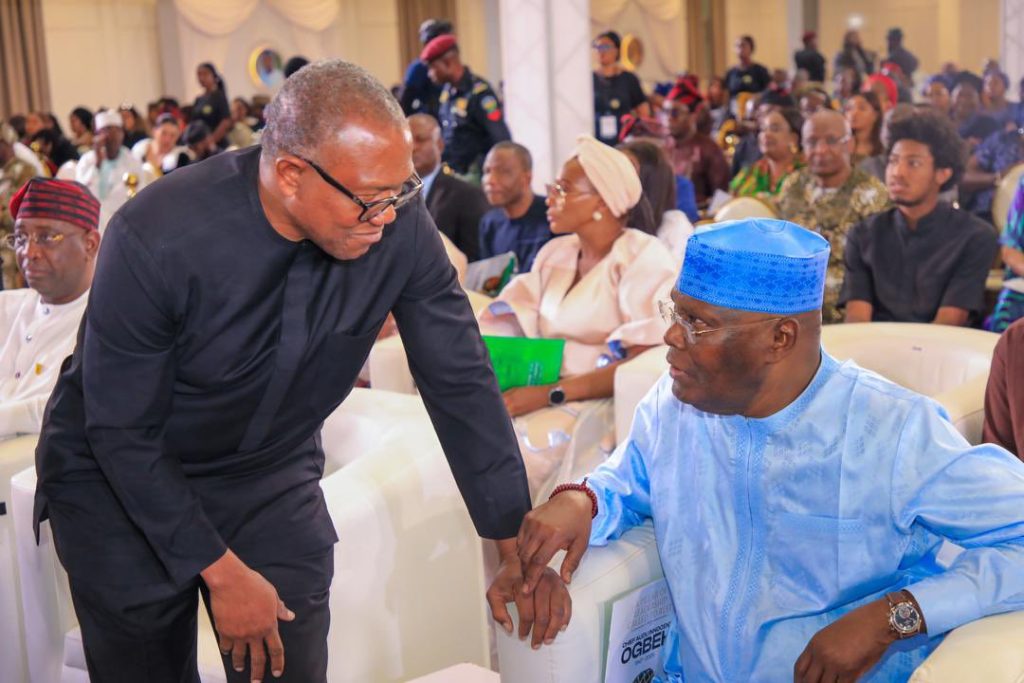
After the 2023 election, Atiku, Obi, and Kwankwaso left with defeat. Yet together, their 14.5 million votes could rewrite Nigeria’s political future.

There is a quiet rearrangement unfolding in Nigerian politics, invisible to most, but deadly in potential. No headlines announce it. No dramatic speeches mark its arrival. Just deliberate movement, careful alignment. Beneath the calm, a possibility brews,one that could unsettle everything we thought we knew about power in this country.
Each of these men carries something heavier than the loss itself. Atiku Abubakar leaves behind a structure that could not close the deal despite nearly seven million votes. Peter Obi walks away with a movement proving belief alone can shake a nation, securing over six million ballots. Rabiu Musa Kwankwaso holds a fortress of loyalty, nearly one and a half million votes strong, built on disciplined grassroots culture. Together, their influence is enormous, greater than any individual contender in that election.
Separately, they were stories of almost. Together, they could become the architects of a force that cannot be ignored.
Because history has a way of circling back. When men who once divided the road find themselves on the same path, politics stops being a contest of parties. It becomes a confrontation with inevitability.
What is taking shape around this emerging coalition is more than the usual shuffle of politicians seeking shelter. It is powered by something older than ambition. It is powered by memory,the memory of ballots scattered, of regions that voted differently, of citizens who wanted change but delivered division. That memory, quantified in tens of millions of votes, is now strategy.
The 2023 lesson was never that the ruling party was unbeatable. It was that fragmentation is the greatest ally of incumbency. The numbers that could have threatened power existed. They simply existed in separate vaults of loyalty. Northern establishment strength marched one way, urban youth idealism another, Kano’s disciplined grassroots network in its own fortress. None were weak, but none were enough.
Now imagine these forces no longer canceling each other out.
Imagine Atiku’s national spread and elite negotiation fused with Obi’s emotionally charged movement, a following that has transformed politics into belief. Add Kwankwaso’s electoral density in Kano and beyond, where loyalty is culture, not casual enthusiasm. Combine these 14.5 million votes and imagine them moving in one direction with disciplined strategy and structure behind them.
That is no longer an opposition. That is a siege.
For the ruling establishment, the danger is not in whispered meetings or press speculation. The real danger lies in psychology. Politics shifts long before ballots are cast. It shifts the moment citizens feel what once seemed impossible has become plausible.
Walk through the streets of Lagos on an election morning. Vendors shouting prices of akara and bread. Young men debating politics with passion and frustration. Mothers with infants on their hips exchanging glances of hope and doubt. Commuters on crowded buses sharing news and rumors. Every face, every conversation, carries memory of ballots lost to fragmentation, neighborhoods ignored, promises that vanished. Hope is alive there, raw and destabilizing.
The moment voters who felt split across multiple platforms begin to see one credible channel, turnout changes. Donor confidence changes. Elite calculations change. The language of inevitability itself begins to migrate.
And that is how dominant parties tremble.
Yet, this moment stands before the oldest trap in Nigerian politics. Ego.
The country has seen brilliant coalitions die in the delivery room because powerful men could not agree on the question that destroys alliances more than ideology ever does: who must wait.
This is where history will judge them. Can Atiku’s long quest accept compromise? Can Obi’s movement embrace coalition discipline? Can Kwankwaso’s fortress politics expand nationally without losing its essence? These questions are the difference between historic realignment and another squandered opportunity.
Coalitions are not defeated by opponents first. They are defeated by impatience within. Yet if they get it right, if ambition bows to timing and personal destiny yields to collective strategy, Nigeria may witness the most formidable opposition architecture since the alliance that ended sixteen uninterrupted years of PDP rule.
This moment matters beyond the names involved. It is about whether democracy can mature beyond fragmented outrage. Whether citizens who voted for change in 2023 through different vehicles may finally approach the next election with unified intent.
Picture Enugu and Ibadan, Kano and Port Harcourt. Market stalls, roadside mechanics, university campuses, commuter buses nodes in the network of memory, awareness, and political sentiment. Ordinary citizens are already living this story, sensing the stakes before strategies are whispered in private rooms.
If that unity happens, the implications are seismic. Campaigns will no longer be contests of scattered grievance. They will become concentrated referendums on governance. The ruling party will no longer enjoy the silent blessing of divided alternatives. Every vote once dispersed across camps could arrive at the ballot box with singular purpose.
That is the nightmare of incumbency. Not criticism. Not editorials. Not opposition press conferences. Unity.
Because power survives anger. It survives scandal. It survives public disappointment. What it struggles to survive is a united alternative with numbers, emotion, strategy, and timing.
The emerging coalition feels less like news and more like a national reckoning. History is full of cruel ironies, and few are more potent than this.The men whose separate ambitions once helped incumbents maintain power may now be the instruments of its greatest vulnerability.
Numbers do not lie. If 14.5 million votes, once scattered, are guided into one disciplined current with strategy behind them, they could take over narrative, debate, and possibly the presidency. Sometimes the greatest threat to first place is not the second-place contender. It is the day the second, third, and fourth decide to move as one.
Nigeria has stood at moments like this before, on the edge of possibility, unsure whether to cling to the familiar or risk the unknown. Since 1999, power has often seemed durable not because it is unbreakable, but because those who challenge it rarely act in shared purpose. Each election carried seeds of change, scattered across competing ambitions, never allowed to root. What is unfolding now feels different. Unity is not a slogan. It is strategy. In a democracy, it is often the difference between permanence and collapse.
Yesterday they divided the road. Tomorrow they may own it.
And if that day comes, 2027 will not be an ordinary election cycle. It will feel like a verdict long postponed, delivered not merely against a party but against the complacency power often mistakes for permanence.
The post Can they own the road they divided yesterday?, by Stephanie Shaakaa appeared first on Vanguard News.