ANEC 2025 Dialogue: Adesina urges media to balance terrorism coverage with military successes
 SKAiF NewsNG SNN
…As Agowike charges military to provide information
By Emma Ujah, Abuja Bureau Chief & Joseph Erunke
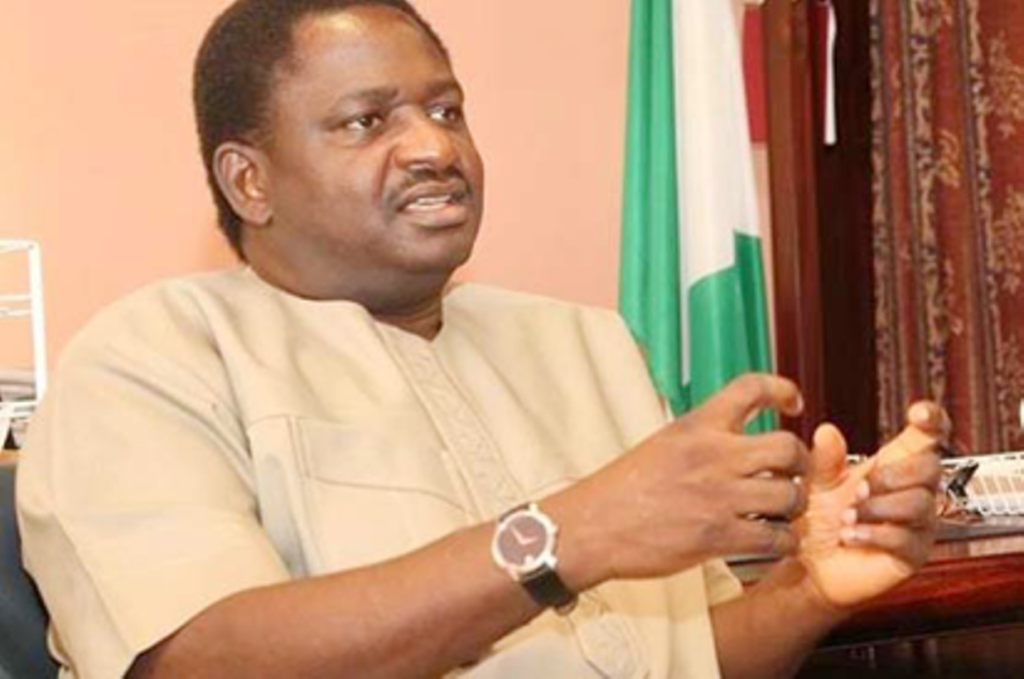
Former Special Adviser to the President on Media and Publicity, Mr. Femi Adesina, has called on Nigerian journalists to maintain a balance between terrorists activities military achievements to avoid becoming tools of terrorists’ propaganda.
He made the appeal during a panel session at the National Dialogue on Media, Terrorism, and National Security, held as part of the 21st All Nigeria Editors’ Conference (ANEC) 2025 in Abuja on Thursday.
Adesina, who served as presidential spokesperson for eight years, under late President Muhammadu Buhari, said the media has a crucial responsibility in shaping public perception of the country’s security efforts.
According to him, while it is important to report attacks, abductions, and other violent disruptions objectively, it is equally vital to spotlight military gains that often go under-reported.
He recalled the February 19, 2018 abduction of students of Government Girls’ Science and Technical College, Dapchi, describing it as a harrowing episode that nonetheless showcased what he referred to as “a swift and decisive rescue operation” by security forces.
While noting that all abducted students,except Leah Sharibu, were returned safely within a short time, he argued that such outcome deserved as much the prominence given the initial kidnap incident.
“Incidents are newsworthy, no doubt. But successes are newsworthy too,” Adesina said, urging editors to adopt a more balanced approach that strengthens national morale rather than amplify fear and despair.
“For eight years, not once did I call an editor to question their headline. I knew exactly what it meant to sit in that chair and apply editorial judgment,” he stated, adding that mutual respect between the press and government was essential for maintaining a healthy democracy.
The session formed part of broader discussions on how the media can responsibly navigate the complex interplay of national security realities, public right-to-know, and professional ethics.
Editors, security analysts, and communication experts at the conference explored how narratives around terrorism can influence national resilience and confidence in counter-terrorism operations.
The ANEC 2025 touched on other conversations on media sustainability, press freedom, and the evolving security landscape.
Media must be given access to information to effectively support nat’l security… Agoawike
Media executives and senior editors have called for improved access to information from security and government agencies, stressing that journalists cannot effectively contribute to national stability without timely, credible briefings.
This position dominated discussions on Thursday during a panel session on Media, Terrorism and National Security at the 21st All Nigeria Editors’ Conference (ANEC) 2025 in Abuja.
Speaking first on the panel, Lady Angela Agoawike, a senior editor and broadcaster, said reporters and editors constantly operate in an environment where access to official information is restricted, despite the media’s constitutional responsibility as the Fourth Estate.
Agoawike noted that editors live and work within the same communities affected by insecurity, yet face major obstacles when trying to report responsibly.
“We live in this country ,in the security space, the media space, our homes, our villages. We see what happens all the time,” she said.
“But the people who should give us information police us. You often have to run around to get basic facts.”
She explained that journalists frequently rely on personal contacts inside security agencies because official channels are slow or unresponsive.
Agoawike emphasised that editors must constantly weigh the public’s right to know against the potential danger that published information could pose to sources, victims, or communities.
She recalled an instance during her tenure as Saturday Editor at the Daily Times, when a correspondent filed a sensitive interview from a crisis zone.
“I asked him, ‘Did you tell this man the implication of what he has said?’ If we published it, it could endanger him. We eventually stepped the story down , that may be self-censorship, yes, but sometimes it is necessary.”
She added that the rise of unverified information on social media has created further pressure on editors to maintain public calm without suppressing legitimate news.
Noting that, “We need the right information to keep the public safe”, Agoawike shared a recent experience in Imo State, where she operates a private radio station.
She recalled waking up one day to sounds of gunfire and military helicopters in Owerri, with no official communication about the situation.
“I called my station and told them: report the sounds and movement, but don’t say more until we confirm. We called the police but no information. Yet we saw armoured vehicles moving. How are we supposed to inform the public if those deploying these assets don’t brief us?” She said.
She stressed that while journalists respect the sensitive nature of security operations, agencies must also recognise the media as a public-interest institution.
Quoting remarks made earlier at the conference, she said the media should be treated “as a public good”, not as adversaries.
Agoawike said journalists are committed to protecting national stability, but will also not shield wrongdoing , including abuses carried out by people in uniform.
She added that public enlightenment should include teaching citizens how to safely interact with security personnel, recalling advice from a police officer during her university days:
“He told me, ‘Anytime you see a policeman carrying a gun, never go near him.’ That has guided me till today. Maybe the media should amplify such messages.”
The post ANEC 2025 Dialogue: Adesina urges media to balance terrorism coverage with military successes appeared first on Vanguard News.