Akpabio vs Oshiomhole: Housemates in the Red Chamber, by Stephanie Shaakaa
 SKAiF NewsNG SNN

Watching the proceedings of the Senate in recent weeks, one could be forgiven for wondering whether Nigeria’s latest reality show has quietly moved from the television studio to the National Assembly.
Read Also: Fake agency originated from Buhari government — Budget Office explains PFIPC allocation
If anyone had suggested that the next big source of national entertainment would come from the Red Chamber rather than a television set, many Nigerians would probably have laughed. Yet, in the past few weeks, the Senate has produced moments that contain all the ingredients of a reality programme: strong personalities, unexpected confrontations, dramatic exchanges, moments of reconciliation and an audience eagerly waiting to see what happens next.
The only problem is that this is not a television show, and Nigerians did not vote for the contestants.
The Red Chamber, as the Senate is popularly called, has become the unlikely setting for a political drama that social media has eagerly embraced. Every exchange is dissected, every facial expression interpreted, every statement analysed, and every confrontation quickly transformed into memes and commentaries.
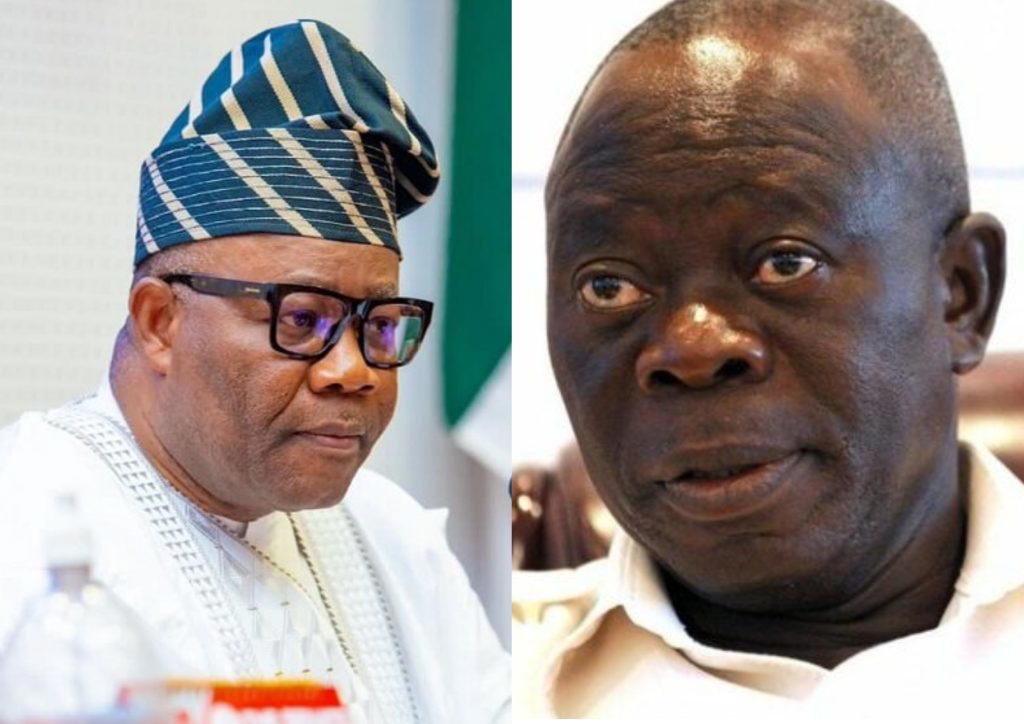
At the centre of this latest episode are Senate President Godswill Akpabio and Senator Adams Oshiomhole, whose interactions have reminded Nigerians that the Senate floor can sometimes produce the kind of tension usually associated with reality television. There are moments of disagreement that capture national attention, followed by moments of laughter and reconciliation that leave many wondering whether another episode is already waiting around the corner.
There are moments when watching the proceedings feels less like following a legislative session and more like watching a carefully choreographed political drama unfold in real time. A senator rises to challenge a ruling, voices become sharper, the chamber suddenly shifts from routine business to heightened tension, and every reaction from the approving nods to the restrained smiles and knowing glances across the aisle appears to become part of the day’s performance. Within minutes, a disagreement that began on the Senate floor escapes into the wider world, transformed into headlines, social media clips and public commentary. Nigerians, watching from their phones and television screens, are left debating not only the issue that was raised but the manner in which it was delivered.
The exchanges between Senate President Godswill Akpabio and Senator Adams Oshiomhole have become a vivid example of this new political theatre. One moment, the chamber carries the seriousness of a national institution debating matters of consequence, the next, it has the energy of a stage where sharp words, humour, interruptions and reconciliations compete for public attention. The scenes are compelling, sometimes amusing, and undeniably human but they also raise a deeper question about whether the drama surrounding the Senate is beginning to overshadow the duty for which the institution exists.
And Nigerians, being Nigerians, have responded in the way they know best, with humour.
A serious political exchange becomes a joke. A tense moment becomes a viral clip. A parliamentary disagreement becomes a conversation across social media platforms. In a country where people have learned to find laughter even in difficult circumstances, the entertainment value of political drama is often impossible to ignore.
Somewhere, Big Brother may well be taking notes.
Imagine a Senate edition of a reality show. The first task could be simple: “Housemates, debate national issues without turning the chamber into a theatre.” The reward would be something more valuable than immunity from eviction, the restoration of public confidence. The punishment for failure would probably be another viral moment.
But unlike an actual reality show, the consequences here are very real.
The Senate is not a television house. It is not a contest to determine who can deliver the sharpest response or command the most attention. It is one of the country’s most important institutions, responsible for making laws, scrutinising government actions, approving national spending and protecting the interests of millions of Nigerians.
That is why the humour surrounding these moments should also make us pause and ask a more serious question: why do Nigerians remember the drama in the chamber more easily than the work being done inside it?
Why do confrontations travel faster than legislation? Why do personalities sometimes overshadow the institution they represent?
The challenge is not that senators disagree. Disagreement is the foundation of democracy. A Senate where everyone thinks alike would be a far more worrying picture. Robust debate, passionate arguments and opposing views are necessary ingredients of a functioning legislature.
The problem begins when political theatre becomes more memorable than political substance.
There is a difference between a lively parliament and an entertaining parliament. One reflects a healthy democracy, the other risks reducing serious national issues to moments of performance.
The Senate should not be remembered because Nigerians enjoyed watching its arguments. It should be remembered because Nigerians felt the impact of its decisions.
A reality show ends when the season is over. The audience moves on to the next programme. But the decisions made in the Senate do not disappear when the cameras are gone. They remain in the economy, in public institutions, in security policies, in education and healthcare, and in the daily experiences of ordinary Nigerians.
Perhaps the greatest irony is that the Senate does not need to chase attention. The responsibility placed on it is already significant enough.
The issues before it, poverty, insecurity, economic hardship, unemployment and national development provide more than enough material for serious engagement.
Nigerians are not asking for legislators who never disagree. They are asking for legislators who understand that the Red Chamber is not a stage and public service is not a performance.
Because while Big Brother Naija crowns winners at the end of every season, democracy asks a different question: when the spotlight was on, who truly served the people?
That is the real contest.
And it is one Nigeria cannot afford to lose.
The post Akpabio vs Oshiomhole: Housemates in the Red Chamber, by Stephanie Shaakaa appeared first on Vanguard News.