‘600m Africans in darkness’: Workers reject AfDB, World Bank electricity plan
 SKAiF NewsNG SNN
By Victor Ahiuma-Young
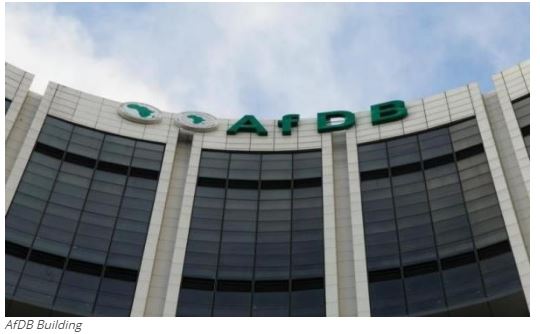
Nigerian and other African labour unions have rejected the African Development Bank, AfDB, and World Bank-backed “Mission 300” electricity initiative, warning that the programme could plunge African countries deeper into debt while failing to deliver sustainable electricity access across the continent.
The unions, under the umbrella of International Trade Union Confederation, ITUC-Africa, Public Services International, PSI, and IndustriAll Global Union Sub-Saharan African Region, which members of Nigeria Labour Congress, NLC, and Trade Union Congress of Nigeria, TUC, belong to, argued that despite previous promises by international financial institutions, about 600 million Africans still lack access to electricity.
In a joint statement issued on the sidelines of the 2026 Annual Meeting of the African Development Bank in Brazzaville, Republic of Congo, the unions said: “Mission 300 marks a continuation of the neoliberal approach to electrification.
The policies proposed under Mission 300 are almost identical to the AfDB’s New Deal on Energy for Africa initiative launched a decade ago.
“The New Deal pledged to mobilise private investment to achieve 100 per cent access in urban areas and 95 per cent access in rural areas by 2025. With 50 per cent of sub-Saharan Africans still without electricity at the beginning of 2026 — or roughly 600 million people — the New Deal was a spectacular failure.
“Mission 300 likely faces a similar fate because it also relies on ‘crowding in’ private investment by creating ‘bankable projects’ for private interests. The World Bank Group and the AfDB have pledged to mobilise 48 billion dollars concessional financing, but this financing will be contingent upon governments using the finance to ‘de-risk’ the investments of private companies.
“This, we believe, is both untenable and unjust. The World Bank’s own studies estimate that the financing gap for sub-Saharan Africa to reach 100 per cent electricity access is between 35 billion dollars and 50 billion dollars annually.
“We strongly suggest that the World Bank Group use its 2026 evaluation to seriously rethink its assumptions about relying on the private sector to lead Africa’s electrification, especially when it involves large amounts of borrowing, the burden of which will fall on governments already struggling to service existing debts.
“We are equally concerned that the African Union adopted Mission 300 without serious questions being asked, while governments continue to push reforms aimed at making utilities achieve ‘100 per cent operational cost recovery’ through tariff adjustments and efficiency measures.
“As unions representing energy sector workers, we have a close-up view of what ‘100 per cent operational cost recovery’ means in practice. Public utilities become so financially stressed that they are unable to improve or expand infrastructure necessary for electrification.”
The unions called on African governments, the AfDB and the World Bank to adopt what they described as a “Reclaim and Restore” approach focused on rebuilding and strengthening public electricity utilities rather than relying heavily on private investors.
According to them, “The current policy makes public utilities weaker in order to create space for the private sector, but the private sector has yet to show up.
“We are convinced that Mission 300 will not be able to deliver on its 300 million target by 2030 based on the current set of policies. Any electrification that might occur in the coming years will impose an intolerable debt burden on governments, as public money is used to subsidise the profits of energy companies, many of which are multinationals based outside Africa.”
The labour groups insisted that ensuring electricity access for millions of Africans would require a new set of policies capable of rebuilding and improving Africa’s public utilities.
The post ‘600m Africans in darkness’: Workers reject AfDB, World Bank electricity plan appeared first on Vanguard News.