Digital payments driving Nigeria’s $11bn food service industry
 SKAiF NewsNG SNN
By Juliet Umeh
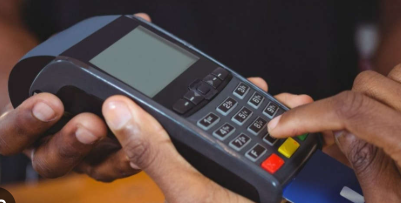
A new study has revealed that digital payment infrastructure is transforming Nigeria’s food service industry, helping businesses overcome longstanding operational challenges and driving the sector to an estimated $11.09 billion market in 2025.
The report, released by a digital bank, Moniepoint, projected that the industry would grow to $19.31 billion by 2030, representing an annual growth rate of 11.73 percent, driven by the expansion of food delivery platforms, cloud kitchens and wider adoption of digital financial services.
Tracing the industry’s evolution over four decades, the study highlighted the journey from the era of Kingsway Rendezvous and Mr Bigg’s to today’s technology-driven quick-service restaurant, QSR, chains. It also noted that food and beverage businesses have become the second-largest merchant category on Moniepoint’s platform, behind only retail.
Group Chief Executive Officer of Moniepoint, Tosin Eniolorunda, said financial inclusion should go beyond providing access to banking services to helping businesses operate more efficiently.
According to him, digital payment infrastructure is becoming the backbone of food businesses by connecting payments with inventory management, procurement, credit access and business growth.
The report found that for decades, Nigerian food businesses relied heavily on cash transactions, exposing operators to theft, accounting errors and revenue leakages. While bank transfers improved payment options, they also introduced delays in confirming transactions before orders could be released, particularly during festive periods when transaction volumes surged.
It added that fragmented payment and inventory systems created opportunities for stock losses, under-reporting of sales and other operational inefficiencies, while collateral-based lending denied many food businesses access to finance.
Citing data from the International Finance Corporation, IFC, the study said Nigeria’s unmet MSME financing demand stood at $32.2 billion in 2022. It added that women own 86.8 per cent of businesses in the accommodation and food services sector, making them among those most affected by the credit gap.
To address these challenges, the report said Moniepoint introduced instant settlement, automated payment confirmation and transaction-based lending, allowing merchants to access working capital without physical collateral. It said these innovations, alongside Nigeria’s cashless policy, resulted in a 2,823 per cent increase in QSR terminal usage.
The study also found that transaction volumes peak between 1 p.m. and 2 p.m., with another surge around 7 p.m., while online food delivery remains active beyond 10 p.m. Card payment activity records its highest growth between November and December, while April is the slowest month.
Moniepoint said the report is part of its research aimed at helping regulators, investors and other stakeholders better understand how digital payment ecosystems are reshaping commerce across Nigeria.
The post Digital payments driving Nigeria’s $11bn food service industry appeared first on Vanguard News.