2027: High hurdles before candidates, parties
 SKAiF NewsNG SNN
By Clifford Ndujihe, Henry Umoru, Joseph Erunke, Johnbosco Agbakwuru, Omeiza Ajayi, John Alechenu, Olayinka Ajayi & Luminous Jannamike
PARTIES and candidates for the presidential, 469 National Assembly, 28 governorship and 993 state assembly seats have high campaign hurdles to scale for the 2027 general polls.
No fewer than eight states have announced between N20 million and N200 million as permit fees for campaign billboards, posters, and outdoor materials.
More states are expected to unfold their fees, which are panning out as major sources of internally generated revenues for the states.
According to the timetable of the Independent National Electoral Commission, INEC, campaigns for the presidential and National Assembly elections will begin today, while those of the governorship and state assembly polls will start on September 9. Both elections are scheduled for January 16 and February 6, 2027, respectively.
A host of the parties were upbeat about their readiness for the 151-day campaign relay, yesterday.
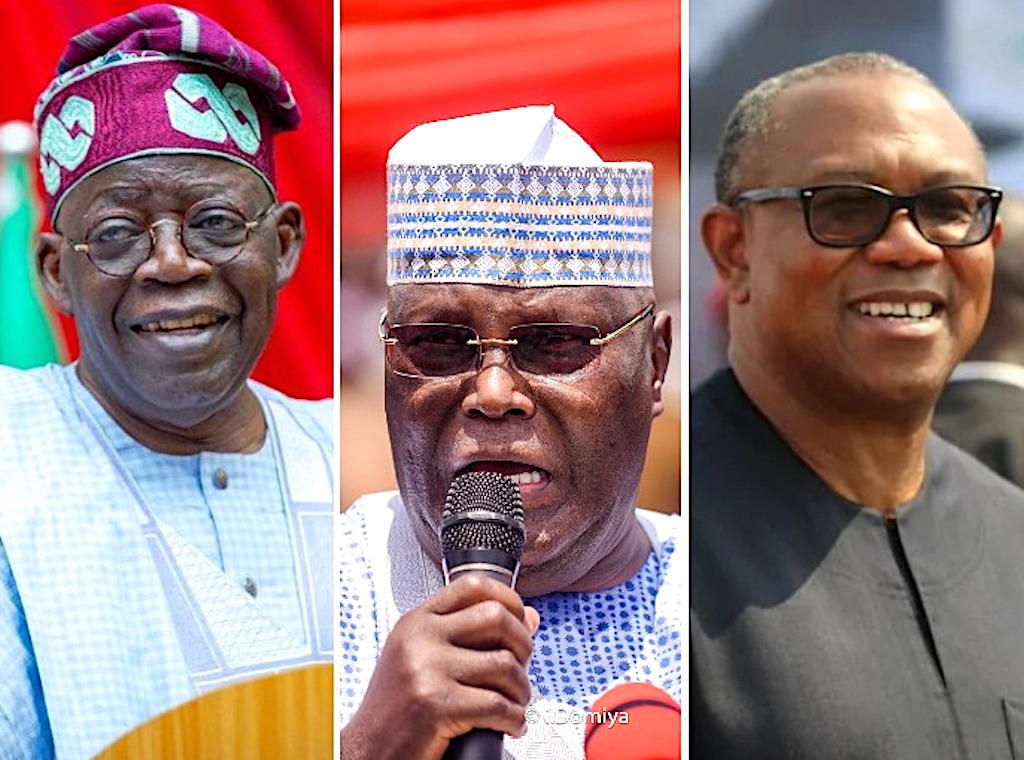
Indeed, President Bola Tinubu of the All Progressives Congress, APC; Alhaji Atiku Abubakar of African Democratic Congress, ADC; Mr Peter Obi of Nigeria Democratic Congress, NDC; and 22 other presidential standard bearers apparently kicked off their campaigns in style, yesterday.
They signed a peace accord and vowed to pursue issue-based campaigns at a ceremony in Abuja facilitated by the National Peace Committee, NPC, in partnership with The Kukah Centre.
At the ceremony, while Tinubu warned against AI-driven misinformation, primordial tensions, ethnic and religious politics, adding that polls were not do-or-die, Obi told voters to reject violators of past accords.
This was as the INEC said voters for the 2027 elections might hit the 100 million mark. The commission, which disclosed that it had started cleaning up the register, listed the challenges it was facing, saying it would deploy 1.4million ad hoc staff across 176,000 polling units for the balloting.
8 states announce N20m-N200m permit fees
States that have announced out-of-home advertising campaign permit fees include Abia, Kogi, Anambra, Enugu, Bauchi, Ebonyi, Oyo and Kano.
In Abia, the Abia State Structures for Signages and Advertising Agency, ABSSAA, announced the following fees: Presidential candidates – ₦200 million; governorship candidates – ₦150 million; senatorial candidates – ₦100 million; House of Representatives Candidates- ₦50 million; and State House of Assembly Candidates- ₦20 million.
In Kogi, the rates are: Presidential – ₦150 million; senatorial -₦50 million; House of Representatives-₦30 million; State House of Assembly ₦5 million.
While Enugu State imposed a ₦150 million comprehensive fee covering campaign materials, billboards, and branded vehicles, Anambra, Bauchi, Ebonyi, Kano, and Oyo states have fees ranging from ₦20 million upwards, depending on the elective office being sought
INEC begins clean-up of voter register
Meanwhile, INEC has declared that it was scaling up its operational capacity to deploy approximately 1.4 million ad hoc personnel across over 176,000 polling units nationwide for the 2027 general elections.
The commission also disclosed that it was utilising the Automated Biometric Identification System, ABIS, under the Continuous Voter Registration, CVR, framework to eliminate duplicate entries and maintain a clean, verified National Register of Voters.
Welcoming the Pre-Election Assessment Mission, PEAM, delegation of the International Republican Institute, IRI, led by former U.S. Assistant Secretary of State for African Affairs, Ambassador Jendayi Frazier, at INEC headquarters in Abuja, yesterday, Chairman of the commission, Prof. Joash Amupitan, listed major threats confronting the electoral space, warning that systemic risks continued to pose direct dangers to public trust.
“Security risks, localised electoral violence, vote-buying, and the rapid proliferation of hate speech, disinformation, and Foreign Information Manipulation and Interference, FIMI, pose direct threats to voter confidence,” Amupitan noted.
The visit coincided with key electoral milestones, coming three days after the Osun State off-cycle governorship election and a day before the official statutory commencement of public campaigns and rallies for the 2027 General Election on Wednesday, August 19, 2026.
Prof. Amupitan noted that the mission offered an independent perspective as the commission transitions into full-scale national election preparations.
He revealed that INEC had consistently used recent off-cycle governorship elections and legislative by-elections as live operational tests for its field logistics, security coordination, and technological framework, stressing that technology has permanently closed legacy vulnerabilities in Nigeria’s voting system.
Reaffirming the neutral standing of the electoral umpire, Prof. Amupitan assured the international observer delegation of full institutional transparency and unreserved cooperation.
Nigeria’s voter register to hit 100m
The electoral commission also projected that Nigeria’s registered voter population would surpass 100 million ahead of the 2027 general elections.
INEC National Commissioner and Chairman of its Information and Voter Education Committee, IVEC, Mallam Mohammed Kudu Haruna, disclosed this in Abuja at the commission’s Joint Implementation Meeting of the Departments of Voter Education and Publicity, VEP, and Gender and Inclusivity, G&I.
The meeting, attended by heads of the two departments from the 36 states and the Federal Capital Territory, FCT, was convened to develop a communication and inclusivity roadmap for the 2027 elections.
Haruna said the existing voter register had risen above 93 million and was expected to cross the 100 million mark after the conclusion and finalisation of the recently conducted nationwide Continuous Voter Registration, CVR, exercise.
He said the development would further reinforce Nigeria’s position as Africa’s largest electoral democracy.
With 151 days to the commencement of the first phase of the 2027 elections, Haruna charged INEC information officers to deploy effective communication strategies to mobilise eligible Nigerians.
“Our job is to give the widest and most effective publicity to all five sets of elections to mobilise all Nigerians of voting age to choose their leaders. This job is at once simple and complex,” he said.
Tinubu, Obi, Atiku, others sign peace accord
In readiness for the polls, presidential candidates and political leaders, yesterday, committed themselves to peaceful, issue-based campaigns, rejecting hate speech, violence, personal attacks, fake news and religious or ethnic incitement.
The commitment was made at the signing of the National Peace Accord, which marks the first phase of the peace initiative ahead of the 2027 elections, and seeks to prevent political competition from degenerating into violence, intimidation, misinformation and other acts capable of undermining Nigeria’s democratic process.
Although Tinubu and Atiku were represented by their nominees, other presidential candidates, including Peter Obi, were present. Also in attendance was the INEC chairman, Prof. Joash Amupitan.
Chairman of the National Peace Committee and former Head of State, General Abdulsalami Abubakar, retd, who was represented at the event by former Chief of Defence Staff, General Martin Luther Agwai, retd, said political actors had increasingly abandoned substantive debates on manifestos and programmes for personal attacks and character assassination.
According to him, the trend has created a toxic political atmosphere capable of inciting citizens against the state, political parties and individual candidates.
“Political campaigns have taken away civility and decency in public discourse and conversation and have created a toxic atmosphere that has the potential to incite citizens against the state, against other political parties and candidates,” Abubakar said.
He recalled that the peace committee introduced the National Peace Accord in 2019 to promote issue-based campaigns and peaceful political competition.
He said the latest accord had been strengthened by linking its provisions to the Constitution, the Electoral Act and other relevant laws governing the electoral process.
“This ensures that the commitments contained in the accord are firmly anchored in the existing legal framework and serve as a clear reminder to political actors of their obligations and responsibilities throughout the electoral process,” he said.
Abubakar said the committee was also moving beyond general appeals for peaceful elections through a comprehensive strategy involving “contextual understanding, preventive diplomacy, stakeholders’ engagement, citizen participation, legal compliance, field-level monitoring, evidence-based analysis and accountability throughout the electoral cycle.”
Tinubu warns against ethnic, religious politics, says elections not do-or-die
President Tinubu, who was represented by the Secretary to the Government of the Federation SGF, Senator George Akume, warned political actors not to use divisive or primordial sentiments of ethnicity and religion as tools for seeking power.
He urged political parties to commit to a peaceful and transparent electoral process, stressing that signing the peace accord is a solemn pledge to the Nigerian people that, as leaders, they will put the nation’s interest above personal or partisan ambitions.
Tinubu said with the aid of technology, INEC has recorded remarkable improvements in every election cycle.
“The introduction of the permanent voters card and BVAS, an electronic card reader, has eliminated voting manipulation, ballot stuffing, and snatching at polling units,” he said.
He noted that since 1999, when the country returned to democratic governance under the stewardship of General Abdulsalami Abubakar and his team, every election period has brought its share of anxiety because of the nature of the nation’s politics and the intense competition for power among political actors.
“It is my pleasure to be here today to take part in this significant event, which precedes the start of the political campaign ahead of the January and February 2027 general elections.
“I thank members of the National Peace Committee, NPC, especially our former Head of State, General Abdulsalami Abubakar, the Sultan of Sokoto, and Bishop Matthew Hassan Kukah, for convening this important occasion.
“Our nation owes the NPC a debt of gratitude for your steadfastness since 2014 in promoting peace accords that commit political parties and candidates to run non-violent, issue-based campaigns during national and off-cycle state elections.”
The President said that while politics and the contest for power could be loud and often create tension and disagreement among politicians, political actors must acknowledge the progress the country had made in its electoral process in terms of transparency and election management by the INEC.
He said: “With the aid of technology, INEC has recorded remarkable improvement in every election cycle.
“These improvements have restored power to the voters, who are now sure that their vote will count. Politicians are now more accountable to the people because votes count. These polls have also demonstrated our capacity as a people to conduct ourselves with maturity and restraint.
“Between October 2025 and August 15, 2026, we witnessed three off-season polls in Anambra, Ekiti, and Osun states. Different parties won them, and local and foreign observers described them as free, credible, and transparent. When the process and outcome are manifestly transparent, we see less post-election litigation in our courts.
“We have gathered today to commit ourselves to a peaceful and transparent electoral process. Signing this peace accord is a solemn pledge to the Nigerian people that we, as leaders, will put the nation’s interest above personal or partisan ambitions.”
He called on all Nigerians, civil society organisations, foreign partners, and the media to join hands in deepening and building a stronger, more vibrant democratic society.
“Democracy is not just about periodic elections that get politicians into government positions. Democracy is about how citizens participate in the affairs of their nation, build trust in public institutions, engage civically, and work together for good governance and a more just and equitable society.
“In the spirit of the accord we have just signed, we must conduct ourselves in ways that strengthen, not tear, the fabric of our society. It is natural during campaigns to disagree as opponents and advocate competing governing visions for our country. We may exchange occasional political jabs.
“But as members of the same household, the same national family, we must never resort to divisive or primordial sentiments of ethnicity or religion as tools for seeking power.
“Let us campaign on superior ideas. Let us debate issues and promote the best policies to expand opportunities for our people and accelerate Nigeria’s journey from a developing nation to a first-world country.
“As the campaign season kicks off, I commit myself and my party, the All Progressives Congress, to the tenets of this accord. Our party rejects violence, hate speech, the spread of misinformation — including through artificial intelligence — and all forms of incitement, especially via social media.
“We are committed to peaceful, transparent elections that will strengthen political stability, social harmony, economic progress, and our nation’s prosperity. I encourage other political parties and political actors to do the same.
“Let us remember that elections are not a do-or-die affair. We are partners in the project of nation-building. Win or lose, our country, Nigeria, must be the ultimate winner.”
Obi tells voters to reject violators of accord
Obi, who spoke shortly before the commencement of the signing ceremony, asked Nigerians to reject political candidates who violate the accord.
Asked what punishment should await any candidate or political party that breached the agreement, the former Anambra State governor said the electorate should deliver the sanction at the ballot box.
“Well, the punishment is that Nigerians should not vote for them,” Obi said, maintaining that those seeking political office must lead by example.
The NDC presidential candidate said: “You can’t answer ‘His Excellency’ without being an excellent person. So, the process that will make you answer ‘His Excellency’ should be excellent, and the only way to do it is to conduct yourself properly.”
Obi also called for a credible 2027 election in which the votes of Nigerians would count. “I don’t have any fear (going into next year’s election) except to say that, please, for the sake of the children of Nigeria, can we have an election where people’s votes will count?” he asked.
He condemned the violence that accompanied the recent Osun State governorship election, saying no Nigerian should have to lose his or her life because of an election.
“We should comfort their families, and we should remain prayerful and conduct ourselves in a way that in our democracy, nobody needs to die for an election. It shouldn’t be. It is painful, and I wish it never happened again,” he said.
Asked whether he still believed in Nigeria’s electoral process, Obi replied: “Well, because I want to change the process, I have to go through it. So, I have to believe in it.”
The Peace Committee’s Project Manager at The Kukah Centre, Asabe Ndaye, said the accord was not merely a ceremonial document but a public commitment backed by law.
“The Peace Accord is a public commitment by political parties and candidates to peaceful political competition, respect for the rule of law, democratic accountability and the will of the people,” Ndaye said.
She disclosed that the committee had, in March 2026, convened electoral stakeholders and presented legal annotations to the document to ensure that political actors understood the implications and consequences of violating its provisions.
“We’re here also to set up for the 2027 campaigns before political competition escalates into electoral conflict. Our competition will not become war and disagreements will not degenerate to violence. Political mobilisation will not become intimidation. Electoral disputes will not become conflict and information will not become a weapon against electoral integrity,” she said
2023 breaches
The Peace Committee also presented evidence of violations recorded during the 2023 electoral cycle, following the previous peace accord signed by political actors.
According to Ndaye, the biggest breach was the commitment to issue-based campaigns, which accounted for 43 per cent of recorded violations.
She said the provision against insults and violence recorded 13.5 per cent violations, while the clause against fake news and disinformation accounted for nine per cent.
She disclosed that 58 per cent of violations relating to issue-based campaigns were attributed to party spokespersons, with 22 states affected.
Among the states most affected, she listed Kaduna, Plateau, Kano, Lagos, Rivers and Benue.
“Political language is not just communication. In a tense electoral environment, it can actually become a risk signal,” Ndaye warned.
She said the Peace Committee had continued to monitor electoral developments since the 2023 general elections, including at least 70 off-cycle elections, by-elections and re-run polls, where attacks involving candidates, party supporters and campaign teams had been recorded.
2,510 security incidents recorded
Ndaye disclosed that the Election Security Information, ESI, Hub established by the committee had recorded 2,510 security incidents between June 2025 and August 2026.
She identified Zamfara, Borno, Kaduna, Niger, Benue and Plateau among the most affected states, with banditry, kidnapping, terrorism and other forms of insecurity constituting major threats.
The hub, she said, had also recorded 381 electoral offences during the period, with the Federal Capital Territory, Osun, Oyo and Lagos recording significant incidents.
The leading electoral threats, according to her, included vote-buying, political violence, thuggery, physical attacks, intimidation, misinformation, political party conflicts, electoral malpractice and voter suppression.
She warned that electoral violence often had a history before manifesting as an actual incident, urging stakeholders to tackle tensions arising from party primaries, defections, political realignments, litigation and nomination disputes before they escalated.
We won’t be stampeded into campaigns — ADC
Speaking on its readiness for the campaigns, the ADC, yesterday, said it would not be stampeded into launching full-scale campaigns for the 2027 general elections, insisting that the opening of the campaign window does not mean parties must hit the ground running immediately.
ADC’s National Publicity Secretary, Bolaji Abdullahi, said that the commencement of campaigns merely gives parties the option to begin campaigning.
“If you say campaigns are commencing, it doesn’t necessarily mean that you must start campaigning tomorrow. It means that you are now permitted to campaign if you wish to,” he told Vanguard.
Abdullahi added that the January election was still sufficiently far away to allow the party to pace its activities.
“The election is January. That is five months from now. It is such a long time,” the party spokesman said.
But beyond the timing of the campaigns, the ADC raised concern over the growing cost of political advertising, particularly in states where presidential campaign adverts are attracting huge fees.
Asked about Cross River State’s reported N150 million charge for presidential campaign adverts, Abdullahi said the party was not taking the development lightly.
“We are going to react to that accordingly. It is not just Cross River; there are a couple of other states like that as well. We have to review it,” Abdullahi said.
We’re ready for campaigns – LP
On its part, the Labour Party, LP, said it was prepared for the campaigns.
National Publicity Secretary of the party, Mr. Ken Asogwa, in a chat with Vanguard, said: “We are fully ready to commence our campaigns for elective office from the Governorship, State and National Assemblies up to the Presidency.
“Our Presidential candidate was actively involved in the signing of the peace accord which held at the Ahmed Bola Tinubu International Conference Centre, Abuja.
“We are also aware of attempts by some southern governors to frustrate opposition parties by imposing unreasonable fees for campaign bill boards in their states. We are also aware that opposition parties are already challenging this absurdity in court.
“It is sad that all of this is happening mostly in the Southern States. This is one of the reasons why we cautioned against granting this set of governors powers to operate state police.
“The state police is yet to take off but Nigerians can now see how repressive some governors can be, even with the current powers they enjoy.
“Our campaigns at all levels will be issue based and devoid of attacks on individuals. We have the most organised structure across Nigeria. Our institutional membership is second to none.’’
We are reading for effective, campaign – NDC
Speaking on the campaigns, the NDC said it was prepared to ready to run an effective and efficient campaign that is stakeholders driven, saying that the presidential election is about five months away and the party would need to be strategic and impactful with its campaign strategies.
National Publicity Secretary of NDC, Osa Director, said: “The NDC is ready to run an effective and efficient campaign that is stakeholders driven. However, that the ban on campaign activities is lifted does not automatically translate to political parties commencing their campaigns the same day. The presidential election is about five months away. Therefore, we need to be strategic and impactful with our campaign strategies.”
On huge cost imposed by some state governments like Cross River for billboards, Director said, “ We condemn the unreasonable hike in prices for billboards by some states. It is undemocratic and amounts to constricting the space for free expression. The state governments involved in such unwholesome and politically abominable practices should reverse themselves immediately. What are they afraid of?”
We’ll unveil our Pan-Nigeria campaign structure soon – SDP
Also the Social Democratic Party, SDP, said it was putting up a Pan-Nigeria campaign structure.
National Publicity Secretary, Araba Rufus Aiyenigba said: “The SDP is putting up its campaign in a very formidable way to be unveiled soon. As you are aware, the Presidential candidate of our party, Prince Adewole Adebayo, has been going round the country to talk to people and people have so much believed in our party and they are joining from every part of the country”.
“We are putting up a Pan Nigeria Campaign Structure comprising of eminent Nigerians, patriots that will come to the campaign body with fresh ideas that will make the party to win next year’s election.”
The post 2027: High hurdles before candidates, parties appeared first on Vanguard News.