2027 Elections: Saraki calls for credible polls, strong anti-corruption drive
 SKAiF NewsNG SNN
By Henry Umoru & Joseph Erunke
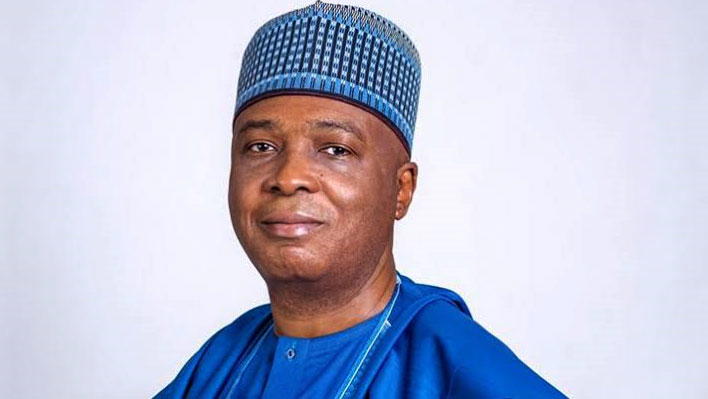
Abuja — Ahead of the 2027 general elections, former Senate President Bukola Saraki has urged the Independent National Electoral Commission (INEC) under Professor Joash Amupitan to conduct credible, transparent, and acceptable polls.
He also called for a strengthened fight against corruption and a society where bad behaviour has consequences.
Speaking at the 23rd Daily Trust Dialogue 2026 at NAF Conference Centre, Abuja, Saraki, who chaired the event, stressed that Nigeria must prioritize four critical issues: judicial independence, moral standards, effective anti-corruption measures, and credible elections.
Saraki noted that democratic continuity without quality is not success and warned that history would judge the Fourth Republic by how well it serves Nigerians, not merely by its longevity. He revealed he was initially hesitant to chair the dialogue due to its proximity to the 2027 elections but emphasized that the platform should focus on national interest rather than political campaigns.
The Special Guest of Honour, Olubadan of Ibadan, Oba Rashidi Ladoja, said the Fourth Republic has yet to realize its full potential. He criticized the electoral system, noting that 80–90% of election results are challenged in courts, turning the judiciary into arenas for deciding winners—a practice uncommon in other democracies. Ladoja also highlighted challenges in security, corruption, economic inequality, and governance.
Former FCT Minister Nasir El-Rufai called for greater accountability, devolution of powers, credible elections, and ending the selective enforcement of laws. He stressed that the opposition is not the enemy of the state but the conscience of the people, warning that the APC would not govern indefinitely.
Panelists Sunday Dare and Nnenna Ukeje reflected on Nigeria’s 26-year democratic journey, noting achievements like uninterrupted civilian rule, electoral institutionalization, and civil society engagement. They also highlighted persistent challenges: insecurity, youth unemployment, declining voter participation, and weak public trust in government.
Ukeje emphasized that democracy should be measured by outcomes—access to education, healthcare, jobs, and social protection—not merely by longevity. She also acknowledged progress in ICT, GSM expansion, and citizen mobilisation, including the #EndSARS movement, as positive contributions to democratic accountability.
Saraki concluded that for the Fourth Republic to leave a meaningful legacy, Nigeria must strengthen institutions, enforce the rule of law, and ensure democracy works for ordinary citizens, not just survive.
The post 2027 Elections: Saraki calls for credible polls, strong anti-corruption drive appeared first on Vanguard News.