2027: Accreditation, collation won’t be fully automated – INEC
 SKAiF NewsNG SNN
…Says Nigerians, not AI, will determine election outcomes
By Omeiza Ajayi
ABUJA: The Independent National Electoral Commission INEC has assured Nigerians that voter accreditation and result collation will not be fully automated in the 2027 general elections, insisting that citizens, not Artificial Intelligence AI, will determine the outcome.
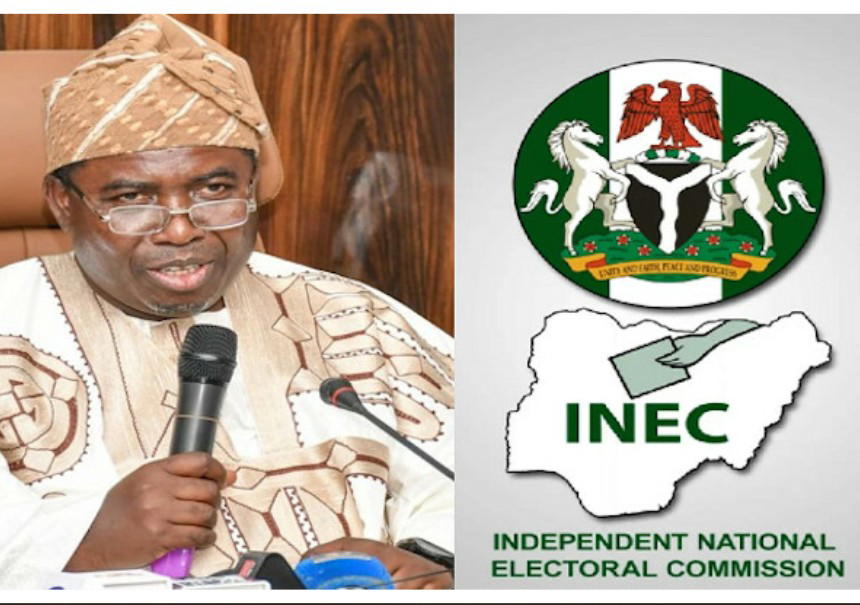
Chairman of the Commission, Prof. Joash Amupitan SAN said on Wednesday that “Algorithms will not, and must never, decide the 2027 vote.”
INEC in its Wednesday Bulletin said Amupitan spoke in Abuja while delivering the keynote address at the Artificial Intelligence and Democracy Forum 2026, held in collaboration with Yiaga Africa.
Amupitan said, as a foundational policy, no critical electoral decision, result collation, voter accreditation or candidate qualification would ever be fully automated or delegated to an autonomous system.
“Human accountability, statutory oversight and judicial review will remain paramount at every stage of the electoral chain,” he said.
Responding to the forum’s opening question, “Will Algorithms Decide the 2027 Vote?”, he said the answer was an unequivocal no. According to him, the choice of who leads Nigeria belongs exclusively to the Nigerian people.
The chairman said the forum was taking place 92 days before the general elections, in a digital landscape that had shifted significantly since 2023.
He warned that the Commission was no longer dealing only with the “analogue” challenges of logistics but with a world in which AI can influence what a voter sees, how the voter thinks and how the voter trusts.
“The greatest threat we face is not the hacking of a ballot box, but the hacking of the voter’s mind,” Amupitan stated.
He said generative AI had reduced to near zero the cost of producing convincing deepfakes, including videos of candidates saying things they never said and of INEC officials giving false instructions.
“If a voter cannot distinguish between truth and a synthetic lie, the foundation of informed consent crumbles,” he said.
The INEC chairman warned that a well-timed deepfake video or cloned audio recording of a candidate, an election official or a security chief could announce a false candidate withdrawal, a postponement of the election or inflammatory ethnoreligious statements, and spread virally within minutes.
He added that malicious actors could also impersonate the INEC Chairman, Resident Electoral Commissioners RECs and other officials to issue fake guidelines, declare unauthorised results or instruct voters to stay home.
On the Commission’s response, Amupitan disclosed that INEC had created an AI Unit within its Information and Communication Technology ICT Directorate, equipped with real-time digital monitoring tools, deepfake detection software and data analytics expertise.
He said any AI tool or automated system deployed by the Commission for logistics, database management or operational support must undergo rigorous audits to guarantee explainability, fairness and security before deployment.
The Commission, he added, was working on a Digital Strategy to audit the information environment and partnering with technology platforms for the rapid debunking and labelling of AI-generated content touching on electoral processes.
Amupitan called on technology companies, including Meta, X, Google, TikTok and Telegram, to rapidly restrict unlabelled synthetic media impersonating election officials, candidates or security personnel.
He also asked them to enforce disclaimers on political advertisements and restrict micro-targeting based on ethnicity, religion or local origin.
He urged political parties and candidates to sign an Ethical AI Code of Conduct, committing to refrain from deploying deepfakes, synthetic impersonation, dark ads or automated botnets.
The INEC chairman stressed that the Commission does not view AI only through the prism of risk. He described it as a powerful force multiplier for administrative precision, predictive planning and institutional integrity.
He said while human collation remained the statutory standard for declaring results, AI could run parallel statistical audits on polling unit result sheets uploaded through the eEC8A, flagging mathematical inconsistencies, atypical entry patterns and image quality defects for administrative review.
On logistics, he said AI-driven geospatial analytics could help INEC deploy ad-hoc staff, vehicles, boats and sensitive materials to 176,846 polling units before 7:30 a.m. on election day.
Amupitan said the 2027 General Election would be the largest democratic exercise on the African continent, involving over 103 million registered voters across 774 Local Government Areas LGAs. He said 10 of the 14 major operational milestones under the Electoral Act 2026 had been successfully executed.
The two-day forum was attended by the Chairperson of the Economic Community of West African States Network of Electoral Commissions ECONEC and Chairman of the Senegal Electoral Commission, Mr Abdoulaye Sylla, along with National Commissioners, RECs, political party leaders, civil society organisations, security agencies, technology firms and the media.
Amupitan said algorithms had no moral compass, no civic duty and no constitutional oath. “They do not have a conscience, they do not have a country, and they do not have a vote. INEC’s job is to ensure that the voice of the people is heard clearly, above the noise of the machines.
“On election day in 2027, it will be the thumbprint of the Nigerian citizen, guided by their own will and their own hopes, that decides our future,” Amupitan said.
The post 2027: Accreditation, collation won’t be fully automated – INEC appeared first on Vanguard News.