2026 calculations harden
 SKAiF NewsNG SNN
Tinubu: Power on trial as patience thins
Atiku: Experience returns with coalition maths
Obi: From movement to machinery
By Luminous Jannamike, Abuja
AT about 6:30 a.m., before Garki fully wakes up, Ibiam Udo is already arranging newspapers opposite the Cyprian Ekwensi Art and Culture Centre in Area 10.
The wooden table he uses is old, scratched, and stubborn; much like Nigerian politics itself. He has sold newspapers here for close to 15 years. Governments have come and gone. Promises too.
Ibiam says you can tell how serious politics is by how fast newspapers sell. “If nothing is happening, people just pass. But when something big is coming, everybody wants to read. Everybody wants to know,” he says.
These days, people are reading.
Ibiam doesn’t debate ideology. That kind of talk doesn’t move papers. His customers; civil servants, artisans, traders, drivers; ask simpler questions. Who is moving where? Who is aligning with who? Who is losing ground?
He answers carefully. Years on the street have taught him that the most important political year is not always the election year itself. It is the year when plans stop being rumours and start becoming actions.
That is why 2026 matters. Nigerians will not vote this year, but politicians are already voting with their feet, their alliances, and their decisions. Power is beginning to sort itself out quietly, long before posters appear or campaigns are officially declared.
In Nigeria’s political calendar, 2026 is not neutral ground. It is the season when calculations harden, loyalties are tested, and governance and ambition begin to share the same oxygen. Every policy move, defection, and silence will be judged by a single question: how does this land in 2027?
Tinubu
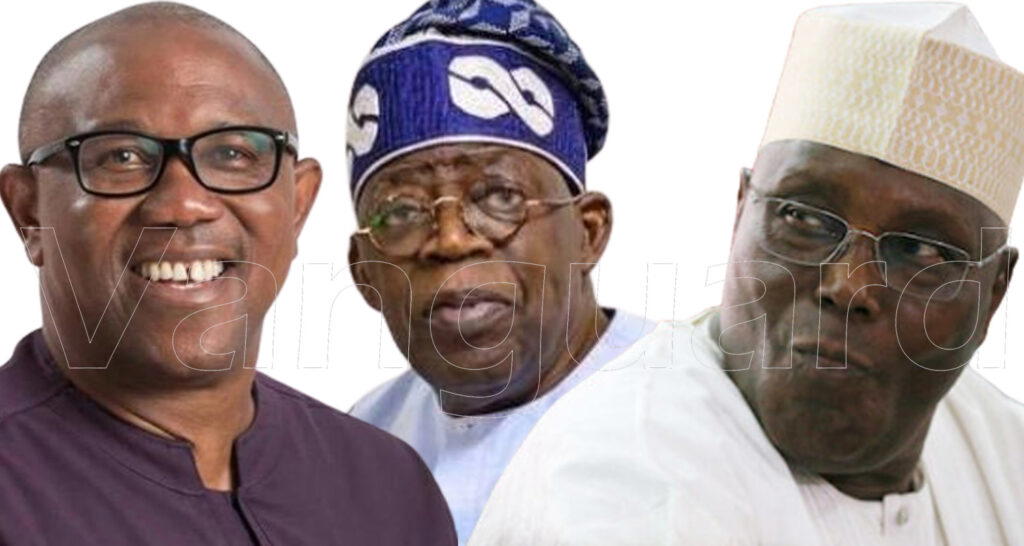
President Bola Ahmed Tinubu enters the year with the advantage of power, and the burden that comes with it. Incumbency gives reach, but it also sharpens accountability. For the APC, the challenge is no longer explanation but evidence. Nigerians have heard why things are difficult. In 2026, they want to see whether things can begin to ease.
If daily life improves, the ruling party will frame the year as proof that tough decisions were necessary. If it does not, patience may thin further. Incumbency offers Tinubu visibility, but it also leaves little room to deflect blame. Governance and politics now travel together.
Atiku, Obi & ADC Coalition
On the opposition side, the terrain has shifted. Atiku Abubakar and Peter Obi are now full members of the African Democratic Congress, a move that has reshaped early calculations ahead of 2027. Their convergence is less about personalities and more about arithmetic; how to combine experience, reach, and followership into a single platform capable of challenging power.
For Atiku, 2026 is about persuasion and legacy. He must convince Nigerians that experience remains relevant, and that coalition politics is preparation, not confusion. For Obi, the task is depth; turning belief into organisation, volunteers into structures, enthusiasm into staying power.
Together, their challenge in 2026 is coherence. Nigerians are watching not only what they oppose, but whether they can sound and act like a united alternative.
PDP
The Peoples Democratic Party, once dominant, faces its own reckoning. The year ahead will determine whether it can stabilise and remain central to the political conversation or continue to lose relevance through defections and internal fractures. Governors and lawmakers will be under pressure to choose between loyalty and calculation.
Other Players
Beyond the major parties, much of 2026 will unfold quietly. Governors will negotiate alignments. Senators will reassess loyalties. Smaller parties will trade endorsements for relevance. Alliances will be hinted at, denied publicly, and discussed privately. Every move will be described as consultation.
The destination, however, will be clear: positioning for 2027.
Nigerians
For Ibiam, politics is not abstract. It shows up in sales. When insecurity rises, fewer people are willing to move around. When prices climb, customers read headlines and walk away without buying.
“If people are comfortable, they buy,” he says. “If they are tired, they just look.”
That is how governance is measured on the street; not in policy documents, but in daily behaviour.
That is also why 2026 is a test of sincerity. Nigerians are listening less to promises and more to patterns. They are watching institutions; INEC, the courts, security agencies not for dramatic interventions at the last minute, but for early signs of independence and competence. Trust cannot be manufactured in an election year. It has to be built ahead of time.
By late afternoon, long after offices have closed and the sun has softened, Ibiam begins packing unsold papers. The day’s politics has done its work.
“This year,” he says quietly, “every story will likely be about tomorrow.”
He is right. 2026 will be restless, strategic, and consequential. It will blur the line between governing and campaigning, between opposition and ambition. And it will decide who Nigerians take seriously on the long road to 2027, and who they stop reading about.
The post 2026 calculations harden appeared first on Vanguard News.