10 most peaceful countries in Middle East before Iran war
 SKAiF NewsNG SNN
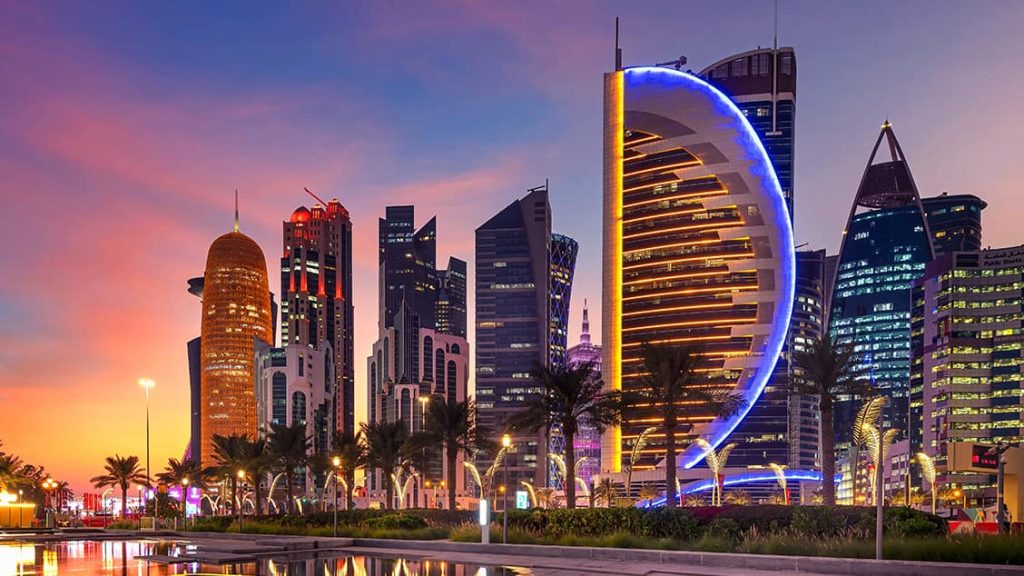
The landscape of the Middle East underwent a seismic shift in early 2026. Prior to the direct military confrontations involving Iran, the United States, and Israel in March 2026, the region had actually been experiencing a fragile but notable period of “rapprochement.” Diplomatic ties were being restored, and several nations were climbing the ranks of global safety indices.
Based on the 2024 and 2025 Global Peace Index (GPI) data—the final snapshots of the region before the current conflict—here are the 10 most peaceful countries in the Middle East and North Africa (MENA).
1. Kuwait
By 2024, Kuwait had overtaken Qatar as the most peaceful country in the MENA region. Its neutrality in regional power struggles and high levels of internal societal safety made it a “haven” in a volatile neighbourhood. It ranked 25th globally in 2024, placing it on par with many European nations.
2. Qatar
Qatar held the top spot for years and remained a close second leading into 2026. Beyond its wealth, Qatar’s peace was defined by its role as the region’s “indispensable mediator.” Before the 2026 strikes, Doha was the primary site for negotiations between the U.S., Iran, and various non-state actors.
3. Oman
Long known as the “Switzerland of the Middle East,” Oman maintained its steady position due to its isolationist yet friendly foreign policy. In 2024, it was ranked third in the region (42nd globally). It remained one of the few places in the Middle East where internal political violence was virtually non-existent.
4. United Arab Emirates (UAE)
The UAE saw one of the most significant improvements in peacefulness leading up to the war. By focusing on “economic peace” and tourism, the UAE reduced its involvement in foreign conflicts (such as Yemen) to bolster its image as a global business hub, ranking 52nd globally in 2024.
5. Bahrain
Despite its small size and past internal friction, Bahrain maintained a high level of societal security. Its peace was largely characterised by high domestic stability and a lack of active military conflict, though it remained heavily militarised due to its hosting of the U.S. Navy’s 5th Fleet.
6. Jordan
Jordan has long been considered the “eye of the storm.” Surrounded by conflict-torn neighbours, it managed to remain peaceful through a combination of strong internal security and a pragmatic foreign policy. In the 2024–2025 period, it was a crucial pillar of regional stability.
7. Tunisia
Despite the economic hardships that followed the Arab Spring, Tunisia remained the most peaceful country in North Africa for much of the early 2020s. Its peacefulness was rooted in its democratic (though struggling) institutions and a lack of external military entanglements.
8. Morocco
Morocco’s stability was a major outlier in North Africa. In the years before 2026, it focused on internal development and strengthening ties with the West and Israel (via the Abraham Accords), which kept its “Ongoing Conflict” score low compared to its neighbours.
9. Saudi Arabia
Under the “Vision 2030” banner, Saudi Arabia made a concerted effort to exit regional wars (most notably the ceasefire in Yemen) to focus on domestic economic transformation. Its 2023 normalisation deal with Iran was a key reason its peace score improved significantly just before the 2026 collapse.
10. Algeria
While often overlooked, Algeria maintained a high degree of internal stability through a strong central government. It rounded out the top 10, benefiting from a lack of active civil war, though it remained heavily armed and wary of its border with Libya.
The post 10 most peaceful countries in Middle East before Iran war appeared first on Vanguard News.