Xenophobia: S/Africans are trying to do to fellow Africans what the whites did to them — Amb. Obisakin
 SKAiF NewsNG SNN
•Says 588 killed, 121,100 displaced in seven years
By Olayinka Ajayi
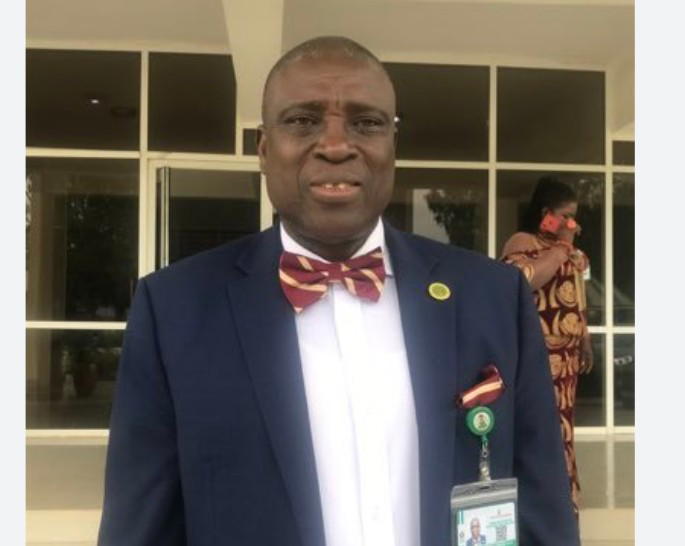
Dr. Laurence Olufemi Obisakin is a seasoned analyst on conflict and international relations and a retired career ambassador. In this interview, Obisakin, who sympathizes with relatives and friends of the two Nigerians killed in the latest xenophobic attacks in South Africa, laments the opportunistic and predatory attitude of some South African politicians.
He also speaks on the need for Nigeria to engage a stick and carrot approach in addressing the attacks in South Africa. Excerpts:
What are your thoughts on the despicable xenophobic attack in South Africa?
You will recall that this has been happening since 1994, and the total casualty from 1994 to 2021 was 588 deaths, and over 121,100 people were displaced. Two Nigerians were reportedly killed in the latest attacks. There is a Chinese proverb that says the beginning of wisdom is by calling people and things by their first names. The South Africa we know has a diversified and middle-income mixed economy and is the most advanced in Africa. The regulated service-oriented sector is about 62.2 per cent. Nigeria is also developed, but when you look at the Nigerian economy, it is a little bit different. We have a lower middle-income economy, and our service sector is approximately 50 per cent of the Nigerian GDP. It is the largest sector, comprising banking, telecoms, and the entertainment sector, which is critical to the economy of Nigeria, followed by agriculture, which is about 20-25 per cent. I will really say the attack is a stab on African brotherhood and sisterhood when you look at how South Africa was liberated. Nigeria was made a frontline state without being there because we committed ourselves. We gave scholarships to them, but those ones are getting old now. The youth now are not aware of what happened in the 1970s. When the good turn has taken long, the fools forget.
What diplomatic mechanisms has the African Union put in place to prevent and respond to xenophobic violence, and why have they had limited impact so far?
The African Union has established several diplomatic mechanisms to prevent it, but it hinges primarily on normative pressure, dialogue, and legal failure. Nigeria has domesticated the African Charter on Human and Peoples’ Rights since 1985, and people could use it to defend their cases. Despite these initiatives, the African Union has had limited impact, struggling with diplomatic and preventive mechanisms like free movement, first in 2018, to foster integration in Africa. But mob action often has political undertones. When you look at xenophobia, it may have to be an automatic reaction. Blaming the vulnerable, helpless, undocumented people is easy for politicians to use them when elections are coming. I even gathered that children of South African mothers and Nigerian fathers are being discriminated against. Business people are afraid to go to work, and children are afraid to go to school. So experts agree that xenophobia in South Africa is deeply rooted in the legacy of apartheid. It is an untreated malady that has evolved into division and anti-immigrant violence, often called the black skin with the white mask. These people are trying to do what the white did to them.
How can the government of South Africa balance its constitutional commitment to human rights with domestic political pressure to restrict foreign nationals in the labour and business sectors?
They are trying to shift to a more strict immigration framework. There is a 2026 revised white paper on citizenship, immigration, and refugee protection. It aims to tighten enforcement while introducing technology-driven management to protect national interests. South Africa has a moral obligation. As Ramaphosa said, bad governance in African countries could be responsible for this. Some of the good nations, like the Netherlands or Germany, you hardly see their citizens embark on japa syndrome. What they do is to go out, do business, and make money. There is this insiders versus outsiders mentality that apartheid has built into their brain. The pre-1994 era during apartheid is still showing in their behaviour.
What role should bilateral relations play, particularly with Nigeria, Zimbabwe, and Mozambique, in addressing economic grievances that fuel anti-immigrant sentiment?
Nigeria should take care of its own people. We should not suffer in the midst of plenty. We have a mining industry, and thank God the government has a mining law. We should implement it. Corruption should stop, and let Nigerians enjoy what God has blessed us with. Nigeria can dialogue, but I also believe in the carrot and stick formula. We have many big South African corporations here, like Stanbic Bank, Multichoice, DSTV, Protea Hotels, and MTN, among others. We can dialogue with them through the Immigration Service, Ministry of Trade, and Ministry of Foreign Affairs. We have done it before. We call them and tell them they do business here, so they should let Nigerians do business there. Our bilateral relation is critical to managing these challenges.
Are there successful policy models from other countries with large migrant populations that South Africa could adapt to reduce tensions at the community level?
There is a need for us to curb this undocumented japa syndrome. We can train these emigrants in good skills like plumbing and electrical work and manage them the same way the Filipinos are doing abroad, in terms of skill-based policy. Thank God for what our people are doing in the fintech and entertainment industry.
How can diplomatic channels improve cooperation between South African law enforcement and foreign governments to address cross-border crime without stigmatizing all migrants?
Under the 1961 Vienna Convention on Diplomatic Relations, Article 3 applies. Key trained ambassadors who are trained should be sent out. They can handle what is happening now. Diplomacy is a skill. You do not just put anybody. It is like surgery. You do not just allow anybody. We should also activate our bilateral joint commission with South Africa. It is better to dialogue than to go to war.
What responsibilities do social media platforms have under international law when misinformation on their platforms incites violence against foreign nationals?
Under international law, social media platforms have a responsibility to respect human rights, which includes preventing their services from being used to incite violence against foreign nationals. While international human rights law primarily binds states, authoritative frameworks, notably the UN Guiding Principles on Business and Human Rights, obligate companies to take action against harmful misinformation, particularly when it fuels discrimination, hostility, or violence. Our media has to be more responsible. It should not give priority to sensationalism. They should watch what they are reporting. There should not be negligence in reporting on their platforms because it may do a lot of harm.
The Legal Basis and Context
The International Covenant on Civil and Political Rights, Article 20, mandates that any advocacy of national, racial, or religious hatred that constitutes incitement to discrimination, hostility, or violence must be prohibited. There are UN guiding principles on it.
How does recurrent xenophobic violence affect South Africa’s leadership role in Africa trade and regional integration initiatives like the AfCFTA?
Recurrent xenophobic violence in South Africa, which we call Afrophobia, undermines the country’s leadership. South Africa is supposed to be a regional leader. Leader of SADC, before you can ask people to come and accept your gift of garments, you look at what you are wearing. South Africa is a major stakeholder in African brotherhood and sisterhood.
What protections exist under international law for documented versus undocumented migrants in South Africa, and where are the enforcement gaps?
We are all creatures. We live in the creation of God. Whether we are documented or undocumented, we should not be killed. There is no room for mob actions, killing people, and taking their jobs. There was a clip about one Nigerian who came in and saw people smoking and dancing. He said, is there any job? They said there is no job that they have taken all jobs, but the man went ahead and started selling plastic. Later he opened a shop, he had a supermarket, and he married a South African girl. People were telling the lady, why are you marrying Nigerians? The lady said when I was with you, I was only smoking illicit drugs. She said, but now look, this man is taking care of me. So kudos to Nigerian men taking care of women. We are responsible. We built kingdoms. Remember the Oyo Kingdom, which spread beyond Nigeria across Benin, Togo, to the shores of Ghana. Look at what Dangote has done with the biggest refinery in Africa. He is the richest man in Africa. So Nigerians are enterprising, and the government should protect them. You know, there is an element of jealousy in this, but it is also an indictment on their preachers there. They really have to know that you should not kill people out of envy.
So it has a historical background. Documented migrants enjoy socioeconomic rights and protections from reformers. Those who have been sent away are undocumented migrants. They face severe restrictions on labour and social services and have been abused. But then, protections under international and domestic law and fundamental human rights in the constitution should apply to all persons within South Africa, regardless of nationality or legal status. Remember, right from the days of the Israelites, those people were told they must not maltreat strangers and foreigners because they themselves were foreigners in Egypt. All children within South Africa, regardless of status, are entitled to basic rights and legal rights, including child rights.
Should economic reparations or community development programs be part of diplomatic solutions to address the perception that foreigners benefit unfairly from local resources?
Economic reparations and community development programs are increasingly viewed as essential components of diplomatic solutions. There is this environmental law that says the polluter should pay, and this should be a deterrent. Those you kill, you pay reparation for them. Nigerian diplomacy should handle this. Even our president has already condemned xenophobia. The South Africans should be made to pay, and if they are made to pay, they will be more careful. They have to be really trained. All these mob people, maybe they are hard on drugs. I do not know why they should kill people because they are in their country. They are also here, and nobody is killing them. We are not killing MTN people because we are civilized people in Nigeria. We may have a problem of Boko Haram and terrorism, but we do not go out and kill people. We do not take our economic difficulty and hardship out on others. Nigeria is so accommodating to business that MTN, within years, brought the headquarters here because they are making their money here. And Nigerians are not too happy that MTN, even here, for two days now, are paid but they are not working here. And we say it is all over. We did not go hunting for them. They have taken our money. Do we know how they have hacked prices here? You know the DSTV prices, and you guys could have taken the law into your hands and looked for them and burned their shops and offices, but we do not do that because we are civilized people. I think we should teach them in South Africa that people have to abide by the rule of law and live on, and also their politicians should stop making inciting, incendiary statements about others. After all, whatever it is, this is Africa. You have to be very careful. Some of us had to starve to support the South African liberation movement. Some of their leaders were our classmates from 1975 to the 1980s in Nigerian universities. We should be careful. We should dialogue. Their leaders should stop them from murdering innocent Nigerians. There is also a need for us to expand the base of our economy, and our youth need to be involved. The government has to do more. SADC can prevent escalation of violence by strengthening existing underutilized regional mechanisms. There is also this eagerness to reclaim sovereignty and overreaching ambition.
There was a case when I was the chairman of the committee that deals with international peace and security. Nigeria was automatically the chair of the 54 countries, and South Africa challenged why Nigeria should be the chairman. He insisted that we must vote, but thank God for my gift of languages. I addressed other countries, and the South African only had one vote. He voted for himself. Nigeria is an elderly nation. We can see South Africa as very young. They got independence in 1994, so there is a difference between 1960 and 1994. Although the white people developed their economy, they also need us. Dangote and some other Nigerian businesses are there.
Some people insist that it is a wake-up call for Nigeria to fix its economy so that its people do not rush out and be subjected to xenophobic attacks and cannot return home. What is your perspective?
I remember in 1981, I used to do translations of some letters written by people from Portugal and Spain to apply to be hairdressers, barbers, and domestic staff in Nigeria. Why not? Nigeria can still be great again. Insecurity has to be tackled because it is killing Nigeria’s economy. Those supporting terrorism have to be apprehended. Those sabotaging our economy have to be removed. And the infrastructure deficit, like power, should be fixed. Thank God for what the government is doing, but they can do better.
The post Xenophobia: S/Africans are trying to do to fellow Africans what the whites did to them — Amb. Obisakin appeared first on Vanguard News.