When bulldozers rumbled in Makoko
 SKAiF NewsNG SNN
Residents say govt’s claim of 100 metre demolition from powerline mere excuse, add community may have been sold to highest bidder
…Destroying our homes, burning our boats left us homeless, without livelihood
…They were served over two years evacuation notices before demolition— LASG
By Elizabeth Osayande and Ifunanya Ndigwe
Days after a demolition squad from the Lagos State government descended on Makoko waterfront with bulldozers, it has been lamentation galore by hapless residents of the iconic slum settlement who said the invasion has left most of them homeless and economically crippled. Condemning the development, which they described as a gross injustice, some community leaders alleged that there was more to the demolition than the reasons advanced by the Lagos State government.
Recall that the Lagos State Governor, Babajide Sanwo-Olu, on Monday last week, informed that evacuation notices were served over two years before the demolition to those living within 150 to 250 metres of high-tension wires. The governor stressed that the decision of the government was based on the collective interest of Lagos State and the residents and not for any ulterior motive.
Sanwo-Olu said: “People need to understand that it is a big city we are dealing with, and the emergency and safety of lives and properties are paramount, so we need to prioritise. Of what interest would it be for the government to want to unduly demolish anybody’s property? What interest if it is not for the overall safety of the citizens we are talking about?
“A lot of the people have built shanties under the high-tension wire, and the regulation is that you need to clear between 150 and 250 metres away from the high-tension wire. We are not demolishing the whole of Makoko; we are clearing the shanties so they do not get to the Third Mainland Bridge and stay behind the high tension.
“We are aware that there are some local and international NGOs that want to profit from this. We are studying things, and we are going to show evidence.
“They have made so much money from international organisations and asked for so many grants and resources to go into those places.
“It is just for them to cover their own lies because they have not done what they said they were going to be doing. That is why they are all shouting and crying more than the bereaved.
“We have been on this for so many years, and we have evidence. The exercise was meant to be done in December 2024; we extended it all throughout 2025. So, we cannot be a lawless set of people. We cannot fold our arms and let calamity or disaster happen.”
Governor Sanwo-Olu also noted that as a compassionate government, affected residents would be given palliatives and relocation stipends as compensation.
He said: “I have instructed both local governments and the various ministries concerned to see how they also can give additional succour, palliatives and relocation stipends to some of the people just to show compassion. And to say, you have done wrong, but the government can still show compassion and be compassionate about it. It is to ensure that we all can live in a safe and secure environment.”
Government is not telling the truth- community leaders
But members of the community were not impressed by the governor’s explanation, describing the reason he gave for the demolition as mere afterthought, alleging that government may have sold their community to the highest bidder. They alleged that the 100-metre demolition of the building from the power line was a ruse.
The demolition exercise, which started about three weeks ago and is still ongoing, has allegedly claimed 12 lives, with several homes demolished, and residents’ livelihoods destroyed.
The residents also said that they are presently homeless and have no place to sleep as their boats were either removed from the ruins of the demolition or burnt during the demolition.
Narrating their ordeal, some residents gave vent to their worsening suffering, even as they continued to fault government’s claims about it’s action.
How our land was sold by government
A prominent member of the community who did not want his name on print informed thus: “The reason they gave for the demolition is nothing but a lie. They want to build high-rise buildings and estates here.” When asked if there was evidence to support his claim, the source provided copies of a document that showed that an NGO, FBT Coral Estate, was allocated the land by the Lagos State Land Allocation Committee in October last year.
We can’t say now what is happening but FBT Coral told us about the demolition six years ago – Baale of Makoko
One of the Baales of Makoko, High Chief Baale Shemede Emmanuel, took time to explain the history of demolition in Makoko and the alleged link to FBT Coral.
According to Chief Emmanuel: “The first demolition started during the administration former Governor of Lagos State, Mr Babatunde Fashola, in 2012 when he gave us 24 hours to vacate here. It was during that time that the Executive Director, Social and Economic Rights Active Centre, SERAC Felìx Morka, took our matter up. However, things changed.”
We were lured to sign an MoU
According to the Baale: “He brought some NGOs, among them FBT Coral. The representative of FBT Coral, one Mr Femi Adelaja, told us that they have acquired some part of our land after the power line, and that they were informed that the government want to demolish our community. He, with Mr Morka, made us sign an MoU that anything that needed to be done, we will be informed, and carried along.
“It was also at that period that Mr Adelaja asked us to move to Agbowa. We refused as we did not get a formal notice from the government. We told him that Makoko is our ancestral home.
“It was this MoU that made our people accuse us that some Baales have sold the land. We didn’t sell any land, but signed an MoU to give information about activities here.”
Recent demolition exercise
The Baale noted thus: “Late last year we got a notice that we should move 100 metres from the power line. We later reached a compromise of 30 metres with the Permanent Secretary of the Office of Urban Development, Mr Gbolahan Oki. We complied, but later got to know that it was 100 metres. We again went to the government; Oki assured us it would now be 50 metres. However, these promises changed when three weeks ago, we saw state actors with bulldozers pulling structures down beyond the agreed limit. When we questioned them, they said they were asked to pull down all the structures on the water front.”
We resisted, then we were victimised, harassed and tear-gassed.”
Continuing, Chief Emmanuel noted that: “Despite our entreaties, visits to the government, and subsequent promises to halt the demolition, the state’s actions have continued. They have passed the 100-metre mark, and in some places demolished up to 500 metres. While this is happening, they fired teargas at us, which caused some people to die. We don’t have names now. But about 20,000 families have been affected, with over 500 children currently out of school due to the demolition exercises.”
Gov. Sanwo-Olu’s remarks about NGOs gaining from our predicament are not true
On the accusations by Governor Sanwo-Olu that NGOs were using Makoko to milk money from international donors, the Baale said: “Government also collect money to uplift the lot of people in underserved communities; yet they do nothing. It is the same NGOs that they are accusing that come here to build schools for our children to be educated. Now, these schools have been destroyed, and our children are now roaming about.”
They have destroyed our home, livelihoods, and now they are burning our boats – victims
Some residents of Makoko told Vanguard that since the demolition started weeks ago, many families have taken to sleeping in their boats and canoes under the rain and in the scorching sun. One of the victims of the demolition, who gave her name as Julia, said that even at that, sleep was no longer guaranteed.
The mother of 10, who said one of her sons was affected by the teargas, tearfully told Vanguard thus: “The demolition left us with nothing. We couldn’t recover a pin because it came suddenly. Since then, we have been sleeping in boats under a billboard. This morning, those who came to demolish structures here said we should remove our boats. Before we could do anything, they started burning our boats. They have taken everything from us.”
When Vanguard visited the area over the weekend many residents have taken shelter under the Third Mainland Bridge.
The demolition should stop, we are now ready to move or manage the remaining space left – Baale
Speaking with Vanguard, Chief Shomoyide said: “Government should stop the demolition exercise, they should provide alternative homes for our displaced residents, and compensate those affected.“ Asked if they are now ready to relocate, he said: “Makoko is the only home we have known. I was born here, so was my father.
Relocating us may not be easy. This is because fishing is our mainstay. Taking us to Ikeja, or Badagry may not be good for us. However, as it is now, if they have relocation plans, we are ready to move. Or better still, they should leave the places not touched yet for us.“
Makoko demolition: Rights groups accuse Lagos govt of illegal evictions, demand justice
Meantime, some NGOs have rallied in support of the embattled, displaced Makoko residents, accusing the Lagos State Government of inhuman treatment, forceful eviction, and blatant disregard of a series of court orders and injunctions. They have also continued to fault the claim by the State government that the demolition was for the good of Lagosians.
On Thursday some human rights groups, community leaders and activists raised the alarm over what they described as systemic, illegal and cruel forced evictions carried out by the Lagos State Government across several waterfront and low-income communities, including Makoko, Oworonshoki, Owode Onirin, Ilaje-Otumara and Baba-Ijora,
Speaking at a joint press briefing in Lagos, the groups accused the state government of using demolitions, violence and intimidation to displace poor residents to clear land for elite and private developments, without consultation, compensation or resettlement.
Israel Idowu, Student Coordinator of the Makoko Waterfront Community, said the demolitions in Makoko were not accidental or unknown to the government. He said that Governor Babajide Sanwo-Olu had publicly spoken about plans to turn Makoko into a tourist destination and had also acknowledged issues around power lines in the area.
Idowu said it was therefore impossible for the government to claim ignorance of what was happening. He revealed that representatives of the Makoko community met with the governor days before the latest demolitions, where assurances were allegedly given that the destruction would stop. Despite this, bulldozers returned to the community.
He added that residents were repeatedly told the demolitions were based on “orders from above”, even as homes far beyond the agreed setback from power lines were destroyed. According to him, the sand filling currently going on in the lagoon shows that the demolitions go beyond safety concerns and point to planned developments.
Comrade Abiodun Ahmed, Chairman of the Owode Motor Spare Parts Market, described a similar experience in Owode Onirin, where traders lost their goods, vehicles and means of livelihood. He said market members were attacked, some were arrested, and vehicles were seized and taken to government offices, where owners were allegedly forced to pay large sums before release.
Ahmed said the actions were carried out without court orders or proper notices, despite the market having existed since 1979 under government recognition. He described the situation as inhuman and called on Nigerians to intervene.
Comrade Tunde Yusuf, Secretary of the Ajegunle Peoples Movement, said the demolitions show a broader pattern where profit is prioritised over human life. He mentioned the case of Makoko, where an elderly resident and a five-day-old baby reportedly died after exposure to tear gas.
Yusuf warned that the demolitions were part of a deliberate agenda to push poor people out of Lagos under the guise of development. He called on residents, trade unions and civil society groups to unite and resist what he described as anti-people policies.
Olanrewaju Olusegun, Secretary of the Coalition of Oworonshoki Demolition Victims, recalled the 2023 demolitions in Oworonshoki, which he said were carried out at night while residents were asleep. He said bulldozers pulled down homes with occupants still inside, leaving many injured and others arrested and detained.
Olusegun further said that the demolitions went ahead despite a valid court injunction secured by human rights lawyer Femi Falana, SAN, restraining the government from further action. He said more than 10,000 people were rendered homeless in defiance of the law.
Zikora Ibeh, Assistant Executive Director of Corporate Accountability and Public Participation Africa, said the government’s claim that NGOs were benefiting from Makoko was false. She argued that the presence of NGOs only highlighted government failure to provide basic amenities such as water, sanitation, schools and healthcare.
According to her, NGOs were merely stepping in to fill gaps created by years of neglect, and this should not be used as justification to destroy communities.
Prince Iwamitighi R. Irowainu, President of Egbe Omo Ilaje Worldwide, said Ilaje-Otumara and Baba-Ijora residents were evicted without notice in March 2025, leaving over 10,000 people homeless. He said families fled with nothing as bulldozers destroyed homes, markets and fishing areas, worsening hunger and poverty.
Opeyemi Adamolekun, an active citizen, called for transparency over claims that community leaders were paid by government officials. He demanded that government publicly name traditional leaders allegedly involved, insisting that secrecy was fuelling distrust and division.
Comrade Hassan Taiwo Soweto, member of the #EndBadGovernance Movement, Lagos State, said what was happening in Lagos mirrored global patterns where governments criminalise poverty. He urged residents not to be intimidated and called for stronger collective action against policies that deepen inequality.
The groups jointly condemned what they described as state-created homelessness and land grabbing, arguing that true urban renewal should focus on upgrading communities, not erasing them. They cited examples from Kenya and South Africa, where informal settlements were improved through collaboration rather than destruction.
They rejected the state government’s offer of palliatives and demanded an immediate halt to demolitions, emergency shelter for displaced families, learning support for affected children, full compensation for lost homes and livelihoods, accountability for deaths and abuses, and a transparent resettlement plan developed with affected communities.
Estate, building experts also fault demolition-Describe it as insensitive
Reacting to the Makoko demolitions, former president of the Nigerian Institute of Building, NIOB, and initiator and pioneer national chairman, Building Collapse Prevention Guild, BCPG, Kunle Awobodu, said it is insensitive on the part of whatever authority has embarked or embarking on demolition of Makoko which he said is a global popular settlement that has become a tourist attraction to Nigerians and foreigners.
According to Awobodu, government has the right to acquire any place or area for development purposes because all lands in the state belong to the state government according to Nigeria’s Land Use Act. But is there adequate alternative plan as compensation to the indigenous people of Makoko being displaced?
Describing Makoko community as a victim of development, the former boss of NIOB said: “The state government may be going there because of economic and social value the place offers now after some non-governmental organisations, both local and international, have impacted the settlement, or the government feels that there is need to upgrade Makoko to the standard of a megacity, but for whatever reason, the displaced people should be compensated adequately.
“In the past, this kind of thing happened to Maroko residents, Okobaba sawmillers and others but at end of the day, they were not provided adequate accommodations. If government feels the place is a slum and does not befit the status of a megacity, all it ought to do is embark on the development of the area rather than outright demolition of the entire settlement.
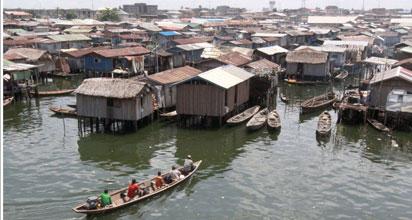
“Makoko is a unique and peculiar settlement living for fishermen and women for decades. The settlement has interesting infrastructure such as floating school and buildings on water, making the community to become a popular tourist attraction. The culture they are known for will be dead by relocating to another place.
“However, wherever they are relocated to, there should be adequate compensation for them. This is the bottomline.”
Also reacting, Housing Development Advocacy Network, HDAN, expressed deep concern over the ongoing demolition of homes in the Makoko area, “which has left many residents displaced and uncertain about their future.”
Government should urgently suspend demolition and engage community leaders
Commenting on the development, Mr. Festus Adebayo, Executive Director of Housing Development Advocacy Network, acknowledged the Lagos State Government’s position that some of the demolished structures were built under high-tension power lines, posing serious safety risks. However, he emphasized that safety concerns should not be addressed in a manner that violates the rights and dignity of vulnerable citizens.
“While we recognise government’s responsibility to protect lives and enforce planning regulations, the sudden demolition of homes without adequate alternative settlement plans exposes residents to homelessness, poverty, and social instability,” Mr. Adebayo stated.
He pointed out that Makoko is home to thousands of low-income residents who depend on the area for their livelihoods.
According to Mr. Adebayo, development and urban safety must go hand in hand with social justice, inclusive planning, and humane resettlement strategies.
The Housing Development Advocacy Network, therefore, calls on the Lagos State Government to urgently suspend demolitions until further engagement with affected communities is conducted, provide clear, affordable, and accessible alternative settlement options for displaced residents, ensure compensation and resettlement plans to align with national and international housing and human rights standards, and adopt participatory urban planning approaches that include community voices in decision-making.
“No Lagos resident should be rendered homeless in the name of development. A truly modern city protects both infrastructure and its people,” Adebayo noted.
The post When bulldozers rumbled in Makoko appeared first on Vanguard News.