What are the functions of ministries in a country? (Part 3), by Usman Sarki
 SKAiF NewsNG SNN
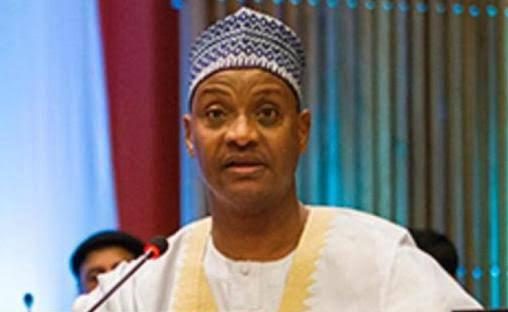
“The task of leadership is not to put greatness into humanity, but to elicit it, for the greatness is already there”, John Buchan.
In the hilarious and admirable British comedy series, “Yes, Prime Minister”, Dorothy Wainwright, an adviser to the fictional Prime Minister James Hacker, once delivered a devastating verdict on the Department of Education. According to her, it was not the guardian of education but its graveyard. Her remedy was as brutal as it was mirthful: “Get rid of it! Abolish it! Remove it! Expunge it! Eliminate it! Eradicate it! Exterminate it! Get rid of it!”
By her logic and the extension of that reasoning, the Department of Industry could be viewed as the graveyard of industry, the Department of Health as the graveyard of health, and so on. What began as comedy thus became a savage indictment of bureaucracy, institutional pretence and the capacity of government departments to survive long after the purposes for which they were created have been defeated.
Comedy, although frowned upon by the venerable Jorge in Umberto Eco’s “The Name of the Rose”, is, when properly understood, often a higher form of political philosophy and criticism. It exaggerates and mocks reality in order to expose it. It makes us laugh, but only because the truth is sometimes too painful, too dangerous or too inconvenient to be stated plainly.
Upon serious reflection, therefore, I have often wondered whether we should transport Dorothy Wainwright’s logic from British comedy to the real-life situation of Nigeria, where we have dozens of ministries, hundreds of departments and thousands of agencies, yet without visible, consistent and measurable improvement in the lives, fortunes and prospects of the people.
What, indeed, are the functions of ministries in a country? Are they merely administrative contraptions created to distribute offices, titles, vehicles, allowances and political patronage? Are they instruments of policy formulation and implementation? Are they centres of technical competence, national planning and public service delivery? Or have they become, in our peculiar circumstances, ritualistic monuments to the presence of government without the substance of governance? What indeed is the purpose of a state bureaucracy?
In a properly ordered state, ministries exist because the responsibilities of government have to be organised, allocated, specialised and executed through defined institutions. The Ministry of Education should exist because the nation must educate its children, train its teachers, regulate its schools and improve learning outcomes. The Ministry of Health should exist because the state must protect life, prevent disease, organise hospitals and raise standards of public health.
The Ministry of Works should exist because roads, bridges and public infrastructure cannot be left to chance.
Likewise, the Ministries of Agriculture and Food Security, Livestock Development and Water Resources should exist because water and food security, meat and dairy production, irrigation, extension services and value chains are matters of national survival.
In other words, a ministry is not supposed to be an ornamental structure, a mere nameplate on a building, or a waiting room for politicians, consultants, contractors and petitioners. It is an instrument through which public purpose is translated into organised action. Its legitimacy lies not in its budgetary allocation, ministerial convoy, official stationery or ceremonial protocol, but in the results it produces for the people.
This is where the Nigerian problem begins. We have become a country of administrative proliferation without corresponding performance. Every difficulty seems to be answered by creating another ministry, department, agency, commission, board, committee or task force. We confuse multiplication with seriousness, expansion with effectiveness, and bureaucracy with governance.
Whenever a new concern arises, our instinct is not first to ask whether existing institutions can be made to work. It is to create another institution, appoint another leadership, rent another office, procure another fleet of vehicles and add another layer to the already crowded architecture of government.
Yet, after all this, the basic questions still remain unanswered. If we have ministries of education, why are millions of children still out of school or poorly taught, and why is there a shortage of properly trained and highly motivated teachers? If we have ministries of health, why do hospitals lack basic equipment, drugs, personnel and dignity? If we have ministries of works, why are many roads death traps? If we have ministries of agriculture, why is food increasingly beyond the reach of ordinary families? If we have ministries of power, why does darkness remain one of the most constant features of our national existence? If we have a ministry of livestock, why are meat and dairy products becoming more expensive and less available?
The same questions must be asked of other ministries and agencies whose responsibilities require constant interrogation in a fast-changing world. What exactly is the Ministry of Humanitarian Affairs expected to do in a country where poverty, displacement and vulnerability have become permanent features of national life? Is it an emergency response institution, a poverty alleviation vehicle, a social protection platform, or another vast administrative channel through which compassion is converted into bureaucracy?
What is the precise task of the Ministry of Women Affairs in the twenty-first century? Is it to organise ceremonies and issue statements, or to transform the material conditions of women through education, health, enterprise, legal protection and participation in national development? What is the function of a ministry responsible for youth in a country where the majority of the population is young, restless, hopeless, underemployed and increasingly alienated from the formal structures of the state? Is it merely to gather youths into conferences and empowerment programmes, or to coordinate a serious national strategy on skills, innovation, productivity, citizenship and opportunity?
What are the roles of Ministries of Culture and Sports in a country so richly endowed with talent, languages, heritage, music, film, literature and athletic promise? Are they ornamental sectors for festivals and tournaments, or strategic instruments of identity, national cohesion, creative industry, employment and soft power? The same scrutiny should apply to NEMA, its counterparts in the states, and to ministries responsible for information and aviation. In an age of floods, fires, epidemics, displacement, climate stress and insecurity, emergency management cannot be reduced to the distribution of relief materials after disasters have occurred. It must become a system of prevention, preparedness, early warning, coordination and recovery.
Likewise, a Ministry of Information information in the twenty-first century cannot remain a mere loudspeaker for government, nor justify its existence merely by the supervision of NTA and Radio Nigeria. In an age of digital communication, artificial intelligence, misinformation, public distrust and global competition for narratives, it must demonstrate value through enlightened and objective public communication, civic education, transparency, national image making and democratic accountability.
A similar query must be posed to the Ministry of Aviation. What exactly is its strategic purpose in a country that does not have a national carrier, struggles to regulate airline operations effectively, and seems unable to bring sanity, affordability and predictability to the cost of air travel? Is it merely an administrative overseer of airports and agencies, or should it be a serious institution for safety regulation, aviation infrastructure, air connectivity, consumer protection, national competitiveness and the strategic positioning of Nigeria as an aviation hub, which in our region, has been appropriated already by Togo and Ghana?
These questions are not asked in anger but in genuine bewilderment, sorrow, curiosity and civic responsibility. A country must periodically interrogate its institutions. It must know whether money spent in the name of governance actually produces governance. The tragedy of many ministries in Nigeria is not that they do nothing at all. It is that they often do many things without transforming anything.
They hold meetings, produce communiqués, organise retreats, conduct workshops, prepare reports, receive delegations, inaugurate committees, inspect projects, travel abroad and issue press releases.
These activities create the appearance of motion. But motion is not the same as movement in the developmental sense. Activity is not the same as achievement. Expenditure is not the same as development. The deeper problem is that ministries have gradually lost the discipline of measurable purpose. Their mandates are often vague, overlapping or duplicated. Their work is compromised by political interference, poor planning, meagre funding, inadequate technical expertise, personality grandstanding, weak monitoring and the absence of consequences for failure.
In some cases, the ministry becomes subordinate to the minister’s preferences rather than the nation’s priorities. In others, permanent bureaucracies become custodians of inertia, resisting change while perfecting the rituals of delay. This, perhaps, is why the question of ministries must be taken beyond the formal language of administration into the harder terrain of performance, delivery and national consequence.
The post What are the functions of ministries in a country? (Part 3), by Usman Sarki appeared first on Vanguard News.